
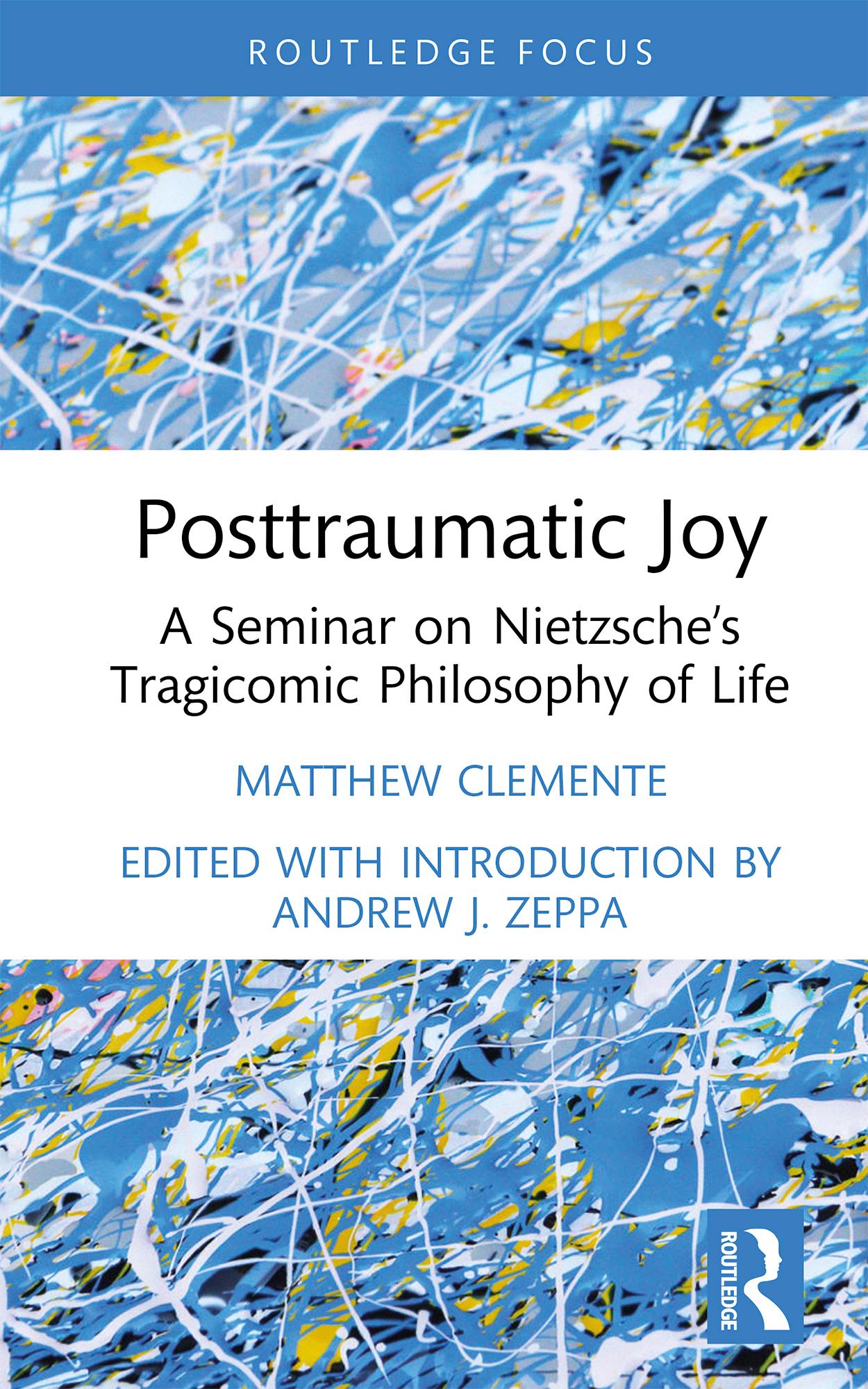
Posttraumatic Joy presents the major themes and ideas of Nietzsche’s corpus from a continental and psychoanalytic perspective with a particular bent toward how they might illuminate ways of coping with and living beyond trauma and suffering. Through a series of transcribed and edited lectures—originally delivered as a part of the "Nietzsche for Clinicians" workshop run through the Center for Psychological Humanities and Ethics at Boston College—this work traces the genesis of such fundamental psychoanalytic concepts as repression, the death drive, and the Oedipus complex to the works of one of philosophy’s most audacious and original thinkers. Reading Nietzsche not as a philosopher in the traditional sense, but as a proto-psychoanalyst, a precursor to Freud and Lacan, this work explores his understanding of the origins of morality, the value of sublimation, the movement from mourning to melancholia—or, in Nietzsche’s terms, from trauma to tragedy—and the possibility of a life lived in affirmation and self-overcoming.
This interdisciplinary book will be of interest to scholars and practitioners whose work intersects with continental philosophy and theoretical and philosophical psychology. This includes any psychotherapist, social worker, psychoanalyst, or pastoral counselor with an interest in understanding the deeply psychological philosophy of one of history’s greatest thinkers.
Betal nemt med kort, Klarna, Apple Pay eller Google Pay. Ikke tilfreds? Du har altid 14 dages fortrydelsesret. Læs mere i vores vilkår. Har du spørgsmål, så send os en mail på hello@memmo.org.
Memmo gør det nemmere at studere – uanset hvor du er i verden. Hos os samler du dine kursusbøger og smarte studieværktøjer ét sted: resuméer, quizzer, podcasts og flashcards. Og så er der Ted, din studieven, der svarer på alt, du undrer dig over. Over 50 000 studerende studerer allerede her – bygget til at hjælpe dig med at lære hurtigere og stresse mindre.