
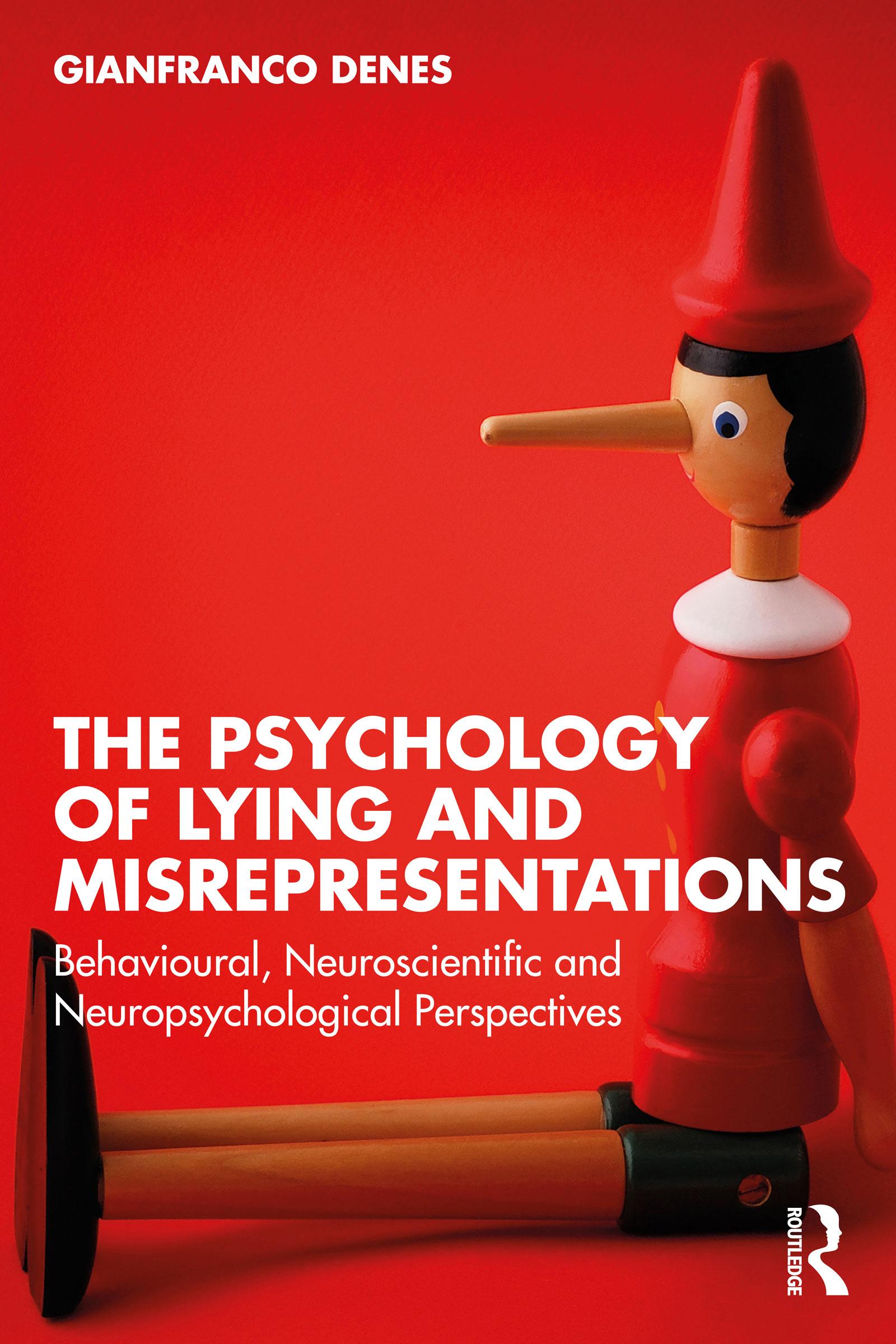
This accessible yet scholarly book focuses on the study of the psychology of lying and misrepresentation, exploring the analysis of the cognitive and neural mechanisms that allow the construction of a false response, both consciously and as a consequence of a brain injury. Drawing on perspectives from experimental, neuropsychological and developmental psychology as well as philosophy, the book examines the mechanisms that allow us all to learn to lie and use lies for different ends and in everyday life.
The Psychology of Lying and Misrepresentations opens with an introductory chapter on lies and the processes underlying their production. It goes on to examine our innate desire to believe, and the clinical and technical methods used to determine whether someone is lying or telling the truth. The book takes a closer look at false memories and self-deception and the reasons behind their establishment and success in an individual’s life. It then moves on from focusing on the individual to discuss the lies directed towards the collective and puts forth the questions around false news and its sustenance over time. The concluding chapters focus on memory disorders resulting from brain damage and false beliefs resulting from an expression of functional damage to specific neural systems.
This book will be of value to researchers in a range of disciplines interested in all aspects of lying, deception, and misrepresentation, as well as experts in forensic study.
Betal nemt med kort, Klarna, Apple Pay eller Google Pay. Ikke tilfreds? Du har altid 14 dages fortrydelsesret. Læs mere i vores vilkår. Har du spørgsmål, så send os en mail på hello@memmo.org.
Memmo gør det nemmere at studere – uanset hvor du er i verden. Hos os samler du dine kursusbøger og smarte studieværktøjer ét sted: resuméer, quizzer, podcasts og flashcards. Og så er der Ted, din studieven, der svarer på alt, du undrer dig over. Over 50 000 studerende studerer allerede her – bygget til at hjælpe dig med at lære hurtigere og stresse mindre.