
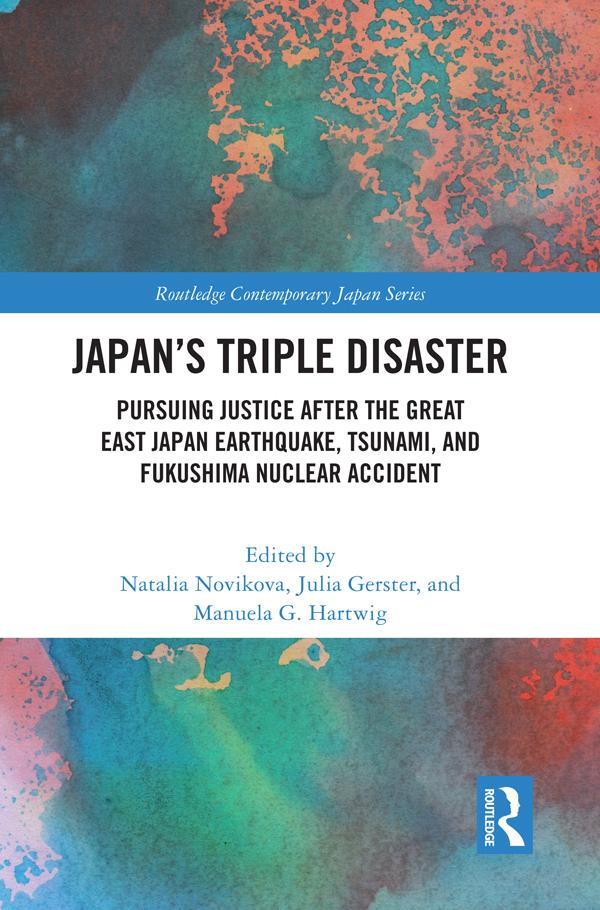
The authors of this volume discuss questions of disaster and justice from various interdisciplinary vantage points, including public policy, science and technology studies, law, gender, sociology and psychology, social and cultural anthropology, town planning and tourism.
The term "natural" disasters is a misnomer; cataclysmic natural events that impact humans can often be anticipated and their consequences should be prevented – the failure to do so is a failure of politics, policy and risk planning. Presenting research on more than a decade after the Great East Japan Earthquake, the chapters highlight not only the manifold challenges in the direct disaster response and policymaking but also the difficulties of "just" long- term recovery. Arguing for just distribution, recognition and participation, this volume provides a diversity of perspectives on these issues as experienced after the 2011 disasters through detailed and nuanced analyses presented by early career researchers and senior academics coming from various countries and continents of the world. The insights of this volume galvanise the discussion of disaster governance and highlight the variety of disaster (in)justices and the ways disasters force people to contest and reimagine their relationships with their countries, neighborhoods, families, and friends.
A valuable read for scholars and students researching issues related to mass emergencies, justice theory and civil activism.
Betal nemt med kort, Klarna, Apple Pay eller Google Pay. Ikke tilfreds? Du har altid 14 dages fortrydelsesret. Læs mere i vores vilkår. Har du spørgsmål, så send os en mail på hello@memmo.org.
Memmo gør det nemmere at studere – uanset hvor du er i verden. Hos os samler du dine kursusbøger og smarte studieværktøjer ét sted: resuméer, quizzer, podcasts og flashcards. Og så er der Ted, din studieven, der svarer på alt, du undrer dig over. Over 50 000 studerende studerer allerede her – bygget til at hjælpe dig med at lære hurtigere og stresse mindre.