
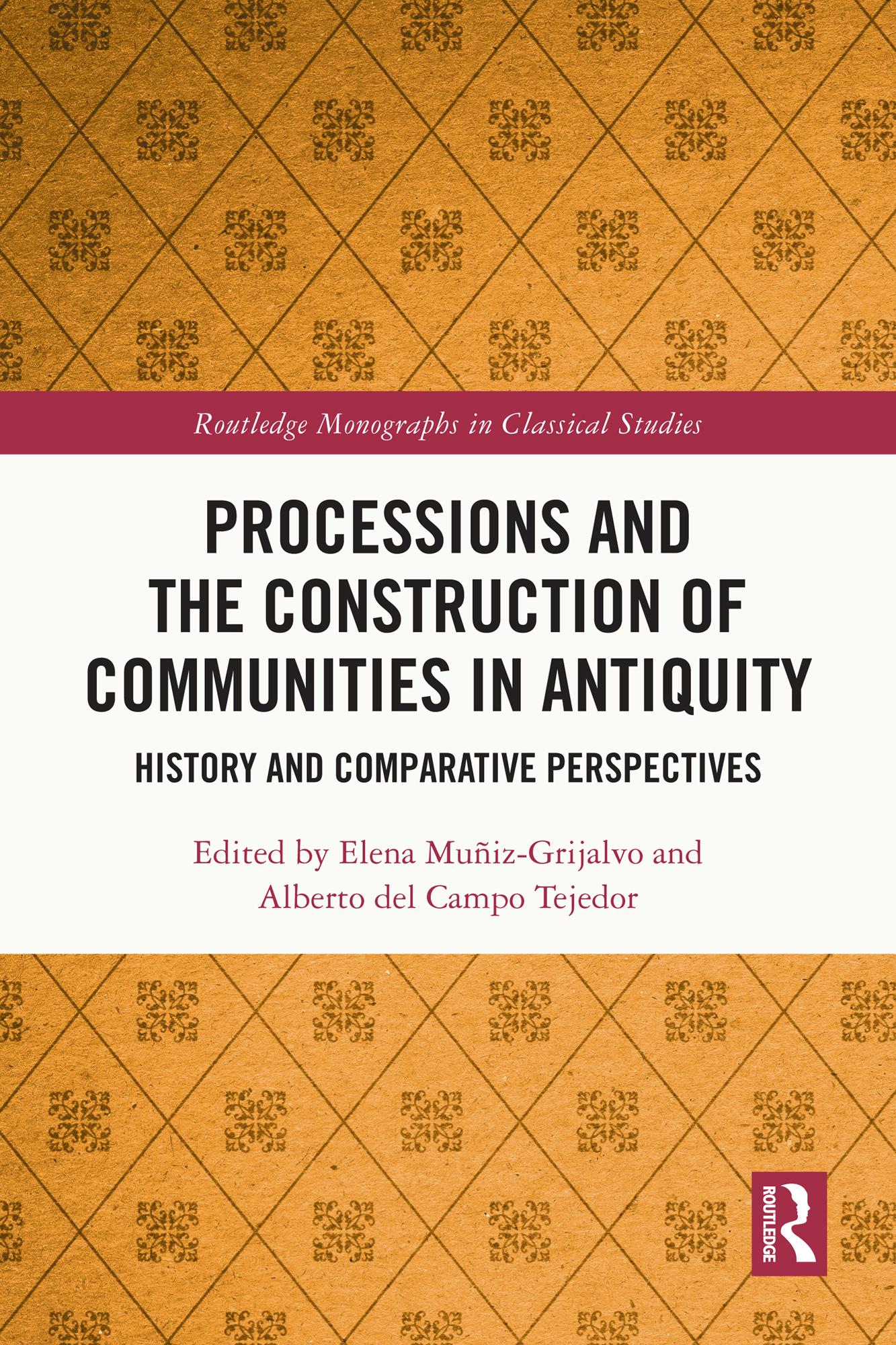
This volume elucidates how processions, from antiquity to the present, contribute to creating consensus with regards to both political power and communitarian experiences.
Many classical sources often only tangentially allude to processions, focusing instead on other ritual moments, such as sacrifice. This book adopts a comparative approach, bringing together historians of antiquity and later periods as well as social anthropologists working on contemporary societies, analysing both ancient and modern examples of how rituals, symbols, actors, and spectators interact in the construction of communities. The different examples explored in this study illustrate the performative capacity of processions to construct reality: the protagonism of image and movement, the design of cultic itineraries, and the active participation of members of the public. In studying these examples, readers develop an understanding of how power is exercised and perceived, the extent of its legitimacy, and the limits of community in a variety of case studies.
Processions and the Construction of Communities in Antiquity is of interest to students and scholars of the classical and early Christian worlds, especially those working on cult, religion, and community formation. The volume also appeals to social anthropologists interested in these issues across a broader chronology.
Betal nemt med kort, Klarna, Apple Pay eller Google Pay. Ikke tilfreds? Du har altid 14 dages fortrydelsesret. Læs mere i vores vilkår. Har du spørgsmål, så send os en mail på hello@memmo.org.
Memmo gør det nemmere at studere – uanset hvor du er i verden. Hos os samler du dine kursusbøger og smarte studieværktøjer ét sted: resuméer, quizzer, podcasts og flashcards. Og så er der Ted, din studieven, der svarer på alt, du undrer dig over. Over 50 000 studerende studerer allerede her – bygget til at hjælpe dig med at lære hurtigere og stresse mindre.