
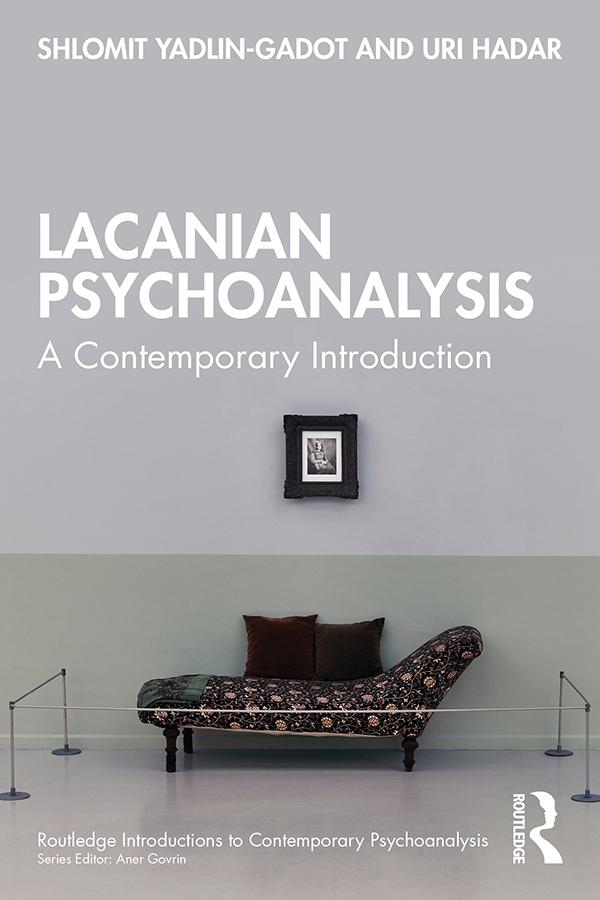
Lacanian Psychoanalysis: A Contemporary Introduction sees Shlomit Yadlin-Gadot and Uri Hadar provide an original approach to the elaborate and complex world of Jacques Lacan, one of psychoanalysis’s most innovative thinkers.
This succinct introductory volume offers a fresh exposition of Lacanian thought, marking the philosophic influences and sensibilities that shaped it and presenting its ideas and concepts in a simple language. Illustrations that range from the clinical and cultural to daily contemporary experience enliven the theory and make it easily accessible. The Lacanian psyche is thoroughly explained and described, unfolding as a drama of desire and jouissance, of hopes and disillusions. Its elusive subject is predicated upon otherness and decentred by its various forms: language and culture, meaningful people and the body. From this perspective, the authors illustrate how Lacan showed that love, sex, politics and therapy always involve the desire to be with the other but, at the same time, to be free of her.
Part of the Routledge Introductions to Contemporary Psychoanalysis series, this book is a must-read for psychoanalysts, students and scholars familiar with Lacan’s ideas, as well as those approaching his theories for the first time. Lacan’s unique and revolutionary understanding of human experience will benefit any scholar of human subjectivity, including art critics, cultural theorists, political commentators and academics in the humanities and social sciences.
Betal nemt med kort, Klarna, Apple Pay eller Google Pay. Ikke tilfreds? Du har altid 14 dages fortrydelsesret. Læs mere i vores vilkår. Har du spørgsmål, så send os en mail på hello@memmo.org.
Memmo gør det nemmere at studere – uanset hvor du er i verden. Hos os samler du dine kursusbøger og smarte studieværktøjer ét sted: resuméer, quizzer, podcasts og flashcards. Og så er der Ted, din studieven, der svarer på alt, du undrer dig over. Over 50 000 studerende studerer allerede her – bygget til at hjælpe dig med at lære hurtigere og stresse mindre.