
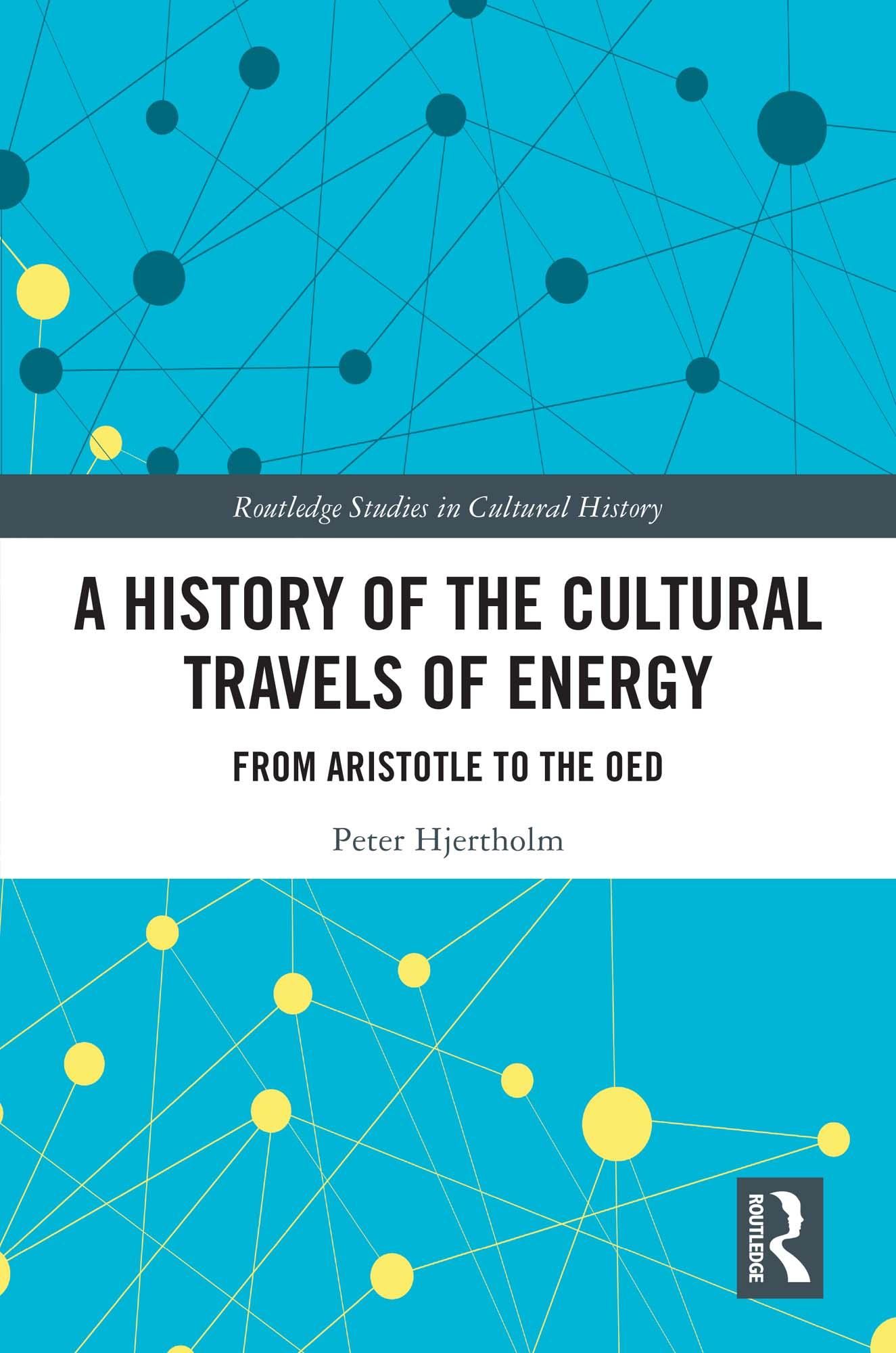
This book offers a cultural history of the travels of energy in the English language, from its origins in Aristotle’s ontology, where it referred to the activity-of-being, through its English usage as a way to speak about the inherent nature of things, to its adoption as a name for the mechanics of motion (capacity for work).
A distinguished literature deals with energy as matter of science history. But this literature fails to adequately answer a historical question about the rise of the science of energy: How did the commonplace word ‘energy’ end up becoming a concept in science? This account differs in important ways from the history of the word in the Oxford English Dictionary. Discovering the origins and early travels of energy is essential for understanding how the word was borrowed into physics, and therefore a cultural history of energy is a necessary companion to the science history of the term. It is important that modern scholars in a variety of fields be aware that energy did not always have a scientific content. The absence of that awareness can lead to, have led to, anachronistic interpretations of energy in historical sources from before the 1860s.
A History of the Cultural Travels of Energy will be useful for those interested in the history of science and technology, cultural history, and linguistics.
Betal nemt med kort, Klarna, Apple Pay eller Google Pay. Ikke tilfreds? Du har altid 14 dages fortrydelsesret. Læs mere i vores vilkår. Har du spørgsmål, så send os en mail på hello@memmo.org.
Memmo gør det nemmere at studere – uanset hvor du er i verden. Hos os samler du dine kursusbøger og smarte studieværktøjer ét sted: resuméer, quizzer, podcasts og flashcards. Og så er der Ted, din studieven, der svarer på alt, du undrer dig over. Over 50 000 studerende studerer allerede her – bygget til at hjælpe dig med at lære hurtigere og stresse mindre.