
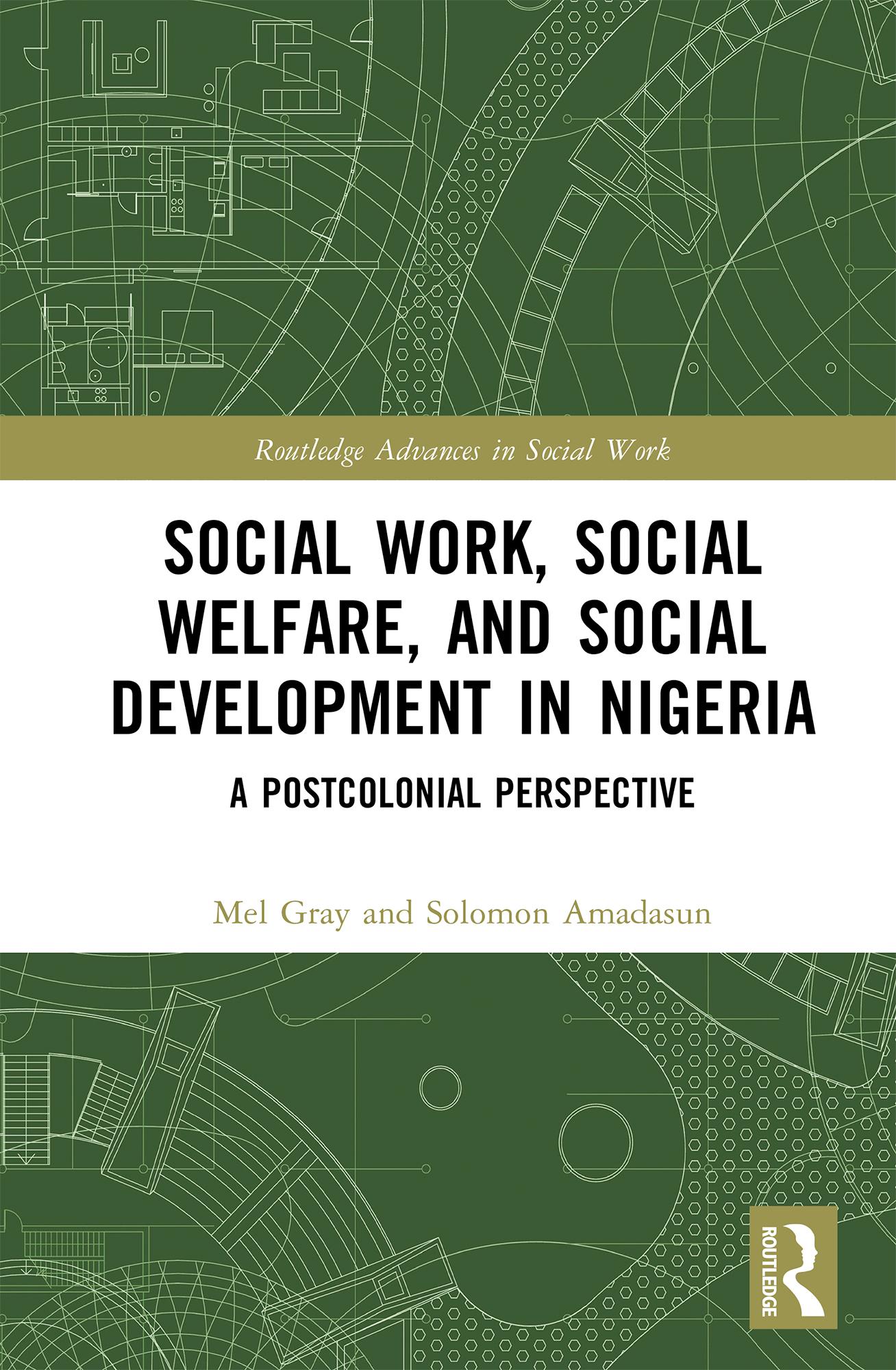
This groundbreaking book provides a comprehensive account of social work, social welfare, and social development in Nigeria from a postcolonial perspective. It examines the historical development of social work and social welfare and the colonial legacies affecting contemporary social welfare provision, development planning, social work practice, and social work education.
Against this historical backdrop, it seeks to understand the position of social work within Nigeria’s minimalist structure of welfare provision and the reasons why social work struggles for legitimacy and recognition today. It covers contexts of social work practice, including child welfare, juvenile justice, disabilities, mental health, and ageing, as well as areas of development-related problems and humanitarian assistance as new areas of practice for social workers, including internally displaced and trafficked people, and their impact on women and children. It seeks to understand Nigeria’s ethnoreligious diversity and indigenous cultural heritage to inform culturally appropriate social work practice.
This book offers a global audience insight into Nigeria’s developmental issues and problems and a local audience – social science and human service researchers, educators, practitioners, students, and policymakers - a glimpse of what’s possible when people work together toward a common goal.
It will be of interest to all scholars and students of social work, development studies and social policy.
Betal nemt med kort, Klarna, Apple Pay eller Google Pay. Ikke tilfreds? Du har altid 14 dages fortrydelsesret. Læs mere i vores vilkår. Har du spørgsmål, så send os en mail på hello@memmo.org.
Memmo gør det nemmere at studere – uanset hvor du er i verden. Hos os samler du dine kursusbøger og smarte studieværktøjer ét sted: resuméer, quizzer, podcasts og flashcards. Og så er der Ted, din studieven, der svarer på alt, du undrer dig over. Over 50 000 studerende studerer allerede her – bygget til at hjælpe dig med at lære hurtigere og stresse mindre.