
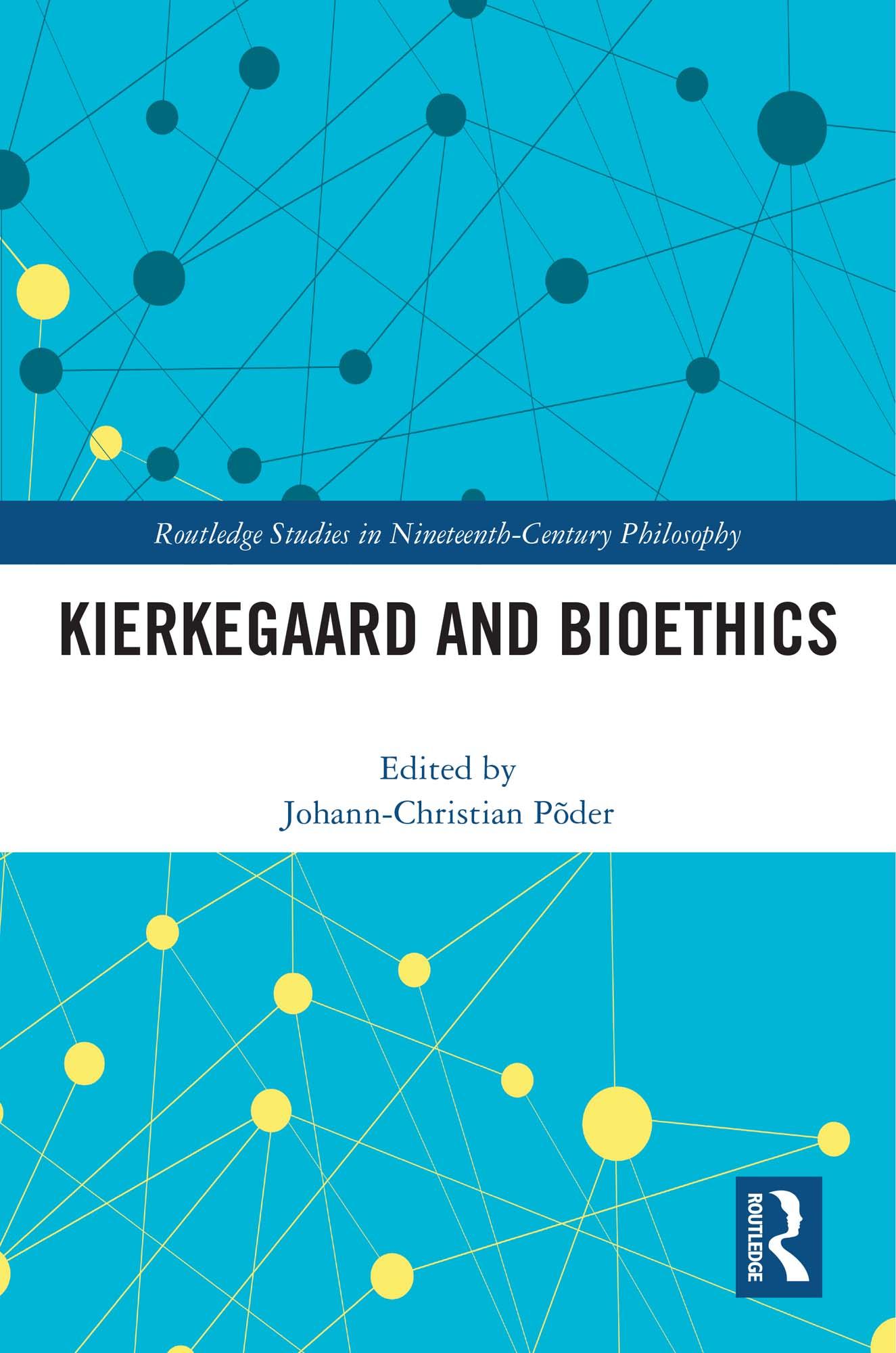
This book explores Kierkegaard’s significance for bioethics and discusses how Kierkegaard’s existential thinking can enrich and advance current bioethical debates.
A bioethics inspired by Kierkegaard is not focused primarily on ethical codes, principles, or cases, but on the existential 'how' of our medical situation. Such a perspective focuses on the formative ethical experiences that an individual can have in relation to oneself and others when dealing with medical decisions, interventions, and information. The chapters in this volume explore questions like: What happens when medicine and bioethics meet Kierkegaard? How might Kierkegaard’s writings and thoughts contribute to contemporary issues in medicine? Do we need an existential turn in bioethics? They offer theoretical reflections on how Kierkegaard’s existential thinking might contribute to bioethics and apply Kierkegaardian concepts to debates on health and disease, predictive medicine and enhancement, mental illness and trauma, COVID-19, and gender identity.
Kierkegaard and Bioethics will be of interest to scholars and advanced students working on Kierkegaard, bioethics, moral philosophy, existential ethics, religious ethics, and the medical humanities.
Betal nemt med kort, Klarna, Apple Pay eller Google Pay. Ikke tilfreds? Du har altid 14 dages fortrydelsesret. Læs mere i vores vilkår. Har du spørgsmål, så send os en mail på hello@memmo.org.
Memmo gør det nemmere at studere – uanset hvor du er i verden. Hos os samler du dine kursusbøger og smarte studieværktøjer ét sted: resuméer, quizzer, podcasts og flashcards. Og så er der Ted, din studieven, der svarer på alt, du undrer dig over. Over 50 000 studerende studerer allerede her – bygget til at hjælpe dig med at lære hurtigere og stresse mindre.