
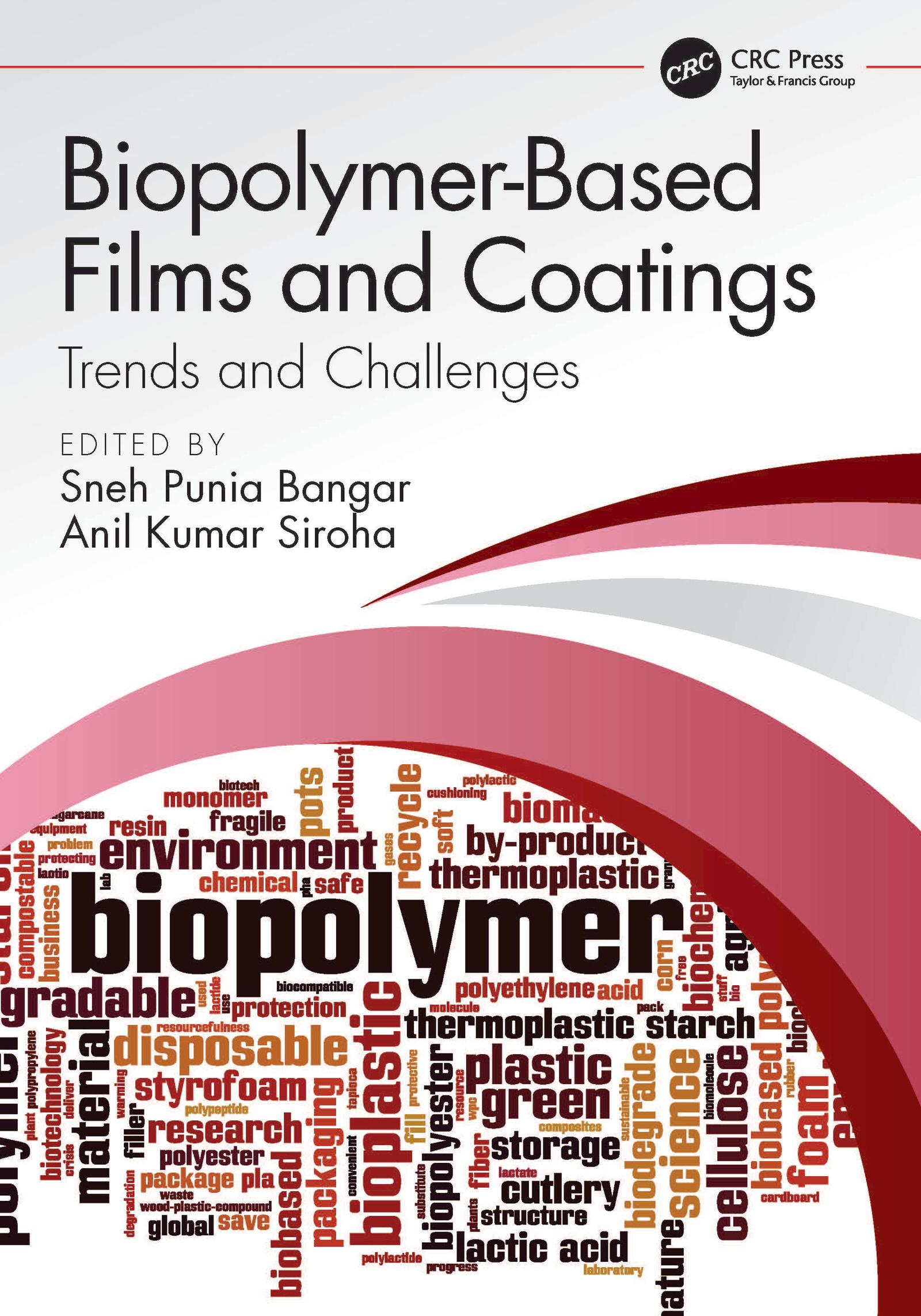
With the growing concern for the environment and the rising price of crude oil, there is increasing demand for non-petroleum-based polymers from renewable resources. Biopolymer films have been regarded as potential replacements for synthetic films in food packaging due to a strong marketing trend toward environmentally friendly materials. Biopolymer-based films and coatings display good barrier properties, flexibility, transparency, economic profitability, and environmental compatibility. Therefore, they have successfully been used for packaging various food products.
Biopolymer-Based Films and Coatings: Trends and Challenges elaborates on the recent methods and ingredients for making biodegradable films and coatings, as well as the current requirements for food security and environmental issues. This book also explores films and coatings prepared with essential oils, antimicrobial substances, and bioactive components that make up this active packaging. Films and coating chapters are based on biopolymers used to prepare films and coatings, that is, carbohydrates, lipids, proteins, and so on. This book provides a platform for researchers and industrialists on the basic and advanced concepts of films and coatings.
Key Features
- Provides a comprehensive analysis of recent findings on biopolymers (carbohydrate-, protein-, and lipid-) based films and coatings
- Contains a wealth of new information on the properties, functionality, and applications of films and coatings
- Presents possible active and functional components and ingredients for developing films and coatings.
- Guides start-up researchers on where to start the latest research work in packaging
It has been estimated that the global production of bioplastics is set to hike from ~2.11 in 2020 to ~2.87 million tonnes in 2025. Further, the demand for fresh, ready-to-eat, or semi-finished foods is increasing, and the need to maintain food safety and quality further exacerbates the challenges in the supply chain, especially with the globalization of food trade and the use of centralized processing facilities for food distribution. It is an urgent requirement to increase shelf life and reduce food product loss. Considering the great market demand for biodegradable material-based packaging systems, this book comes at an opportune time to enable researchers and food scientists to develop suitable solutions considering the sustainability and economic feasibility of the process.
Betal nemt med kort, Klarna, Apple Pay eller Google Pay. Ikke tilfreds? Du har altid 14 dages fortrydelsesret. Læs mere i vores vilkår. Har du spørgsmål, så send os en mail på hello@memmo.org.
Memmo gør det nemmere at studere – uanset hvor du er i verden. Hos os samler du dine kursusbøger og smarte studieværktøjer ét sted: resuméer, quizzer, podcasts og flashcards. Og så er der Ted, din studieven, der svarer på alt, du undrer dig over. Over 50 000 studerende studerer allerede her – bygget til at hjælpe dig med at lære hurtigere og stresse mindre.