
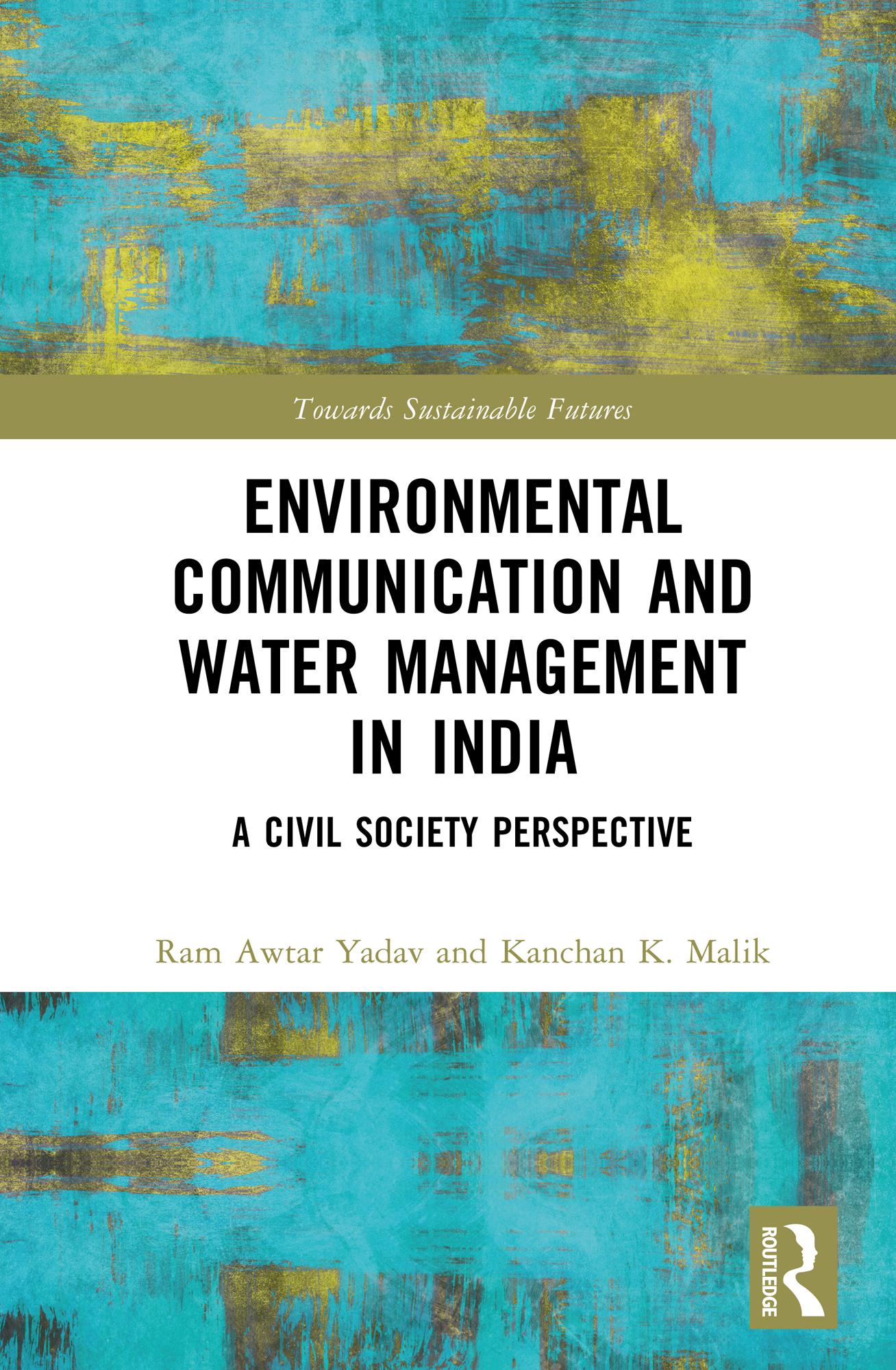
This book analyses the underlying communication strategies and approaches of grassroots water management practices in India through a case study-based ethnographic approach.
Drawing from fieldwork experiences, this volume provides a detailed overview of Parmarth, a not-for-profit NGO, which is the case study for this research. It presents an in-depth theoretically informed analysis of data collected through multiple methods, which includes key informant interviews, focus group discussions, participant observation, and document reviews, among other approaches.
The book examines Parmarth’s strategies and processes to mobilise women as important stakeholders in the region’s water conservation initiatives. It discusses communicative actions, tactics and campaigns in water interventions and the role of various stakeholders ranging from local community members to civil society.
Accessibly written, this volume is a must-read for scholars and researchers of media and communication studies, environmental communication, ecology studies, development studies, public policy, sustainable development, water management, sociology, and political science.
Betal nemt med kort, Klarna, Apple Pay eller Google Pay. Ikke tilfreds? Du har altid 14 dages fortrydelsesret. Læs mere i vores vilkår. Har du spørgsmål, så send os en mail på hello@memmo.org.
Memmo gør det nemmere at studere – uanset hvor du er i verden. Hos os samler du dine kursusbøger og smarte studieværktøjer ét sted: resuméer, quizzer, podcasts og flashcards. Og så er der Ted, din studieven, der svarer på alt, du undrer dig over. Over 50 000 studerende studerer allerede her – bygget til at hjælpe dig med at lære hurtigere og stresse mindre.