
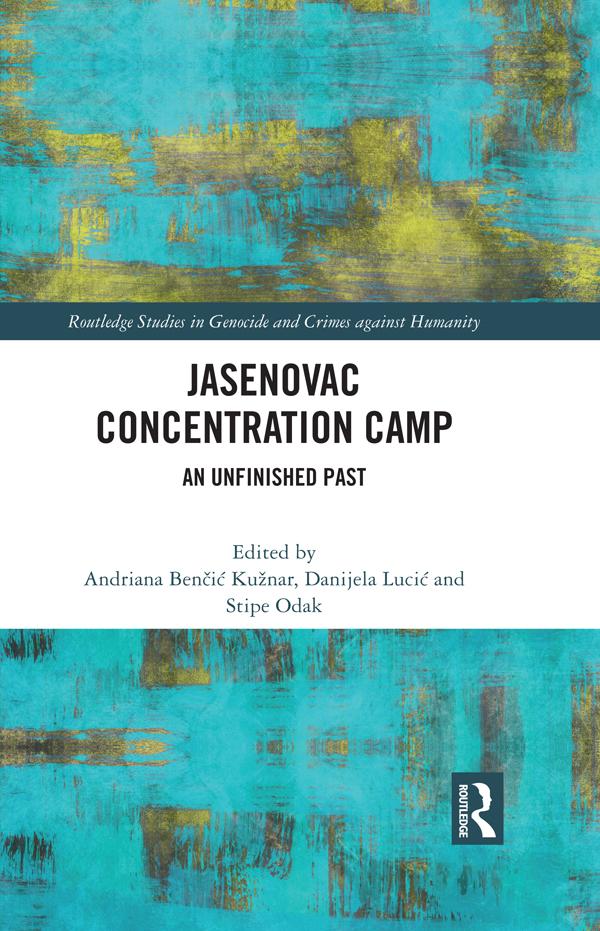
This book presents state-of-the-art discussions around the concentration camp Jasenovac. Initially one of the largest camps of the Second World War, Jasenovac became a symbol of supra-national unity during the Yugoslav period and in the 1990s re-emerged as a contested symbol of narrational victimhood. By analyzing some of the most controversial topics related to the Second World War in south-eastern Europe – the Holocaust, the genocide of Serbs and Roma, the issues of political prisoners and state-sponsored crimes, censorship during Communist Yugoslavia, the use of memory in war propaganda, and representation of tragedies in museums and art – the book allows for a greater understanding of the development of intergroup violence in the former Yugoslavia. It will be of interest to scholars and students of history, genocide studies, memory studies, and sociology as well as professionals working in the field of conflict resolution and reconciliation.
Betal nemt med kort, Klarna, Apple Pay eller Google Pay. Ikke tilfreds? Du har altid 14 dages fortrydelsesret. Læs mere i vores vilkår. Har du spørgsmål, så send os en mail på hello@memmo.org.
Memmo gør det nemmere at studere – uanset hvor du er i verden. Hos os samler du dine kursusbøger og smarte studieværktøjer ét sted: resuméer, quizzer, podcasts og flashcards. Og så er der Ted, din studieven, der svarer på alt, du undrer dig over. Over 50 000 studerende studerer allerede her – bygget til at hjælpe dig med at lære hurtigere og stresse mindre.
Du kan måske også lide
Køb bogen0