
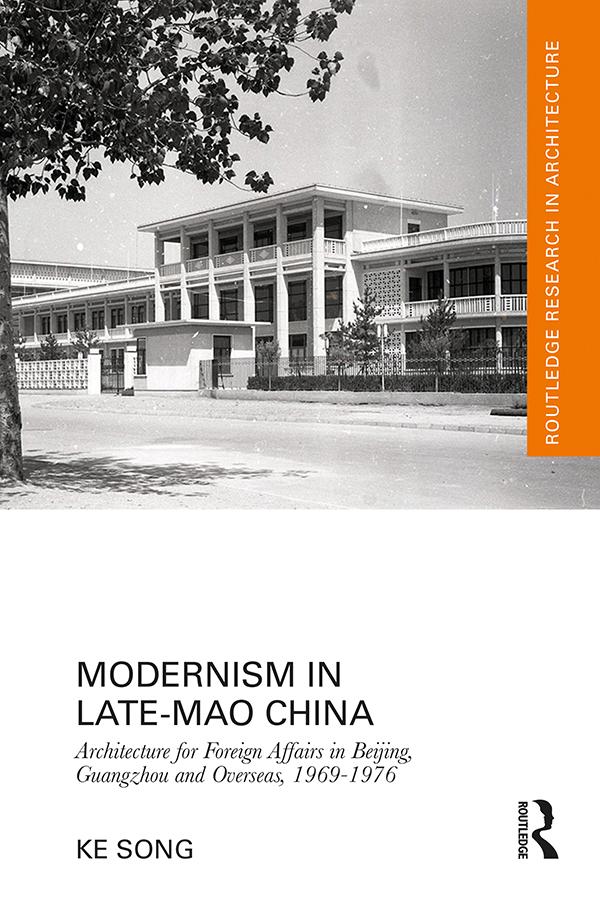
This book investigates the architectural history of China in the Mao era (1949–1976), focusing on the rise of modernism in the last seven years of the Cultural Revolution from 1969 to 1976. It highlights the new architecture of this period, exemplified by three clusters of buildings for foreign affairs, namely buildings for foreign diplomacy in Beijing, buildings for foreign trade in Guangzhou and China’s foreign aid projects overseas.
The emergence of new architecture in the early 1970s is closely associated with China’s political and diplomatic shift of the time, from a radical emphasis on ideological struggle to a dynamic balance between leftist ideology and pragmatic concerns. In this context, China’s relations with the West quickly improved, culminating with American president Richard Nixon’s visit to China in 1972. The increasing foreign affairs brought new opportunities to Chinese architects who referenced both Western modernism and Chinese architectural traditions to create a new version of Chinese modernism. The book brings dimensions of form, politics and knowledge to the analysis of architecture, to construct an understanding of architectural design as an aesthetic, political and intellectual practice.
Modernism in Late-Mao China will be an enriching and useful reference for students and scholars who are interested in the global architectural history of the twentieth century, especially Cold War modernism.
Betal nemt med kort, Klarna, Apple Pay eller Google Pay. Ikke tilfreds? Du har altid 14 dages fortrydelsesret. Læs mere i vores vilkår. Har du spørgsmål, så send os en mail på hello@memmo.org.
Memmo gør det nemmere at studere – uanset hvor du er i verden. Hos os samler du dine kursusbøger og smarte studieværktøjer ét sted: resuméer, quizzer, podcasts og flashcards. Og så er der Ted, din studieven, der svarer på alt, du undrer dig over. Over 50 000 studerende studerer allerede her – bygget til at hjælpe dig med at lære hurtigere og stresse mindre.