
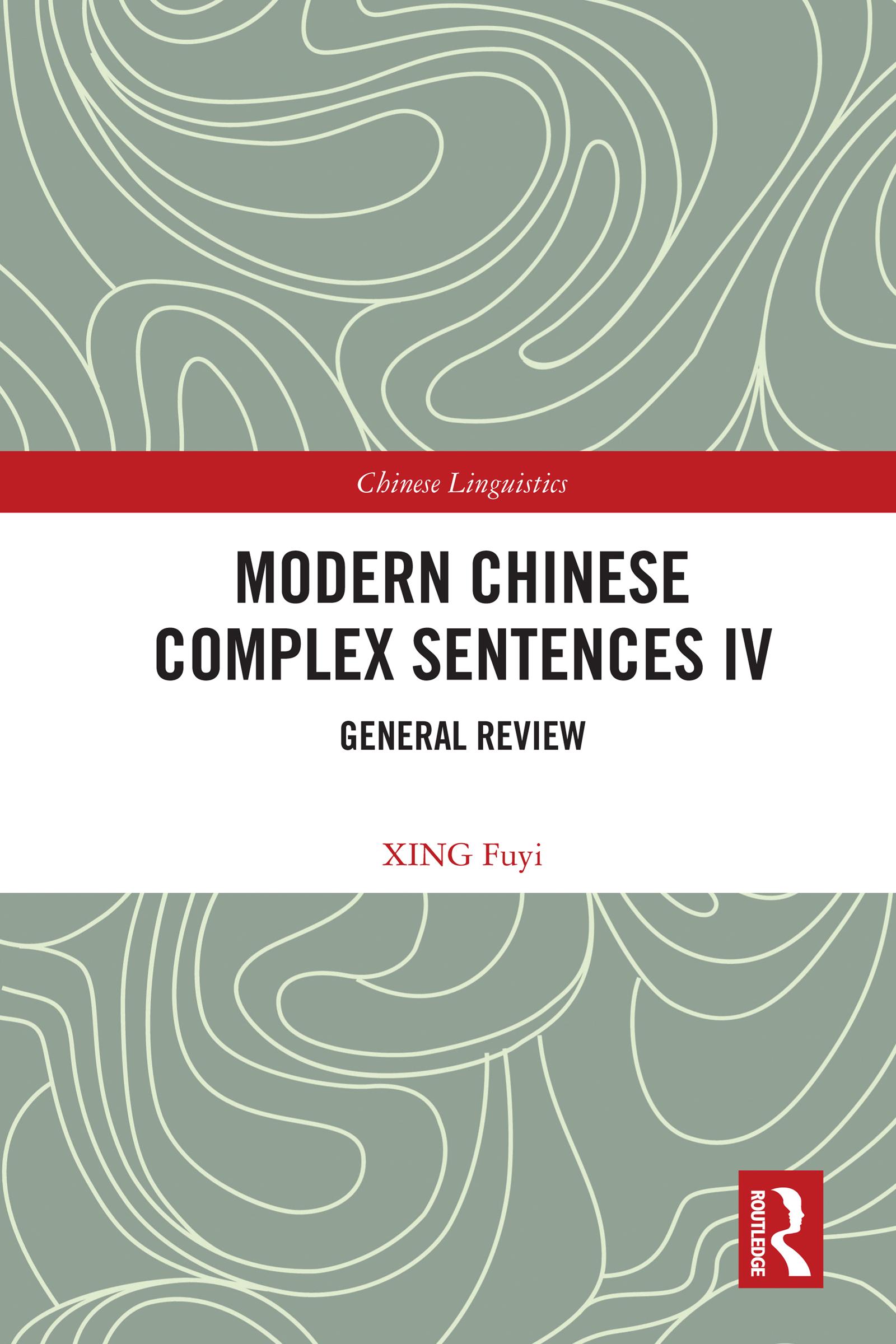
This book is the final volume of a four-volume set on modern Chinese complex sentences, assessing the key attributes, related sentence structures, and semantic and pragmatic relevance of complex sentences.
Complex sentences in modern Chinese are unique in formation and meaning. Following on from analysis on coordinate, causal and adversative types of complex sentences, the ten chapters in this volume review the characteristics of complex sentences as a whole. The author discusses the constituents, related structures, semantic and pragmatic aspects of complex sentences, covering topics such as the constraints and counter-constraints between sentence forms and semantic relationships, six type-crossover markers, distinctions between simple sentences and complex sentences, clauses formed by a noun/nominal phrase followed by le, the shǐ-structure, subject ellipsis or tacit understanding of clauses, as well as double-subject sentences, alternative question groups and their relationships with complex sentences.
The book will be a useful reference for scholars and learners interested in Chinese grammar and language information processing.
Betal nemt med kort, Klarna, Apple Pay eller Google Pay. Ikke tilfreds? Du har altid 14 dages fortrydelsesret. Læs mere i vores vilkår. Har du spørgsmål, så send os en mail på hello@memmo.org.
Memmo gør det nemmere at studere – uanset hvor du er i verden. Hos os samler du dine kursusbøger og smarte studieværktøjer ét sted: resuméer, quizzer, podcasts og flashcards. Og så er der Ted, din studieven, der svarer på alt, du undrer dig over. Over 50 000 studerende studerer allerede her – bygget til at hjælpe dig med at lære hurtigere og stresse mindre.