
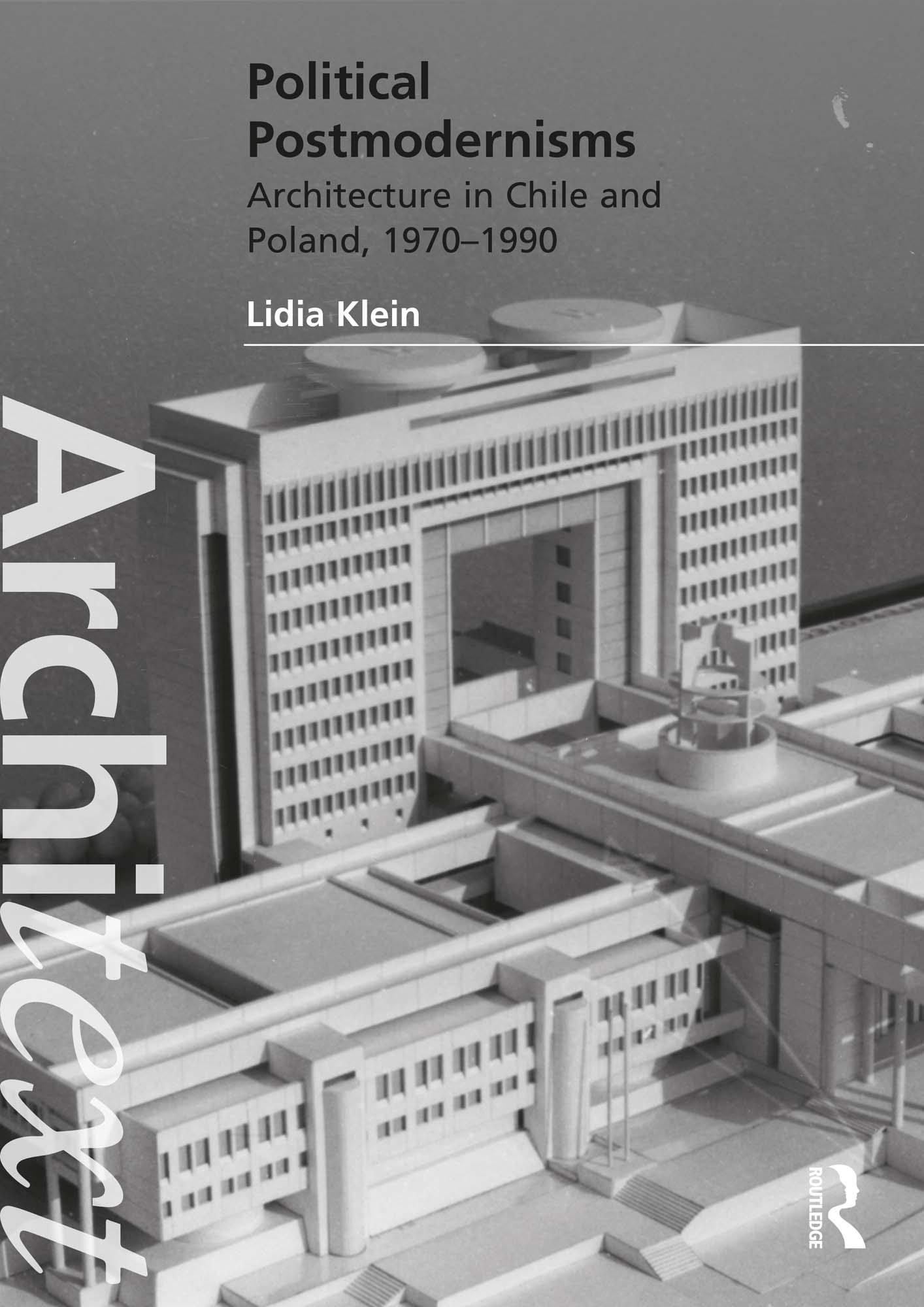
Political Postmodernisms shows how sites outside of Western Europe and North America undermine an established narrative of architecture theory and history. It focuses specifically on postmodern architecture, which is traditionally understood as embodying the flippant and apolitical aesthetics of capitalist affluence. By investigating postmodern architecture’s manifestations in the unlikely settings of Chile during the neoliberal dictatorship of Augusto Pinochet and Poland during the late socialist Polish People’s Republic, the book argues for a new account that incorporates the political roles it plays when seen in a global perspective. Political Postmodernisms has three goals. First, it challenges the familiar narrative regarding postmodern architecture as following the “cultural logic of late capitalism” (Fredric Jameson) or as a socially conservative project (Jürgen Habermas). Second, it fills in portions of Chilean and Polish architectural history that have been neglected by Chilean and Polish architectural historians themselves. Third, Political Postmodernisms shows how architecture can work as a political form – serving propagandistic purposes and functioning as part of oppositional projects. The book is projected to be of use to students and scholars in global modern and contemporary architecture history, history of urban planning, East European Studies, and Latin American Studies.
Betal nemt med kort, Klarna, Apple Pay eller Google Pay. Ikke tilfreds? Du har altid 14 dages fortrydelsesret. Læs mere i vores vilkår. Har du spørgsmål, så send os en mail på hello@memmo.org.
Memmo gør det nemmere at studere – uanset hvor du er i verden. Hos os samler du dine kursusbøger og smarte studieværktøjer ét sted: resuméer, quizzer, podcasts og flashcards. Og så er der Ted, din studieven, der svarer på alt, du undrer dig over. Over 50 000 studerende studerer allerede her – bygget til at hjælpe dig med at lære hurtigere og stresse mindre.