
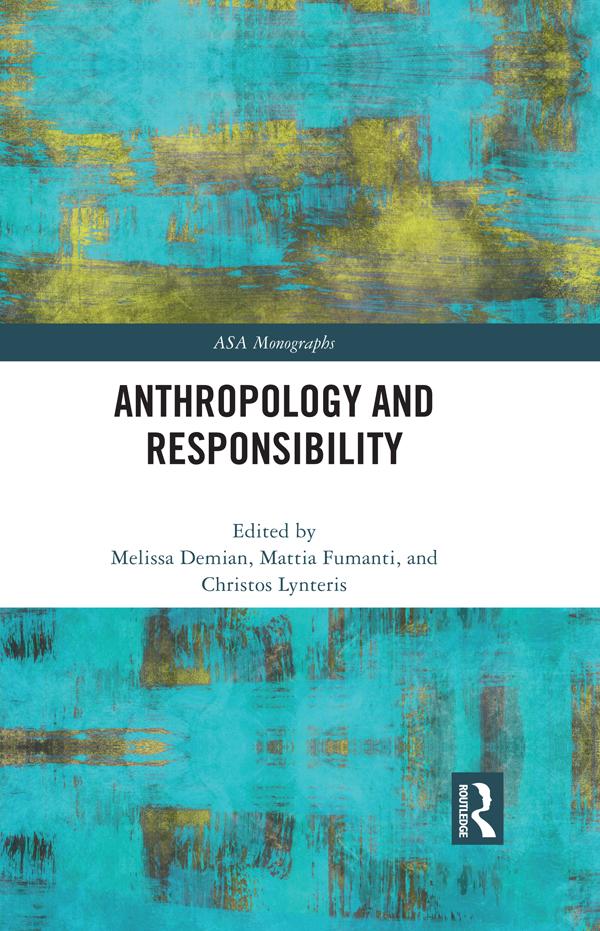
This book explores the role and implications of responsibility for anthropology, asking how responsibility is recognised and invoked in the world, what relations it draws upon, and how it comes to define notions of the person, institutional practices, ways of knowing and modes of evaluation. The category of responsibility has a long genealogy within the discipline of anthropology and it surfaces in contemporary debates as well as in anthropologists’ collaboration with other disciplines, including when anthropology is applied in fields such as development, medicine, and humanitarian response. As a category that unsettles, challenges and critically engages with political, ethical and epistemological questions, responsibility is central to anthropological theory, ethnographic practice, collaborative research, and applied engagement. With chapters focused on a variety of cultural contexts, this volume considers how anthropology can contribute to a better understanding of responsibility, including the ‘responsibility of anthropology’ and the responsibility of anthropologists to specific others.
Betal nemt med kort, Klarna, Apple Pay eller Google Pay. Ikke tilfreds? Du har altid 14 dages fortrydelsesret. Læs mere i vores vilkår. Har du spørgsmål, så send os en mail på hello@memmo.org.
Memmo gør det nemmere at studere – uanset hvor du er i verden. Hos os samler du dine kursusbøger og smarte studieværktøjer ét sted: resuméer, quizzer, podcasts og flashcards. Og så er der Ted, din studieven, der svarer på alt, du undrer dig over. Over 50 000 studerende studerer allerede her – bygget til at hjælpe dig med at lære hurtigere og stresse mindre.