
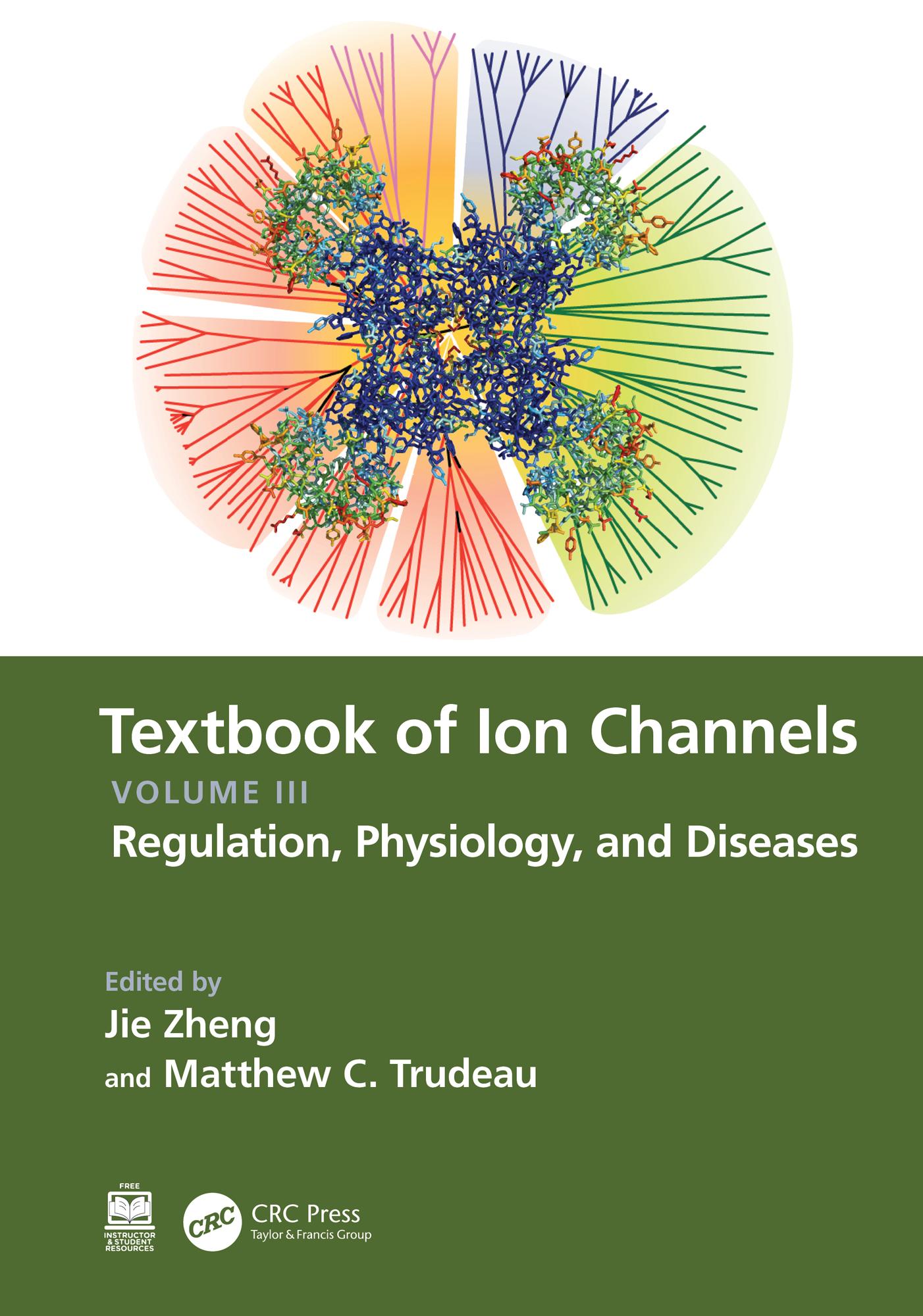
The Textbook of Ion Channels is a set of three volumes that provides a wide-ranging reference source on ion channels for students, instructors and researchers. Ion channels are mem- brane proteins that control the electrical properties of neurons and cardiac cells; medi- ate the detection and response to sensory stimuli like light, sound, odor, and taste; and regulate the response to physical stimuli like temperature and pressure. In non-excitable tissues, ion channels are instrumental for the regulation of basic salt balance that is critical for homeostasis. Ion channels are located at the surface membrane of cells, giving them the unique ability to communicate with the environment, as well as the membrane of intracellular organelles, allowing them to regulate internal homeostasis. Ion channels are fundamentally important for human health and diseases, and are important targets for pharmaceuticals in mental illness, heart disease, anesthesia, pain and other clinical appli- cations. The modern methods used in their study are powerful and diverse, ranging from single ion-channel measurement techniques to models of ion channel diseases in animals, and human clinical trials for ion channel drugs.
Volume III includes coverage of key ion channel regulators and their mechanisms, the role of ion channels working in concert in selected physiological systems, and examples of ion channel mutations and dysfunction in a selection of diseases. Chapters on ion channel regulation include splice variants, calcium–calmodulin regulation, regulation by G pro- teins, and lipids. A selection of ion channels in physiological systems includes ion chan- nels of the heart, ion channels in immune cells and their role in pancreatic beta cells and regulation of insulin secretion, and the role of channels in sperm and eggs. While disease mechanisms are integrated into the chapters of Volume II, Volume III offers special consid- eration of ion channels in epilepsy, cystic fibrosis and pain syndromes.
All three volumes give the reader an introduction to fundamental concepts needed to understand the mechanism of ion channels, a guide to the technical aspects of ion channel research, offer a modern guide to the properties of major ion channel families, and includecoverage of key examples of regulatory, physiological, and disease roles for ion channels.
Betal nemt med kort, Klarna, Apple Pay eller Google Pay. Ikke tilfreds? Du har altid 14 dages fortrydelsesret. Læs mere i vores vilkår. Har du spørgsmål, så send os en mail på hello@memmo.org.
Memmo gør det nemmere at studere – uanset hvor du er i verden. Hos os samler du dine kursusbøger og smarte studieværktøjer ét sted: resuméer, quizzer, podcasts og flashcards. Og så er der Ted, din studieven, der svarer på alt, du undrer dig over. Over 50 000 studerende studerer allerede her – bygget til at hjælpe dig med at lære hurtigere og stresse mindre.