
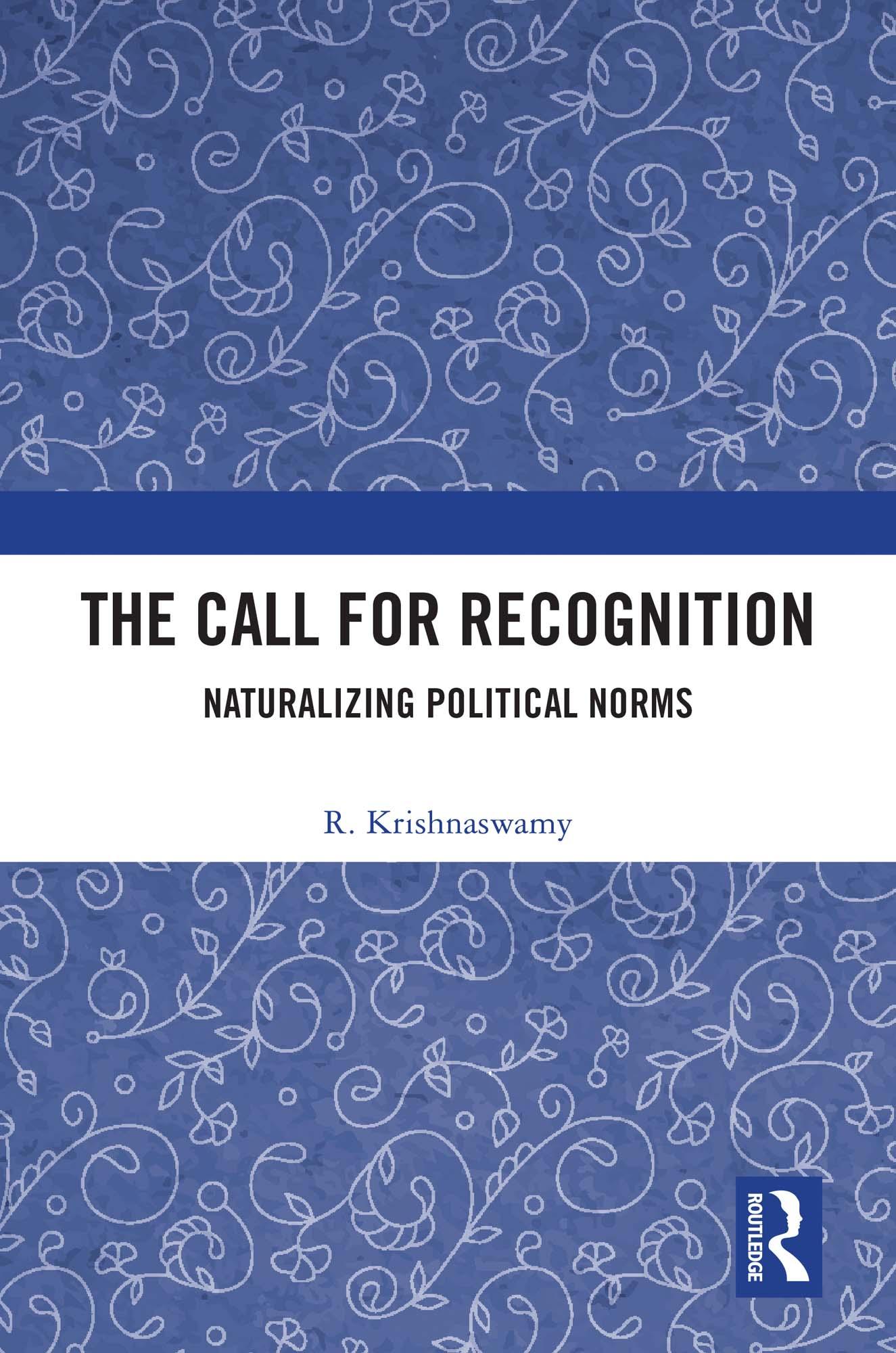
This book builds a case for how social norms are neither mere conventions nor are they merely anthropological phenomena, which are relativistic. In other words, it talks about how socio-political norms are built out of our natural social behaviour but at the same time also have objective normative validity.
The volume puts forth an alternative model called the recognitional model which can help us address some of the socio-political concerns we face in today’s world. It addresses the problem with a purely legalistic framework of addressing social injustice in that law, due its universalistic assumptions, regarding human nature, tends to glide over the particular differences that might exist between people. This book discusses how we know that in our daily lives, we value people not only because that person is a legal human being but also because that person is our father, mother, our teacher, etc. There is a whole network of acts of social respect that we engage in with the other in our social sphere which the legal framework can’t quite capture. This volume sheds light on the political consequence of legal reasoning in that it is formalistic in the sense that legal relations can’t successfully codify the immediate epistemic context from which social identities emerge.
An introspective work, this book will be of great interest to scholars and researchers of linguistics, political philosophy, law and human rights, and social theory.
Betal nemt med kort, Klarna, Apple Pay eller Google Pay. Ikke tilfreds? Du har altid 14 dages fortrydelsesret. Læs mere i vores vilkår. Har du spørgsmål, så send os en mail på hello@memmo.org.
Memmo gør det nemmere at studere – uanset hvor du er i verden. Hos os samler du dine kursusbøger og smarte studieværktøjer ét sted: resuméer, quizzer, podcasts og flashcards. Og så er der Ted, din studieven, der svarer på alt, du undrer dig over. Over 50 000 studerende studerer allerede her – bygget til at hjælpe dig med at lære hurtigere og stresse mindre.