
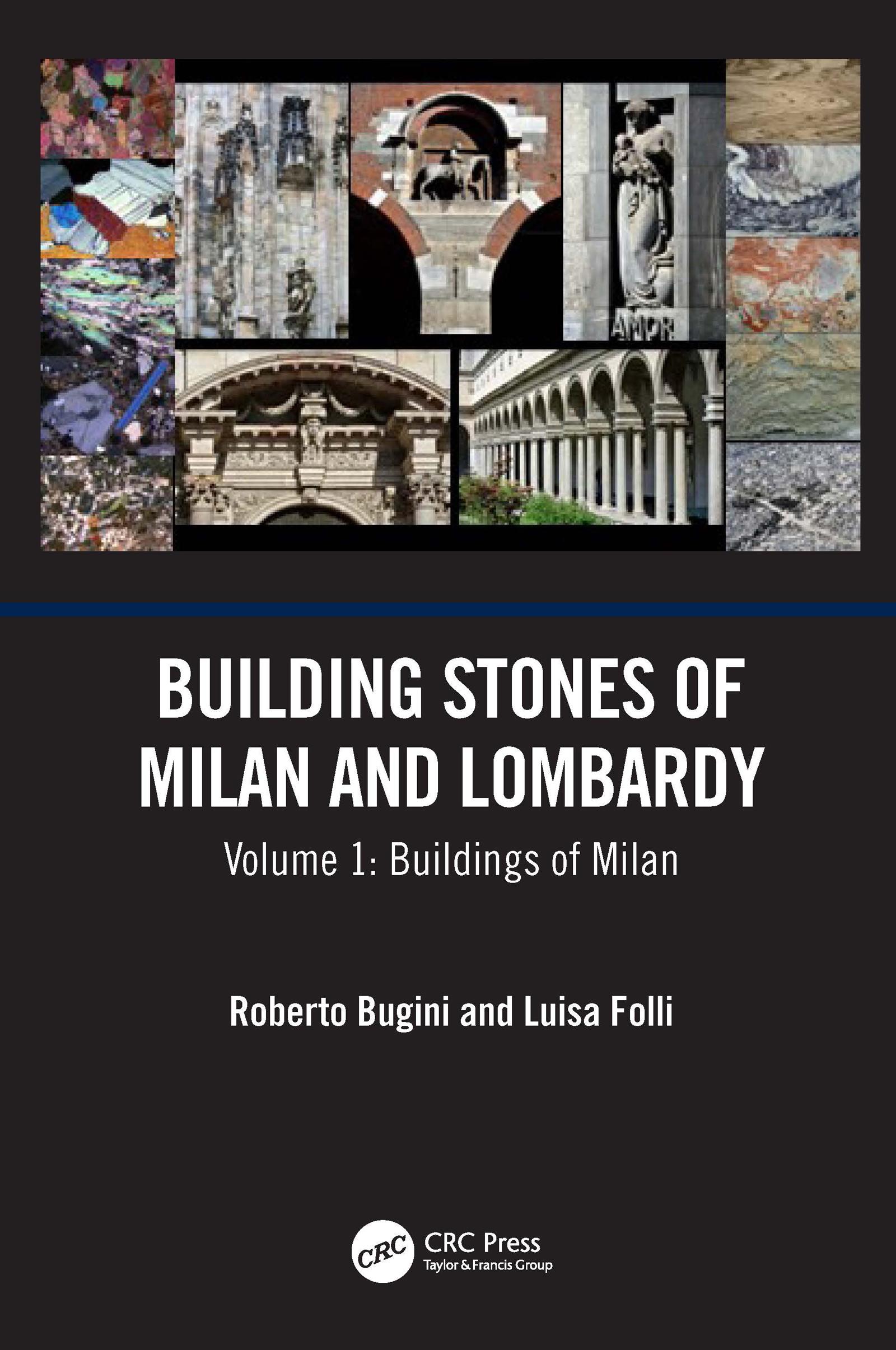
Milan has played an important role in the Italian country since the Roman period. This importance is reflected also by the diffusion of stone architecture: a persisting trait of Milan architecture was the use of different stones in the same building. Milan lies in the middle of the alluvial plain of the Po, far from the stone quarries; some waterways were dug out in order to supply the building stones from the surrounding territories.
The study of stone as a building material was significant at the end of 19th century, but then it was largely neglected by both architects and geologists. So it is significant to suggest a study about the stones employed to build in Milan (Volume 1) in relationship with a petrographic study about the features of the stones quarried in the whole Lombard territory (Volume 2).
The present volume contains a record of Milanese edifices marking the different historical periods. Each edifice is described in a "card" containing: the building history, the architect, the kind of stone employed and subdivided according to the different parts of the building and the shape of stone elements. A particular investigation is addressed to the stones used during the 20th century; a great part of them were never used before in Milan (or in Lombardy).
Betal nemt med kort, Klarna, Apple Pay eller Google Pay. Ikke tilfreds? Du har altid 14 dages fortrydelsesret. Læs mere i vores vilkår. Har du spørgsmål, så send os en mail på hello@memmo.org.
Memmo gør det nemmere at studere – uanset hvor du er i verden. Hos os samler du dine kursusbøger og smarte studieværktøjer ét sted: resuméer, quizzer, podcasts og flashcards. Og så er der Ted, din studieven, der svarer på alt, du undrer dig over. Over 50 000 studerende studerer allerede her – bygget til at hjælpe dig med at lære hurtigere og stresse mindre.