
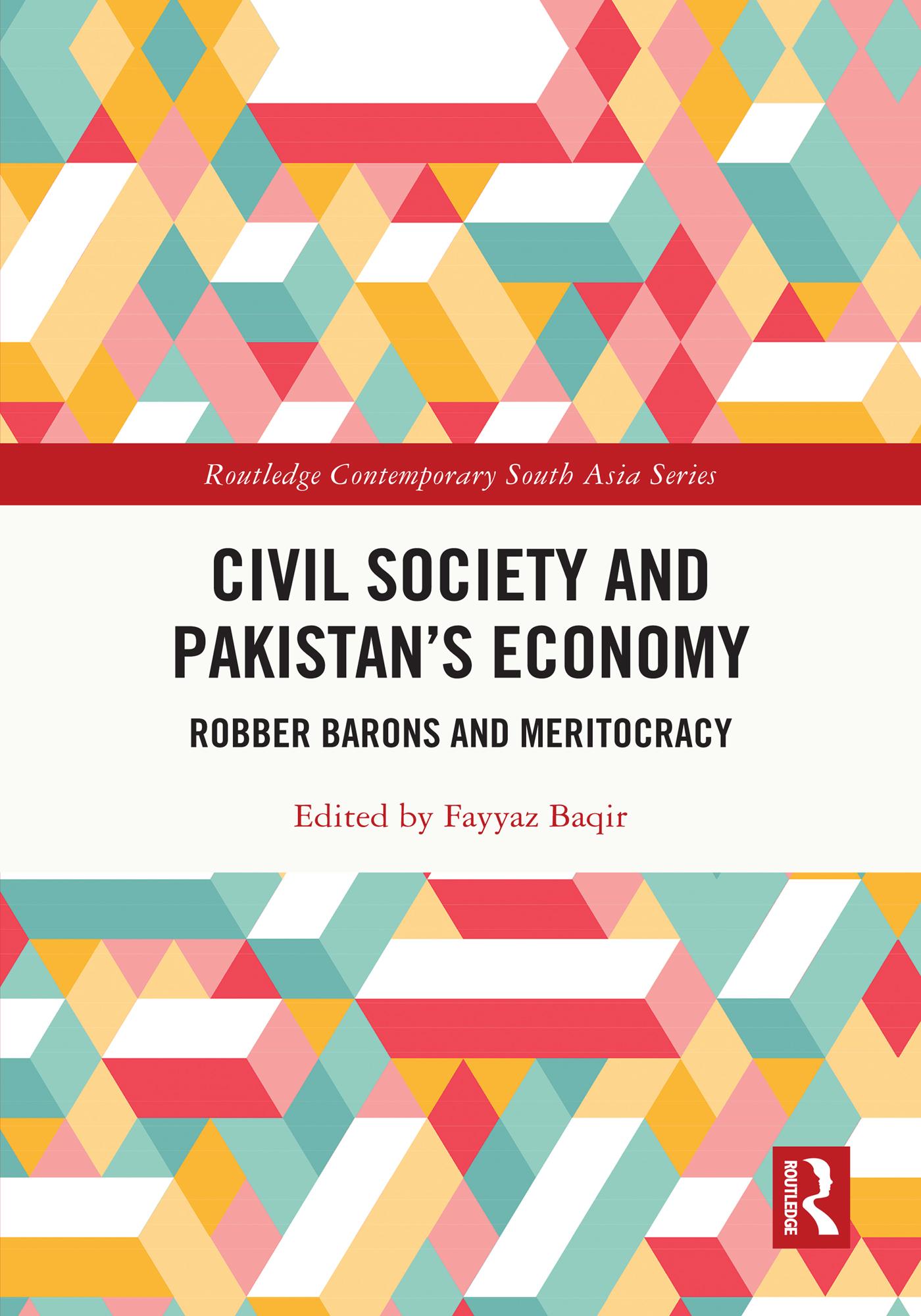
This book analyses the paradoxes of Pakistan’s economy, meritocratic domestic policy, and the role of the state and the civil society. It argues that the transition in the county’s foreign policy from geo-politics to geo-economic depends on a fundamental domestic policy transition from kleptocracy to meritocracy.
Civil Society and Pakistan’s Economy discusses how the prevalence of rent-seeking practices has undermined merit-based practices by increasing the cost of doing business and converting public loss into private profit by awarding inappropriate subsidies and imposing regressive taxes. The analyses are supported by describing the instruments and mechanisms used for rent-seeking practices and the creation of public awareness of options available to change these practices through citizen’s action and civil society engagement. The book also shows the path of transformation and the role of participation and argues that aspiring for and capturing power is not the only way to transform Pakistan.
A novel analysis depicting macro-micro linkages of encroachment of socio-economic space by the power elites and effective strategies used for its reappropriation by the people, the book will be of interest to academics researching South Asian Studies, in particular South Asian economics and politics.
Betal nemt med kort, Klarna, Apple Pay eller Google Pay. Ikke tilfreds? Du har altid 14 dages fortrydelsesret. Læs mere i vores vilkår. Har du spørgsmål, så send os en mail på hello@memmo.org.
Memmo gør det nemmere at studere – uanset hvor du er i verden. Hos os samler du dine kursusbøger og smarte studieværktøjer ét sted: resuméer, quizzer, podcasts og flashcards. Og så er der Ted, din studieven, der svarer på alt, du undrer dig over. Over 50 000 studerende studerer allerede her – bygget til at hjælpe dig med at lære hurtigere og stresse mindre.