
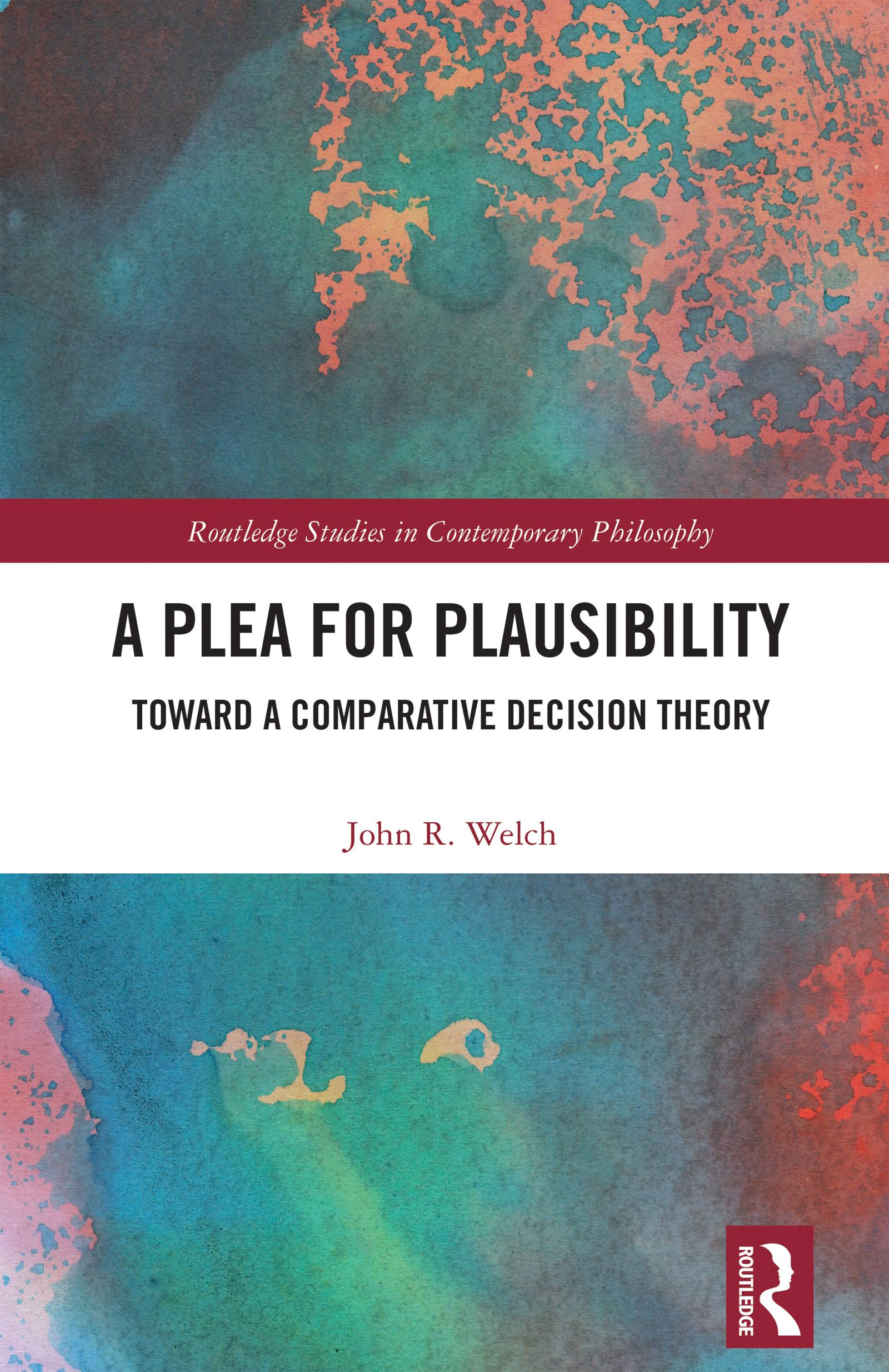
This book develops an original theory of decision-making based on the concept of plausibility. The author advocates plausible reasoning as a general philosophical method and demonstrates how it can be applied to problems in argumentation theory, scientific theory choice, risk management, ethics, law, economics, and epistemology.
Human decisions are conditioned by formidable uncertainty. The standard resource for dealing rationally with uncertainty is the mathematical concept of probability. The probability calculus is well-known, but since the numerical demands for applying it cannot usually be met, it is not widely applicable. By contrast, the concept of plausibility is widely applicable, but it is little known. This book relies on a generalized concept of plausibility whose strength is its adaptability. The adaptability is due to a novel form of decision theory that takes plausibilities as inputs. This form of decision theory remains applicable to decisions informed by sharp probabilities and utilities, but it can also be applied to decisions that must be made without them. It can aid in the rationally critical enterprise of discriminating good arguments from bad, and this can foster philosophical progress.
A Plea for Plausibility will be of interest to scholars and advanced students working in argumentation theory, philosophy of science, ethics, epistemology, economics, law, and risk management.
Betal nemt med kort, Klarna, Apple Pay eller Google Pay. Ikke tilfreds? Du har altid 14 dages fortrydelsesret. Læs mere i vores vilkår. Har du spørgsmål, så send os en mail på hello@memmo.org.
Memmo gør det nemmere at studere – uanset hvor du er i verden. Hos os samler du dine kursusbøger og smarte studieværktøjer ét sted: resuméer, quizzer, podcasts og flashcards. Og så er der Ted, din studieven, der svarer på alt, du undrer dig over. Over 50 000 studerende studerer allerede her – bygget til at hjælpe dig med at lære hurtigere og stresse mindre.