
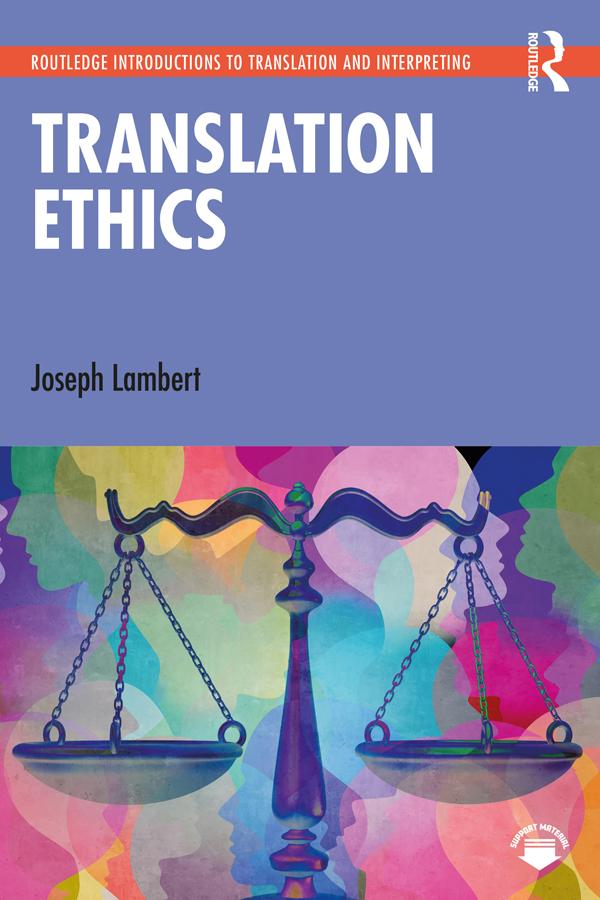
Translation Ethics introduces the topic of ethics for students, researchers, and professional translators. Based on a successful course and written by an experienced instructor, the Introduction and nine core chapters offer an accessible examination of a wide range of interlocking topic areas, which combine to form a cohesive whole, guiding students through the key debates.
Built upon a theoretical background founded in philosophy and moral theory, it outlines the main contributions in the area and traces the development of thought on ethics from absolutism to relativism, or, from staunchly-argued textual viewpoints to current lines of thought placing the translator as agent and an active – even interventionary – mediator. The textbook then examines the place of ethical enquiry in the context of professional translation, critiquing provision such as codes of ethics. Each chapter includes key discussion points, suggested topics for essays, presentations, or in-class debates, and an array of contextualised examples and case studies. Additional resources, including videos, weblinks, online activities, and PowerPoint slide presentations on the Routledge Translation studies portal provide valuable extra pedagogical support.
This wide-ranging and accessible textbook has been carefully designed to be key reading for a wide range of courses, including distance-learning courses, from translation and interpreting ethics to translation theory and practice.
Betal nemt med kort, Klarna, Apple Pay eller Google Pay. Ikke tilfreds? Du har altid 14 dages fortrydelsesret. Læs mere i vores vilkår. Har du spørgsmål, så send os en mail på hello@memmo.org.
Memmo gør det nemmere at studere – uanset hvor du er i verden. Hos os samler du dine kursusbøger og smarte studieværktøjer ét sted: resuméer, quizzer, podcasts og flashcards. Og så er der Ted, din studieven, der svarer på alt, du undrer dig over. Over 50 000 studerende studerer allerede her – bygget til at hjælpe dig med at lære hurtigere og stresse mindre.