
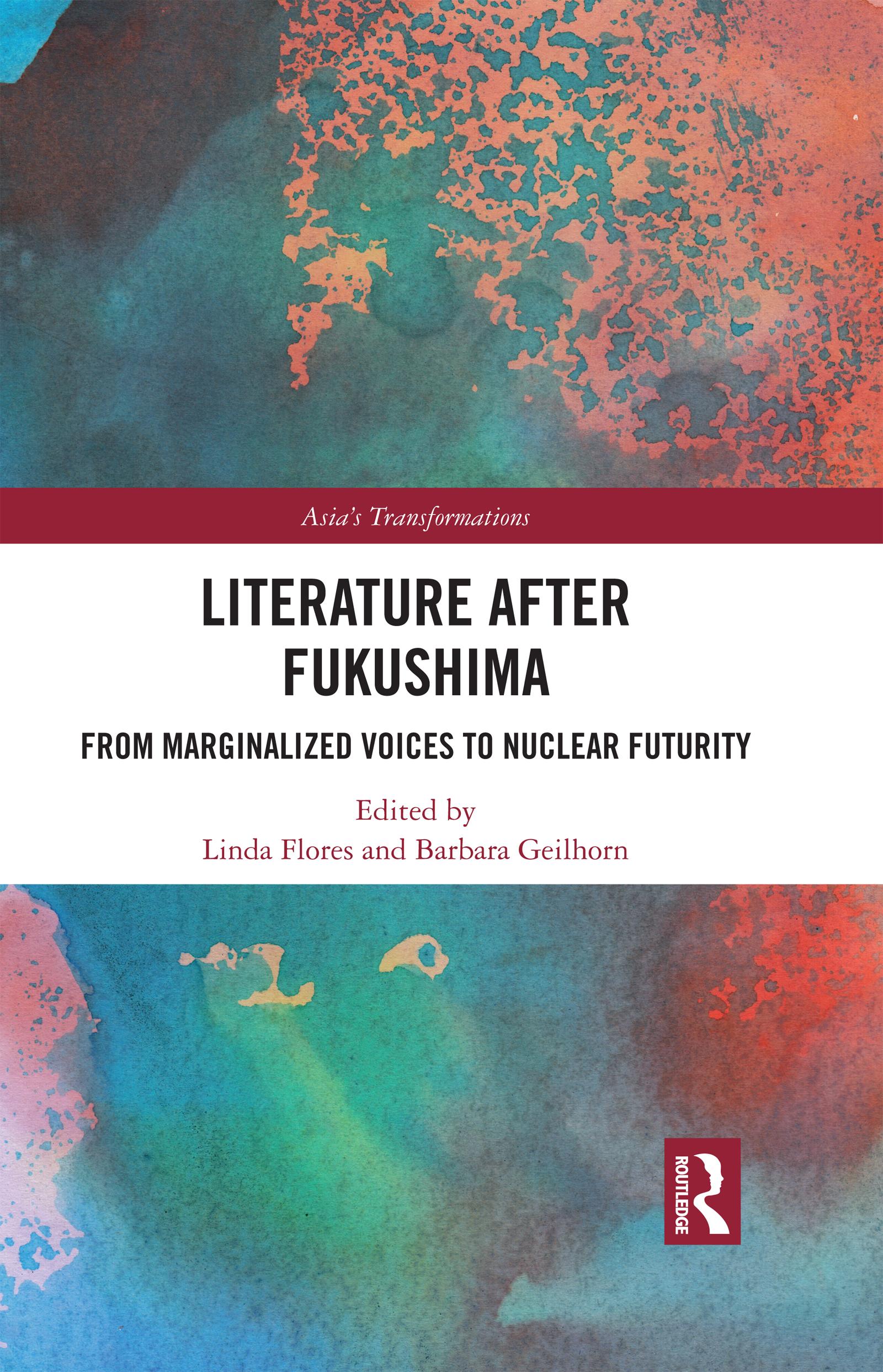
Literature after Fukushima examines how aesthetic representation contributes to a critical understanding of the 3.11 triple disaster – the Great East Japan earthquake, tsunami, and multiple meltdowns at the Fukushima Daiichi Nuclear Power Plant.
Through an examination of key works in the expanding corpus of 3.11 literature the book explores how the disaster—both its immediate aftereffects and its continued unfolding—reframed discourse in various areas such as trauma studies, eco-criticism, regional identity, food safety, civil society, and beyond. Individual chapters discuss aspects of these perspectival shifts, tracing the reshaping of Japanese identity after the triple disaster. The cultural productions explored offer a glimpse into the public imaginary and demonstrate how disasters can fundamentally redefine our individual and shared conception of both history and the present moment.
Literature after Fukushima is the first English-language book to provide an in-depth analysis of such a wide range of representative post-3.11 literature and its social ramifications. Contributing to a more comprehensive understanding of the post-disaster climate of Japanese society and adding new perspectives through literary analysis, this book will be of interest to scholars and students of Japanese and Asian Studies, Literary Studies, Environmental Humanities, as well as Cultural and Transcultural Studies.
Betal nemt med kort, Klarna, Apple Pay eller Google Pay. Ikke tilfreds? Du har altid 14 dages fortrydelsesret. Læs mere i vores vilkår. Har du spørgsmål, så send os en mail på hello@memmo.org.
Memmo gør det nemmere at studere – uanset hvor du er i verden. Hos os samler du dine kursusbøger og smarte studieværktøjer ét sted: resuméer, quizzer, podcasts og flashcards. Og så er der Ted, din studieven, der svarer på alt, du undrer dig over. Over 50 000 studerende studerer allerede her – bygget til at hjælpe dig med at lære hurtigere og stresse mindre.