
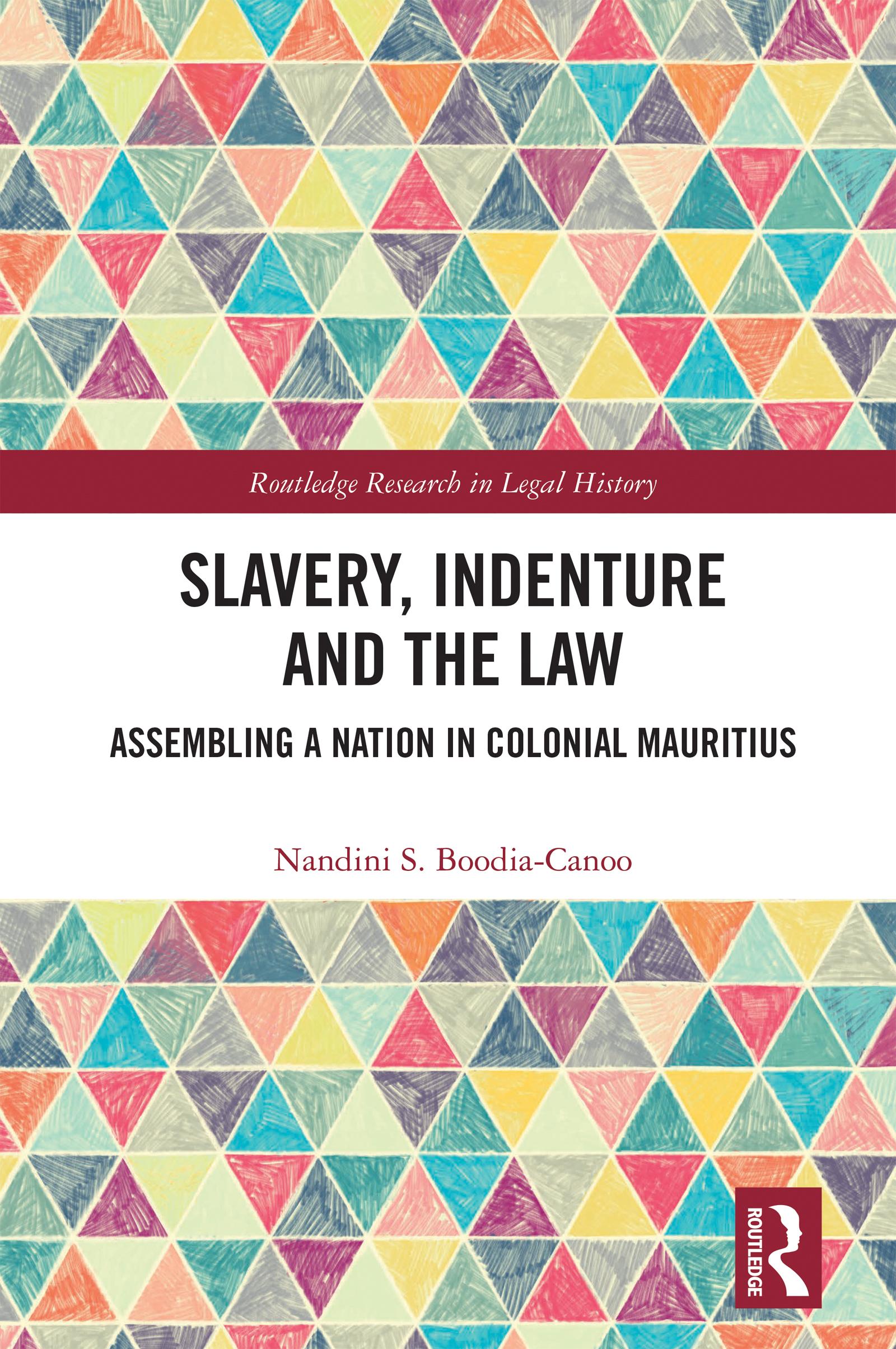
This book addresses historical issues of colonialism and race, which influenced the formation of multicultural society in Mauritius. During the 19th century, Mauritius was Britain’s prime sugar-producing colony, yet, unlike the West Indies, its history has remained significantly under-researched. The modern demographic of multi-ethnic Mauritius is unusual as, in the absence of an indigenous people, descendants of colonists, slaves and indentured labourers constitute the majority of the island’s population today. Thus, it may be said that the Mauritian nation was "assembled" during the period in question. This work draws on an in-depth examination of the two labour systems through which the island came to be populated: slavery and indenture. In studying the relevant laws, four legal events of historical importance within the context of these two labour systems are identified: the abolition of the slave trade, the abolition of slavery, private indentured labour migration and state-regulated indenture. This book is notable in that it presents a legal analysis of core historical events, thus straddling the line between two disciplines, and covers both slavery and indentured labour in Mauritian history. Mauritius, as an originally uninhabited island, presents a rare case study for inquiries into colonial legacies, multiculturalism and race consciousness. The book will be a valuable resource to scholars worldwide in the fields of slavery, indenture and the legal apparatus of forced labour.
Betal nemt med kort, Klarna, Apple Pay eller Google Pay. Ikke tilfreds? Du har altid 14 dages fortrydelsesret. Læs mere i vores vilkår. Har du spørgsmål, så send os en mail på hello@memmo.org.
Memmo gør det nemmere at studere – uanset hvor du er i verden. Hos os samler du dine kursusbøger og smarte studieværktøjer ét sted: resuméer, quizzer, podcasts og flashcards. Og så er der Ted, din studieven, der svarer på alt, du undrer dig over. Over 50 000 studerende studerer allerede her – bygget til at hjælpe dig med at lære hurtigere og stresse mindre.