
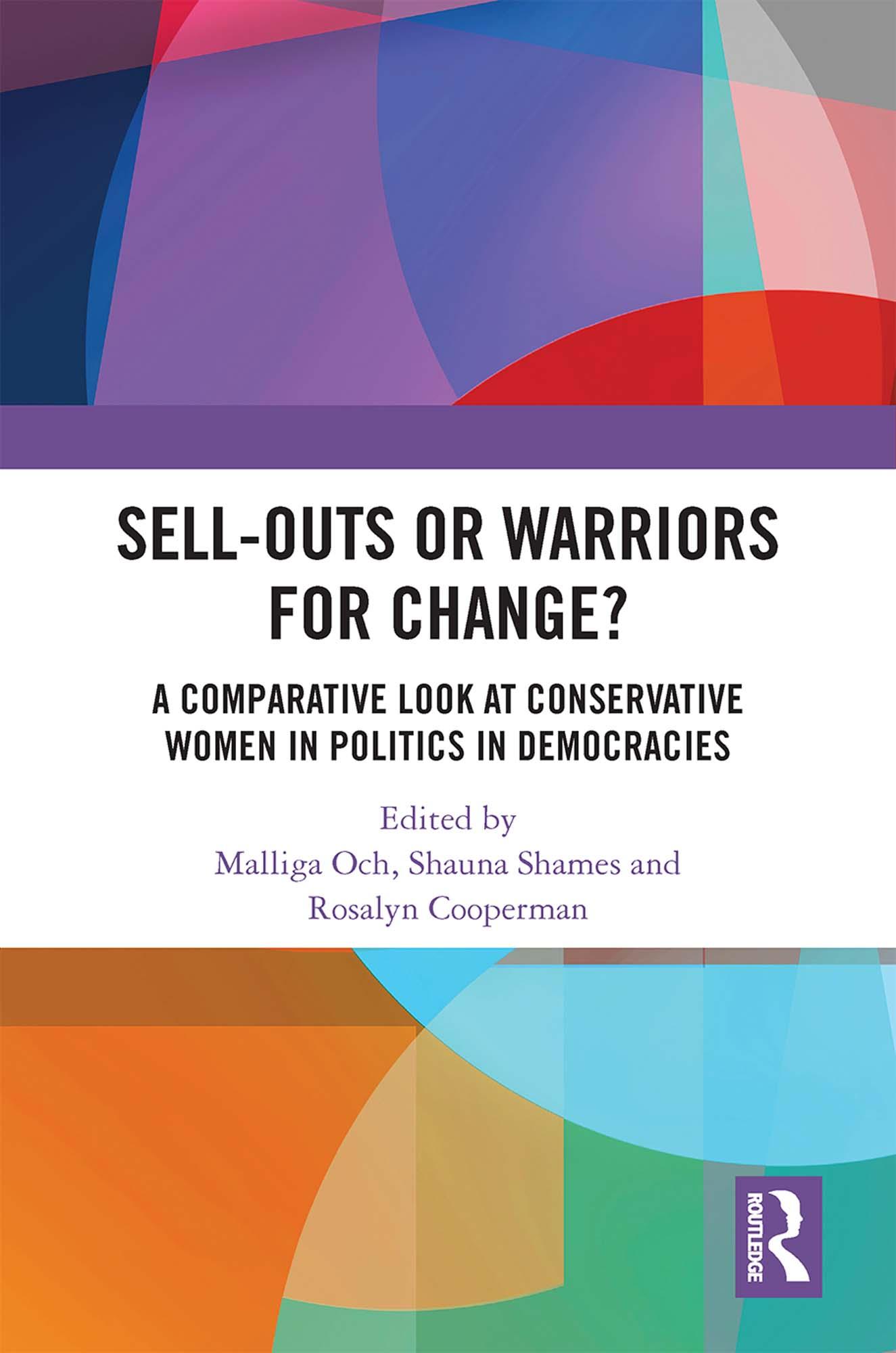
This book addresses the central question of how right-wing women navigate the cross-pressures between gender identity and political ideology.
The hope has always been that more women in politics would lead to greater inclusion of women’s voices and interests in decision-making and policy. Yet this is not always the case; some prominent conservative women such as Margaret Thatcher have rejected the feminist label while others such as Angela Merkel have reluctantly accepted it. Republican women in the U.S. Congress have embraced social and economic policies contrary to what many consider to be women’s issues while EU Commission president Ursula von der Leyen is a staunch supporter of feminist ideas. Other conservative women, such as Marine LePen in France strategically use feminist ideas to justify their conservative stances on immigration. This brings up an interesting yet understudied question: under what circumstances do conservative women become feminist allies and when do they toe the party line? It is this tension between women’s political representation and conservatism that this edited volume explores.
The chapters in this book, except for Chapter 3, were originally published as a special issue of Journal of Women, Politics & Policy.
Betal nemt med kort, Klarna, Apple Pay eller Google Pay. Ikke tilfreds? Du har altid 14 dages fortrydelsesret. Læs mere i vores vilkår. Har du spørgsmål, så send os en mail på hello@memmo.org.
Memmo gør det nemmere at studere – uanset hvor du er i verden. Hos os samler du dine kursusbøger og smarte studieværktøjer ét sted: resuméer, quizzer, podcasts og flashcards. Og så er der Ted, din studieven, der svarer på alt, du undrer dig over. Over 50 000 studerende studerer allerede her – bygget til at hjælpe dig med at lære hurtigere og stresse mindre.