
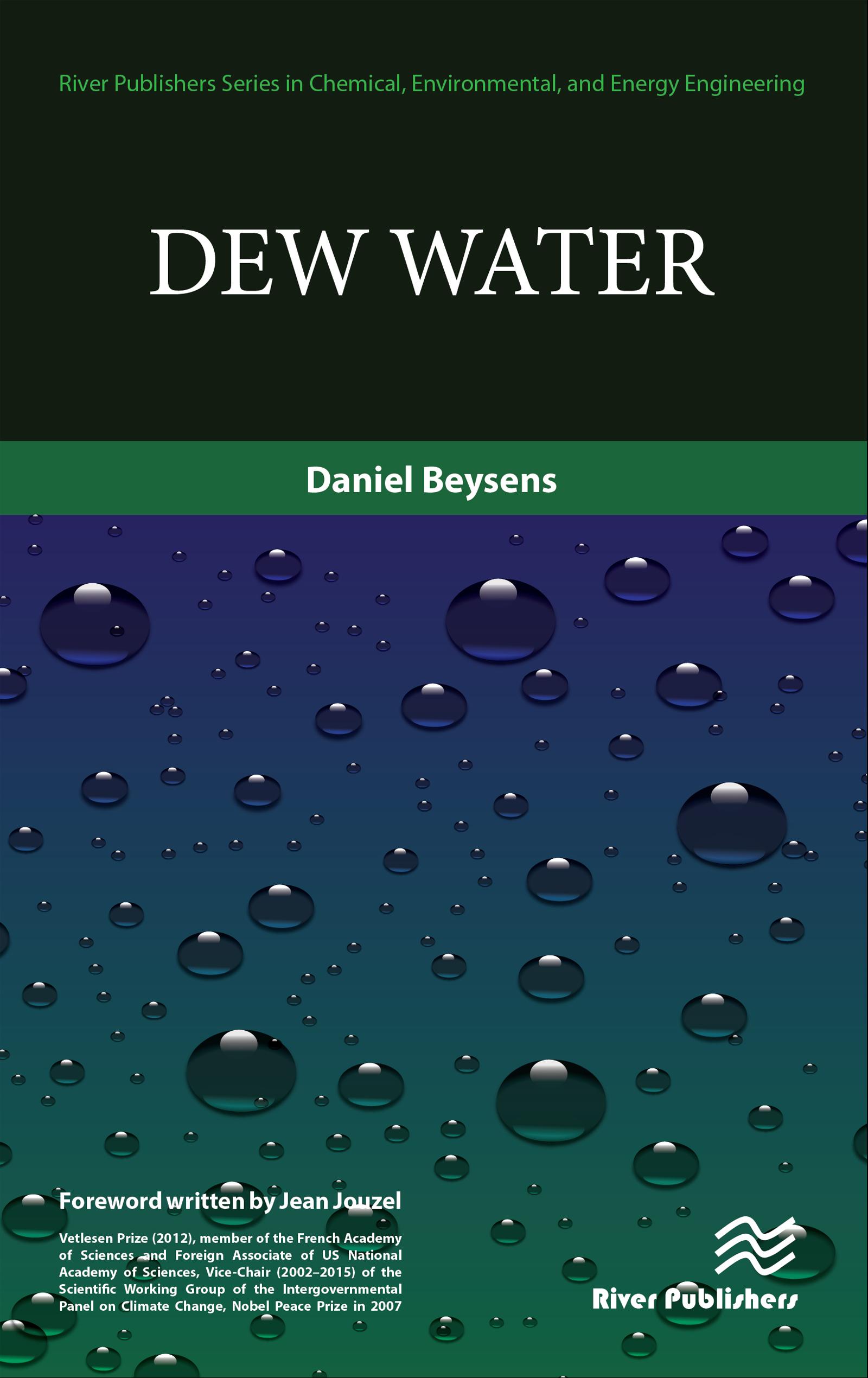
The world’s ever-increasing need for fresh water has led to the use of non-conventional sources such as rain and fog water collection. Although rain water collection is relatively simple, the supply is often erratic. Passive fog water collection has been used in several parts of the world but is only relevant to certain geographical locations. Dew occurrence, however, is far more widespread, can form in most climates and geographic settings, show high frequency and prevalence throughout the year. During the past 20 years, dew collection has therefore been investigated as a serious supplemental source of fresh water. Dew Water offers a thorough review of dew, its formation characteristics and potential for dew collection, for audiences that include policy-makers, non-governmental organizations involved in development aid and sustainable development, engineers, urban planners, researchers and students.After providing a background on atmospheric water, humid air, and sky and materials emissivity, the book deals with dew formation and its estimation with a focus on the use of meteorological data. Dew measurement techniques are reviewed and discussed as well as dew collection by passive means. Computational fluid dynamics technique is described for better design of dew collectors. Dew quality (chemistry, biology) is assessed in view of potable water quality. Costs and economic aspects are also considered.
Betal nemt med kort, Klarna, Apple Pay eller Google Pay. Ikke tilfreds? Du har altid 14 dages fortrydelsesret. Læs mere i vores vilkår. Har du spørgsmål, så send os en mail på hello@memmo.org.
Memmo gør det nemmere at studere – uanset hvor du er i verden. Hos os samler du dine kursusbøger og smarte studieværktøjer ét sted: resuméer, quizzer, podcasts og flashcards. Og så er der Ted, din studieven, der svarer på alt, du undrer dig over. Over 50 000 studerende studerer allerede her – bygget til at hjælpe dig med at lære hurtigere og stresse mindre.
Du kan måske også lide
Køb bogen0