
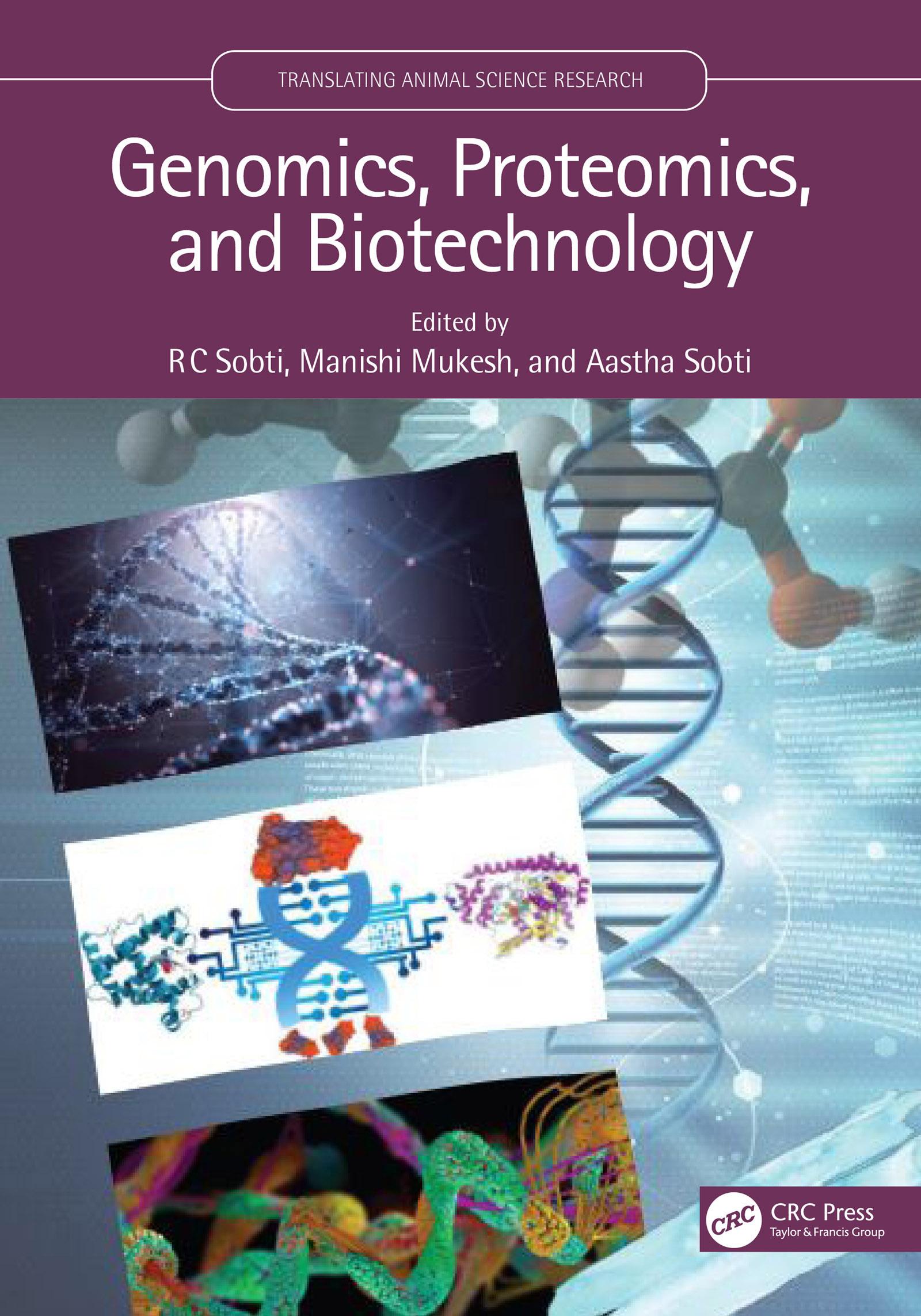
High-throughput molecular technologies ("omics") can help to decipher the contributions of different physiological systems and identify candidate molecules that are representative of different physiological pathways thereby allowing the discovery of biomarkers. Notably, the omics technologies along with and computational methods, bioprospecting, and artificial intelligence will continue to lead to better understanding of biological mechanisms that are responsible for physical attributes, or phenotypes. Research breakthroughs obtained through these technologies can be used to enhance productivity of food animals, meet the increasing demand for animal-sourced foods, enhance high-quality nutrient availability, ensure nutrient safety, mitigate the effects of climate variability, and result in new technologies that provide continued improvement in food security worldwide. Such breakthroughs are an urgent necessity because over the past 50 years, there has been an unprecedented increase in the world’s population, which will reach ten billion by the year 2050. Innovative and technological advancements that enhance all aspects of food production will arise from basic, fundamental research. Besides food, animal by-products have found many applications in the fields of pharmaceuticals, cosmetics, and household and industrial products. Hence, the need to ameliorate the productivity, reproductivity, growth performance, and disease resistance in animals has created a worldwide interest in gaining a deeper understanding of animal biology, biotechnology and genomics, and proteomics.
The present volume thoroughly discusses the omics studies in domestic and non-domestic animals and their role in mitigation of various challenges ahead.
The volume thus focuses on
i. Omics (genomics, proteomics, transcriptomics, metabolonomics) technologies in identifying, characterizing biodiversity
ii. Role of molecular techniques for improvement of domestic and non-domestic organisms
iii. Animal and alternative model systems (using stem cells, tissue engineering, cell free systems, 3D platforms etc.) for studying life phenomena
iv. Genetically modified organisms as factories for the products
Betal nemt med kort, Klarna, Apple Pay eller Google Pay. Ikke tilfreds? Du har altid 14 dages fortrydelsesret. Læs mere i vores vilkår. Har du spørgsmål, så send os en mail på hello@memmo.org.
Memmo gør det nemmere at studere – uanset hvor du er i verden. Hos os samler du dine kursusbøger og smarte studieværktøjer ét sted: resuméer, quizzer, podcasts og flashcards. Og så er der Ted, din studieven, der svarer på alt, du undrer dig over. Over 50 000 studerende studerer allerede her – bygget til at hjælpe dig med at lære hurtigere og stresse mindre.