
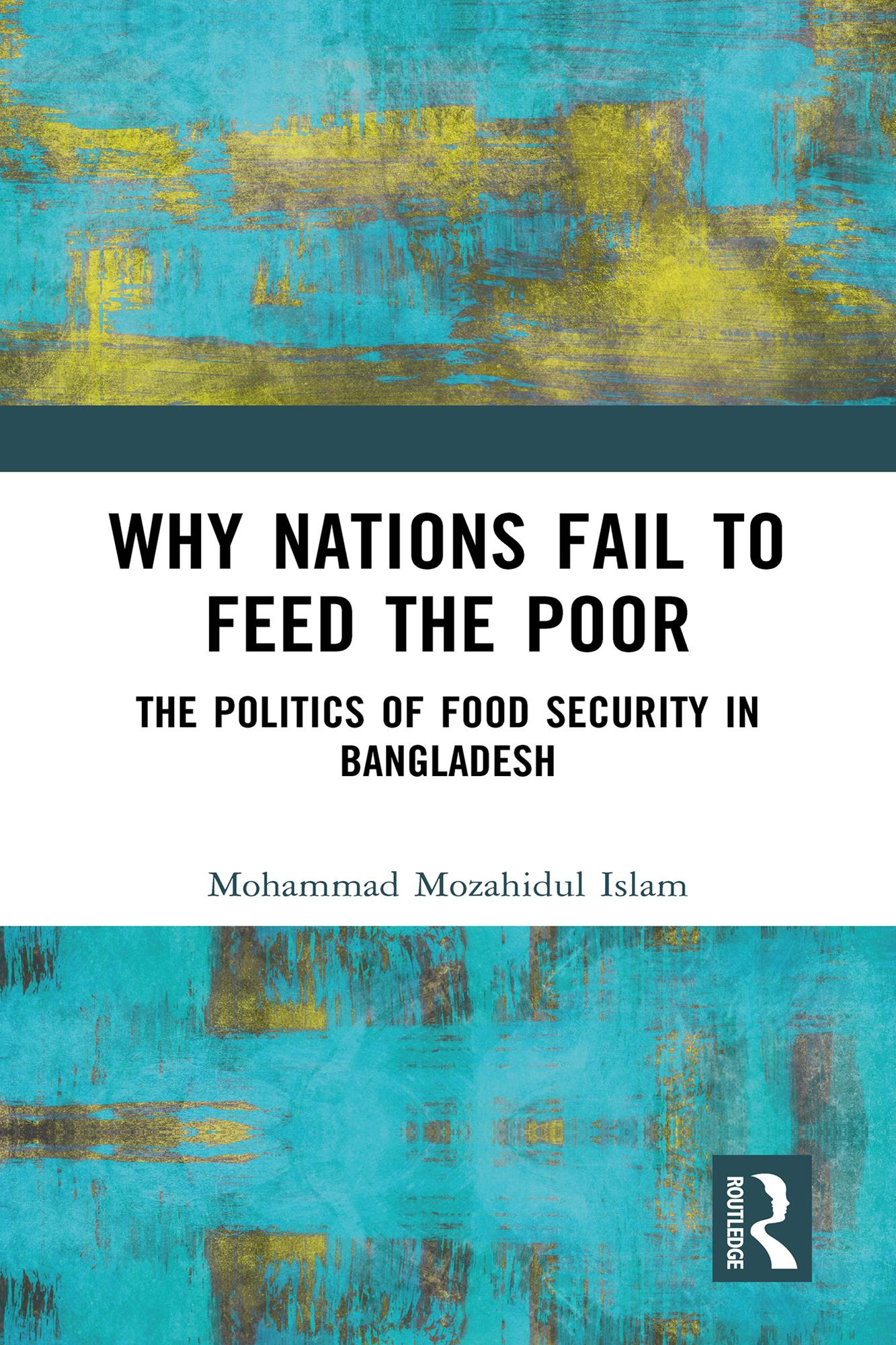
This book examines the political and economic dimensions of food security in Bangladesh and assesses the role of the state in meeting the challenges of food security. The key concern, which is at the heart of this study, is to explore how Bangladesh responds, when its people go hungry. There are no detailed empirical studies that examine the Bangladesh’s role by providing an historical cum political analysis; however conventional approaches are primarily concerned with a partial diagnosis of the economic or nutritional problems of food security. The book then provides a detailed picture of the missing dimensions of state that include the strength of institutions, the scope of state functions, and other important attributes. In doing so, it uses the concept of neo-patrimonialism to explore the political system of Bangladesh.
This book explicates the various impediments to food security, ranging from the process of policy formulation to their implementation mechanisms. It unpacks the structural weaknesses of the Bangladesh's institutional capacity in promoting food security, and, in the process, argues that the root cause of food insecurity is deeply embedded in the nature of the government itself, and the political institutions that link the state and society.
Betal nemt med kort, Klarna, Apple Pay eller Google Pay. Ikke tilfreds? Du har altid 14 dages fortrydelsesret. Læs mere i vores vilkår. Har du spørgsmål, så send os en mail på hello@memmo.org.
Memmo gør det nemmere at studere – uanset hvor du er i verden. Hos os samler du dine kursusbøger og smarte studieværktøjer ét sted: resuméer, quizzer, podcasts og flashcards. Og så er der Ted, din studieven, der svarer på alt, du undrer dig over. Over 50 000 studerende studerer allerede her – bygget til at hjælpe dig med at lære hurtigere og stresse mindre.