
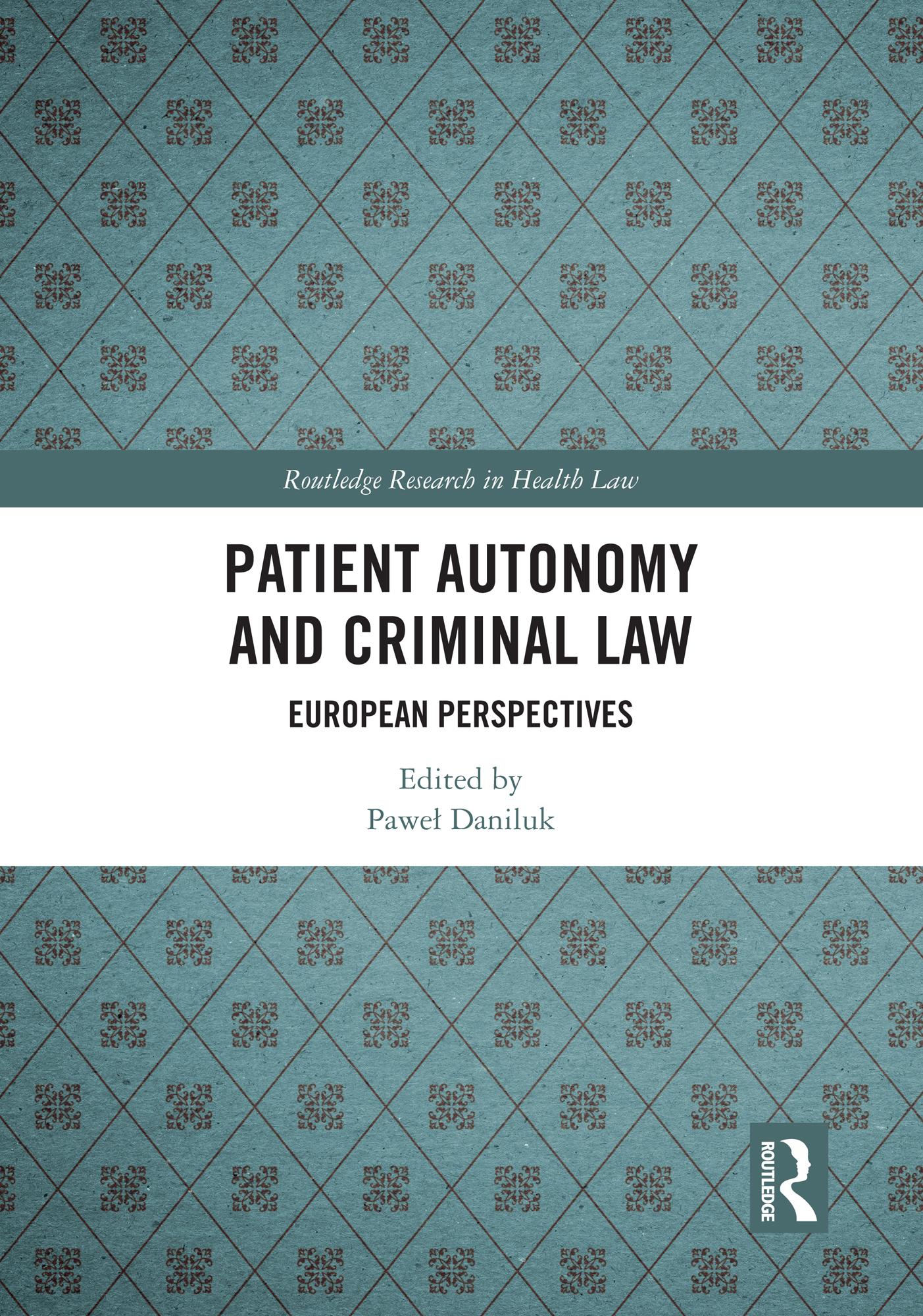
This book shows how the legal systems of individual European countries protect patient autonomy. In particular, it explains the role of criminal law, that is, what criminal law protection of patient autonomy looks like on a European scale in both legal and social dimensions. Despite EU integration processes, the work illustrates that the legal orders of individual European countries are far from uniform in this area. The concept of patient autonomy here is generally in the context of the patient's freedom from unwanted medical activities: the so-called negative freedom. At the same time, in countries where there are no regulations clearly criminalising the performance of a therapeutic activity without the patient's consent, the so-called positive freedom is also discussed. The book will be a valuable reference work for academics, researchers and policy-makers working in Health Law, Medical Ethics, Applied Ethics and Criminal Law.
Betal nemt med kort, Klarna, Apple Pay eller Google Pay. Ikke tilfreds? Du har altid 14 dages fortrydelsesret. Læs mere i vores vilkår. Har du spørgsmål, så send os en mail på hello@memmo.org.
Memmo gør det nemmere at studere – uanset hvor du er i verden. Hos os samler du dine kursusbøger og smarte studieværktøjer ét sted: resuméer, quizzer, podcasts og flashcards. Og så er der Ted, din studieven, der svarer på alt, du undrer dig over. Over 50 000 studerende studerer allerede her – bygget til at hjælpe dig med at lære hurtigere og stresse mindre.
Du kan måske også lide
Køb bogen0