
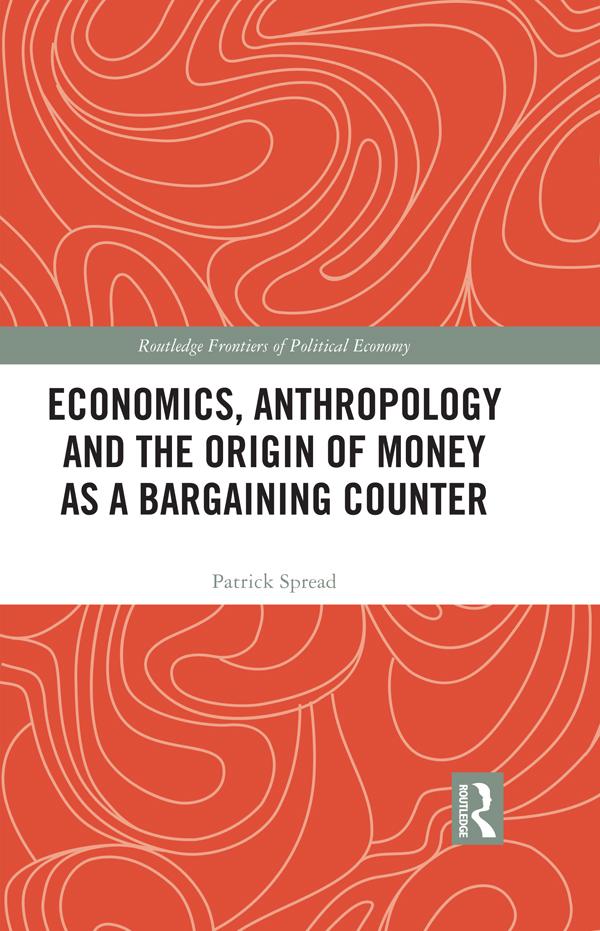
For many decades economists have disputed with economic anthropologists over the origins of money. Economists claim that money emerged from barter exchange; anthropologists claim that it originated as a ‘unit of account’ in the temples and palaces of ancient Mesopotamia. This book argues that money originated as a bargaining counter in a system of money-bargaining, emerging almost seamlessly from barter-bargaining. This is not the ‘money’ of mainstream economic conception – a ‘veil’ cast over a system of resource allocation defined in mathematical terms.
Confidence in the bargaining counter is sustained through ‘support-bargaining,’ a process in which individuals seek the support of their associates but seek at the same time to advance their own interests. A comprehensive ‘Introduction to Support-Bargaining and Money-Bargaining’ is provided by the work. The arrival of coin-money is recognised by many as a crucial event in the history of mankind, and it is argued here that the distinctive character of support-bargaining in ancient Greek city states made possible the introduction of coin-money. The dependence of coin-money on a particular form of support-bargaining also suggests the reason why coin-money was not introduced much earlier, given that the technology for producing coins was available long before their adoption.
This book will be of great interest to researchers in the history and origins of money, banking and economic theory more broadly.
Betal nemt med kort, Klarna, Apple Pay eller Google Pay. Ikke tilfreds? Du har altid 14 dages fortrydelsesret. Læs mere i vores vilkår. Har du spørgsmål, så send os en mail på hello@memmo.org.
Memmo gør det nemmere at studere – uanset hvor du er i verden. Hos os samler du dine kursusbøger og smarte studieværktøjer ét sted: resuméer, quizzer, podcasts og flashcards. Og så er der Ted, din studieven, der svarer på alt, du undrer dig over. Over 50 000 studerende studerer allerede her – bygget til at hjælpe dig med at lære hurtigere og stresse mindre.