
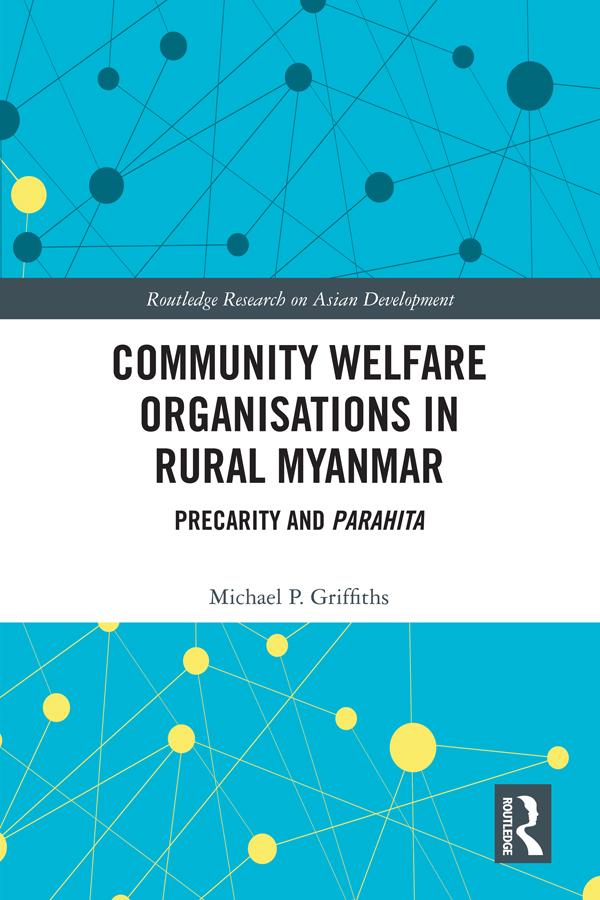
This book provides an in-depth study of the moral economies emerging from within conditions of precarity in rural communities in contemporary Myanmar.
James C. Scott’s seminal work on ‘The Moral Economy of the Peasant’ argued that peasant notions of subsistence and expectations of reciprocity formed the basis for subsequent rebellion as economic conditions changed and new market forces were introduced. Now, nearly a century on, Michael Griffiths argues that the conditions faced by rural communities in Myanmar remain precarious, but different forms of moral economy shape their responses. In the contemporary context, the moral economy of rural communities is characterized by the emergence of localized, self-organized community welfare associations which adopt a sophisticated iteration of self-help framed by the Buddhist concept of parahita (altruism). This book analyses the performative nature of these welfare organizations as a form of politics, asking how notions of citizenship expressed in these organizations promote more inclusive, or more exclusive practices towards non-Buddhist minorities.
At a time when discourse on identity in Myanmar has been dominated by practices of othering and exclusion, this book provides an important analysis of what citizenship and reciprocity means in contemporary rural Myanmar. This book is a critical resource for researchers working on rural development and the social sciences in Southeast Asia.
Betal nemt med kort, Klarna, Apple Pay eller Google Pay. Ikke tilfreds? Du har altid 14 dages fortrydelsesret. Læs mere i vores vilkår. Har du spørgsmål, så send os en mail på hello@memmo.org.
Memmo gør det nemmere at studere – uanset hvor du er i verden. Hos os samler du dine kursusbøger og smarte studieværktøjer ét sted: resuméer, quizzer, podcasts og flashcards. Og så er der Ted, din studieven, der svarer på alt, du undrer dig over. Over 50 000 studerende studerer allerede her – bygget til at hjælpe dig med at lære hurtigere og stresse mindre.