
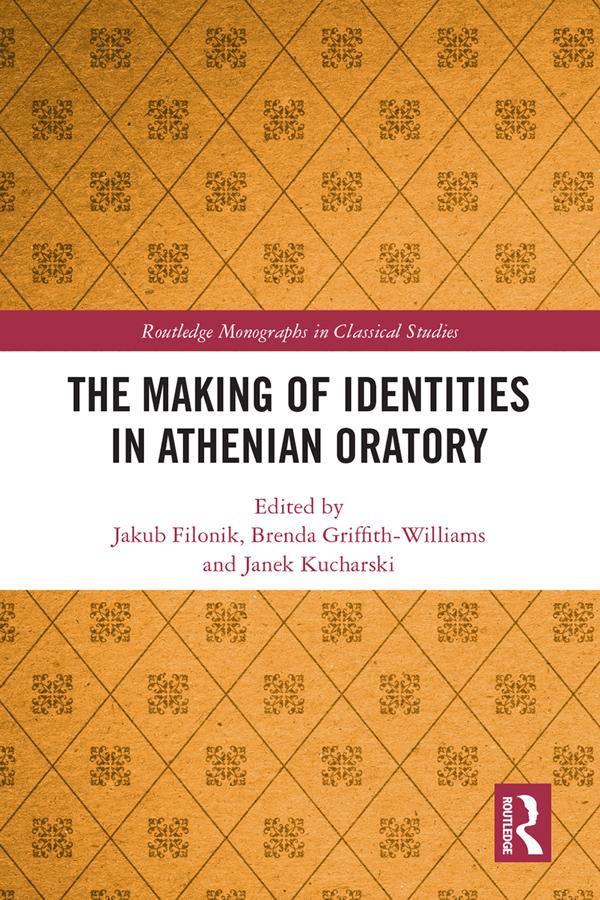
Focusing on extant speeches from the Athenian Assembly, law, and Council in the fifth–fourth centuries BCE, these essays explore how speakers constructed or deconstructed identities for themselves and their opponents as part of a rhetorical strategy designed to persuade or manipulate the audience.
According to the needs of the occasion, speakers could identify the Athenian people either as a unified demos or as a collection of sub-groups, and they could exploit either differences or similarities between Athenians and other Greeks, and between Greeks and ‘barbarians’. Names and naming strategies were an essential tool in the (de)construction of individuals’ identities, while the Athenians’ civic identity could be constructed in terms of honour(s), ethnicity, socio-economic status, or religion. Within the forensic setting, the physical location and procedural conventions of an Athenian trial could shape the identities of its participants in a unique if transient way.
The Making of Identities in Athenian Oratory is an insightful look at this understudied aspect of Athenian oratory and will be of interest to anyone working on the speeches themselves, identity in ancient Greece, or ancient oratory and rhetoric more broadly.
Betal nemt med kort, Klarna, Apple Pay eller Google Pay. Ikke tilfreds? Du har altid 14 dages fortrydelsesret. Læs mere i vores vilkår. Har du spørgsmål, så send os en mail på hello@memmo.org.
Memmo gør det nemmere at studere – uanset hvor du er i verden. Hos os samler du dine kursusbøger og smarte studieværktøjer ét sted: resuméer, quizzer, podcasts og flashcards. Og så er der Ted, din studieven, der svarer på alt, du undrer dig over. Over 50 000 studerende studerer allerede her – bygget til at hjælpe dig med at lære hurtigere og stresse mindre.