
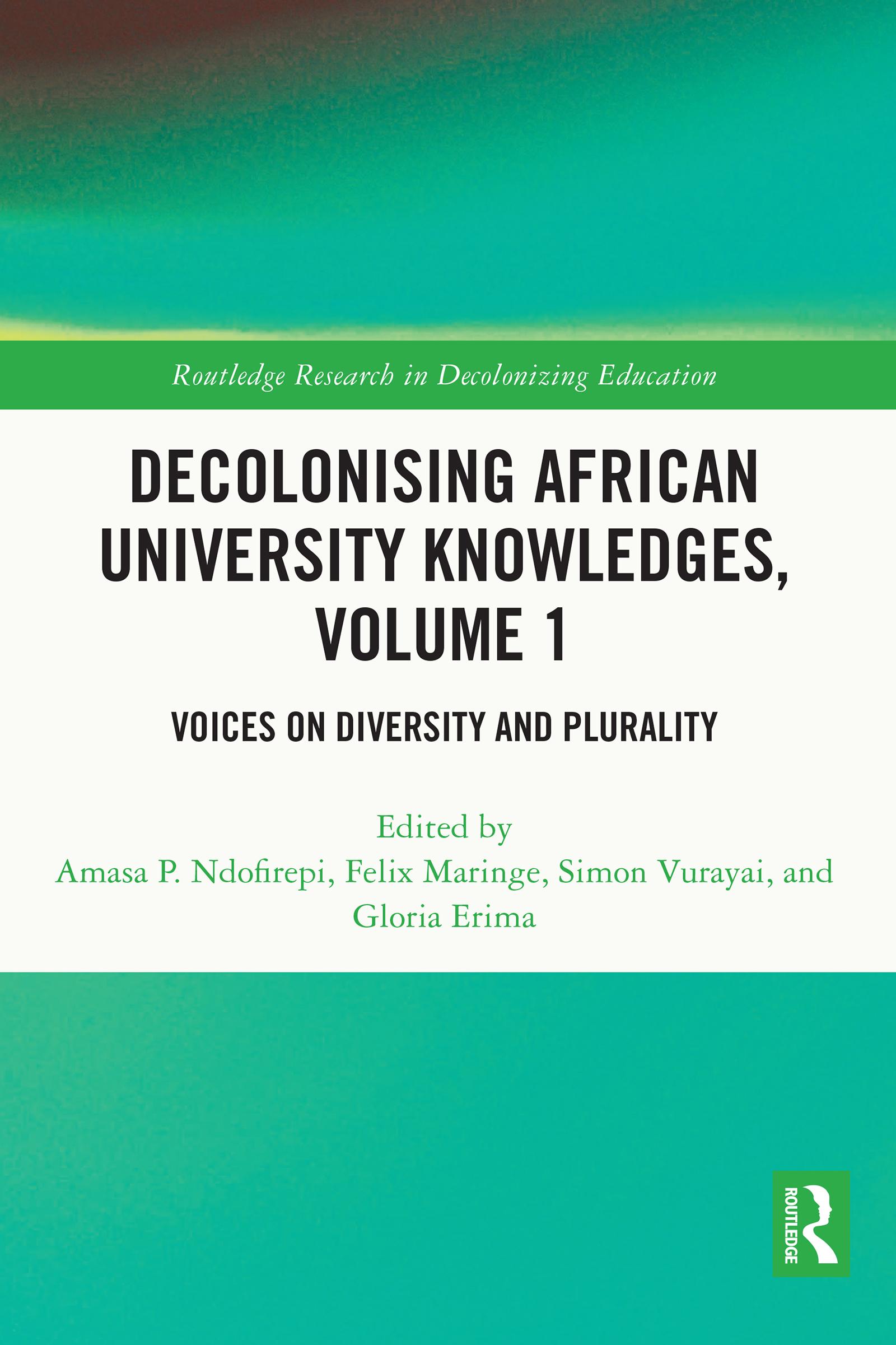
This timely work investigates the possibility of unyoking and decolonising African university knowledges from colonial relics. It claims that academics from socially, politically, and geographically underprivileged communities in the South need to have their voices heard outside of the global power structure.
The book argues that African universities need a relevant curriculum that is related to the cultural and environmental experiences of diverse African learners in order to empower themselves and transform the world. It is written by African scholars and is based on theoretical and practical debates on the epistemological complexities affecting and afflicting diversity in higher education in Africa. It examines who are the primary custodians of African university knowledges, as well as how this relates to forms of exclusion affecting women, the differently abled, the rural poor, and ethnic minorities, as well as the significance of the Fourth Industrial Revolution in the future of African universities. The book takes an epistemological approach to university teaching and learning, addressing issues such as decolonization and identity, social closure and diversity disputes, and the obstacles that come with the neoliberal paradigm.
The book will be necessary reading for academics, scholars, and postgraduate students in the fields of Sociology of Education, decolonising education, Inclusive Education, and Philosophy of Education, as it resonates with existing discourses.
Betal nemt med kort, Klarna, Apple Pay eller Google Pay. Ikke tilfreds? Du har altid 14 dages fortrydelsesret. Læs mere i vores vilkår. Har du spørgsmål, så send os en mail på hello@memmo.org.
Memmo gør det nemmere at studere – uanset hvor du er i verden. Hos os samler du dine kursusbøger og smarte studieværktøjer ét sted: resuméer, quizzer, podcasts og flashcards. Og så er der Ted, din studieven, der svarer på alt, du undrer dig over. Over 50 000 studerende studerer allerede her – bygget til at hjælpe dig med at lære hurtigere og stresse mindre.