
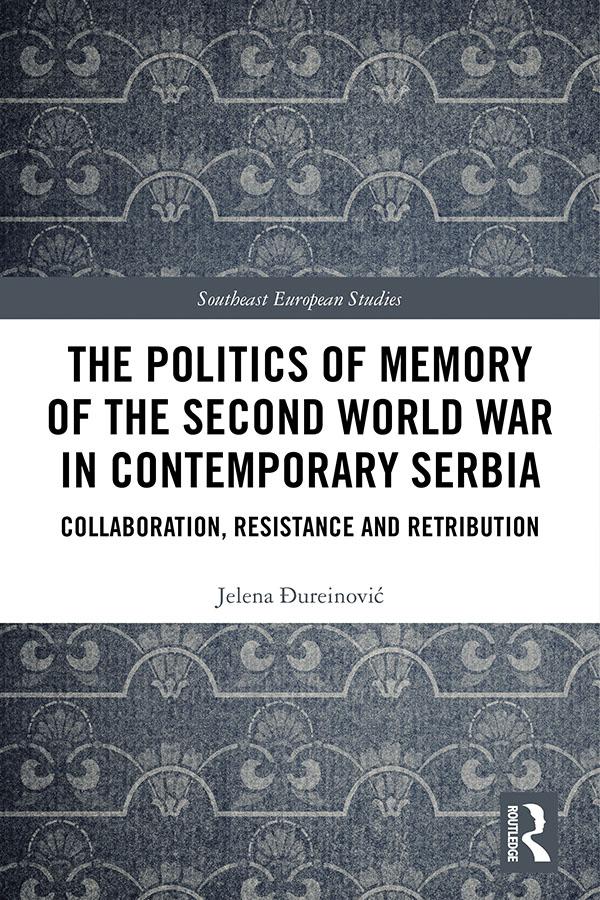
Exploring the concepts of collaboration, resistance, and postwar retribution and focusing on the Chetnik movement, this book analyses the politics of memory.
Since the overthrow of Slobodan Milošević in 2000, memory politics in Serbia has undergone drastic changes in the way in which the Second World War and its aftermath is understood and interpreted. The glorification and romanticisation of the Yugoslav Army in the Homeland, more commonly referred to as the Chetnik movement, has become the central theme of Serbia’s memory politics during this period. The book traces their construction as a national antifascist movement equal to the communist-led Partisans and as victims of communism, showing the parallel justification and denial of their wartime activities of collaboration and mass atrocities. The multifaceted approach of this book combines a diachronic perspective that illuminates the continuities and ruptures of narratives, actors and practices, with in-depth analysis of contemporary Serbia, rooted in ethnographic fieldwork and exploring multiple levels of memory work and their interactions.
It will appeal to students and academics working on contemporary history of the region, memory studies, sociology, public history, transitional justice, human rights and Southeast and East European Studies.
Betal nemt med kort, Klarna, Apple Pay eller Google Pay. Ikke tilfreds? Du har altid 14 dages fortrydelsesret. Læs mere i vores vilkår. Har du spørgsmål, så send os en mail på hello@memmo.org.
Memmo gør det nemmere at studere – uanset hvor du er i verden. Hos os samler du dine kursusbøger og smarte studieværktøjer ét sted: resuméer, quizzer, podcasts og flashcards. Og så er der Ted, din studieven, der svarer på alt, du undrer dig over. Over 50 000 studerende studerer allerede her – bygget til at hjælpe dig med at lære hurtigere og stresse mindre.