
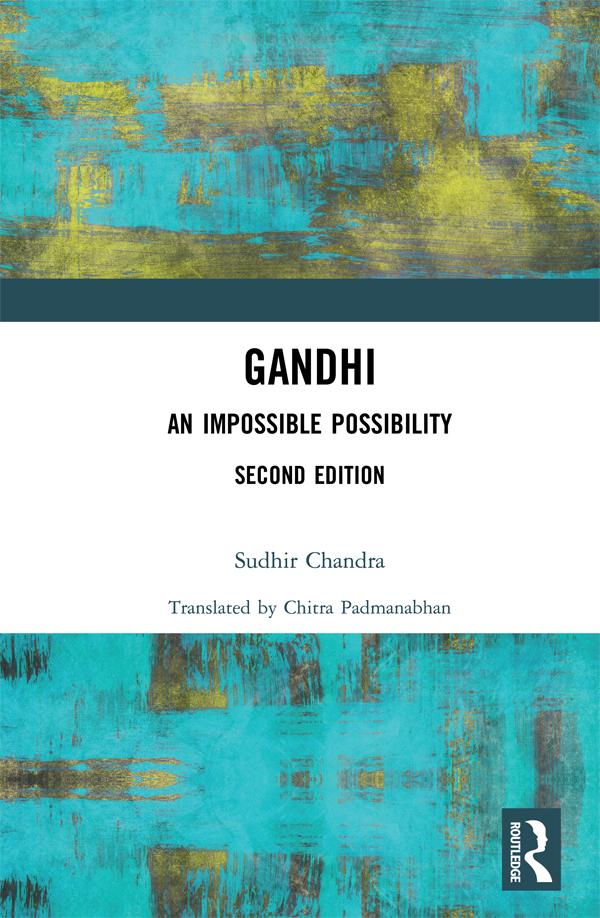
Gandhi was perhaps the most influential yet misunderstood figure of the twentieth century. Drawing close attention to his last years, this book explores the marked change in his understanding of the acceptance of non-violence by Indians. It points to a startling discovery Gandhi made in the years preceding India’s Independence and Partition: the struggle for freedom which he had all along believed to be non-violent was in fact not so. He realised that there was a causal relationship between the path of illusory ahimsa, which had held sway during the freedom struggle, and the violence that erupted thereafter during Partition.
In the second edition of this much-acclaimed volume, Chandra revisits Gandhi’s philosophy to explain how and why the phenomenon of the Mahatma has been understood and misunderstood through the years. Calling for a rethink of the very nature and foundation of modern India, this book throws new light on Gandhian philosophy and its far-reaching implications for the world today. It will interest not only scholars and researchers of modern Indian history, politics and philosophy, but also lay readers.
Betal nemt med kort, Klarna, Apple Pay eller Google Pay. Ikke tilfreds? Du har altid 14 dages fortrydelsesret. Læs mere i vores vilkår. Har du spørgsmål, så send os en mail på hello@memmo.org.
Memmo gør det nemmere at studere – uanset hvor du er i verden. Hos os samler du dine kursusbøger og smarte studieværktøjer ét sted: resuméer, quizzer, podcasts og flashcards. Og så er der Ted, din studieven, der svarer på alt, du undrer dig over. Over 50 000 studerende studerer allerede her – bygget til at hjælpe dig med at lære hurtigere og stresse mindre.