
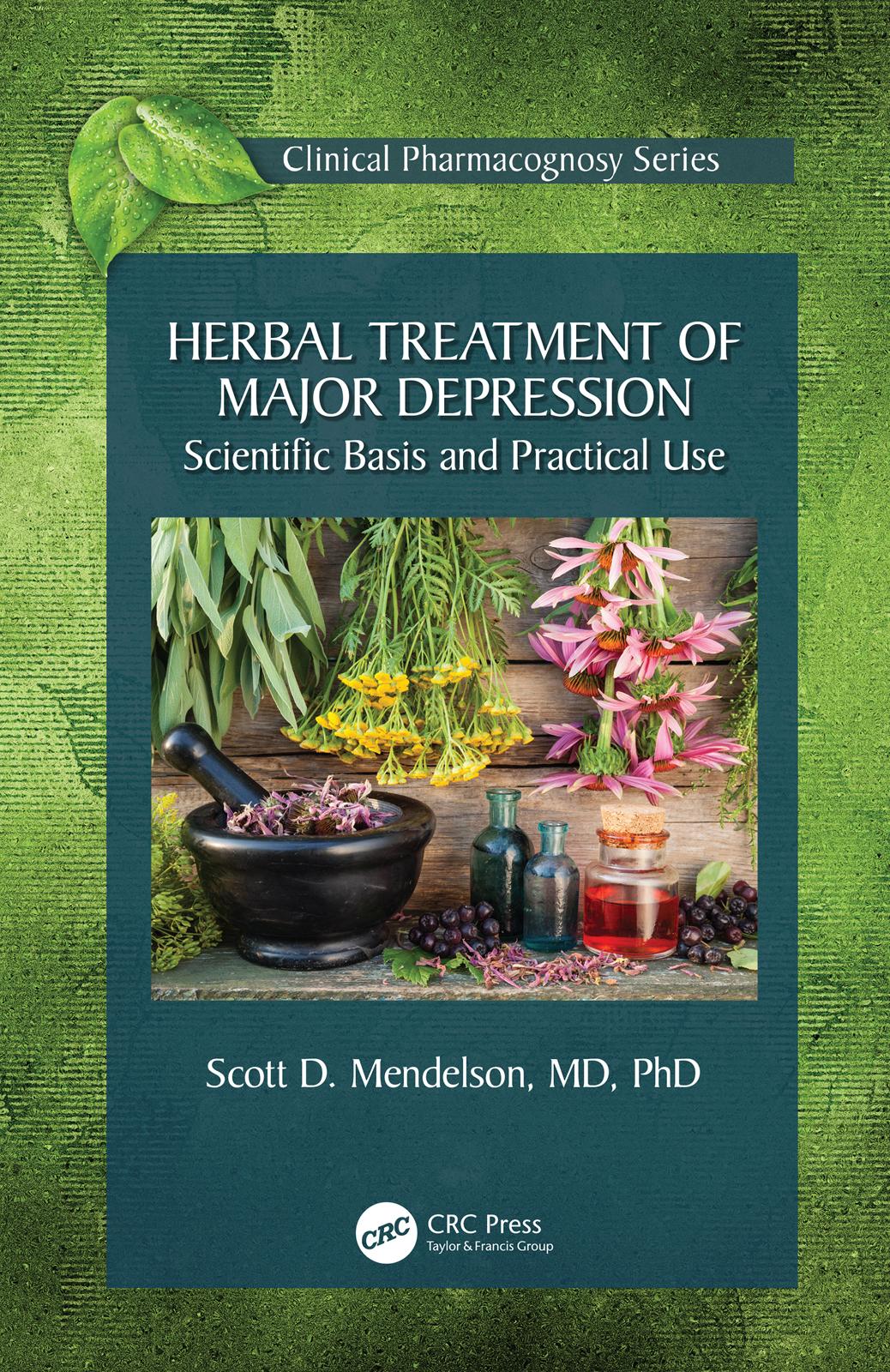
This unique volume presents new understandings of the neurochemical nature of major depression, and how herbs and their constituent flavonoids and terpenes appear to address some of the mechanisms now thought to be involved. It explores how recent studies of the rapid antidepressant effects of ketamine inform neuroscientists about deep intracellular mechanisms of antidepressant action that have little to do with simple enhancement of monoaminergic activity. These mechanisms include actions on PI3K, Akt, mTOR, GSK3, BDNF, and other intracellular pathways. New theories of the pathophysiology underlying major depression, such as oxidative damage, inflammation, stress and insulin resistance are then explored.
Key Features:
- Focuses on oxidative damage, inflammation, and metabolic syndrome.
- Explains that a significant percentage of people treated for major depression obtain little if any relief from standard antidepressant medications.
- These facts lead to discussion of herbs that can be used to treat major depression, as well as consideration of the scientific basis for how these herbs act.
- The antidepressant properties of 66 herbs are discussed, along with dosing and safety information.
Betal nemt med kort, Klarna, Apple Pay eller Google Pay. Ikke tilfreds? Du har altid 14 dages fortrydelsesret. Læs mere i vores vilkår. Har du spørgsmål, så send os en mail på hello@memmo.org.
Memmo gør det nemmere at studere – uanset hvor du er i verden. Hos os samler du dine kursusbøger og smarte studieværktøjer ét sted: resuméer, quizzer, podcasts og flashcards. Og så er der Ted, din studieven, der svarer på alt, du undrer dig over. Over 50 000 studerende studerer allerede her – bygget til at hjælpe dig med at lære hurtigere og stresse mindre.