
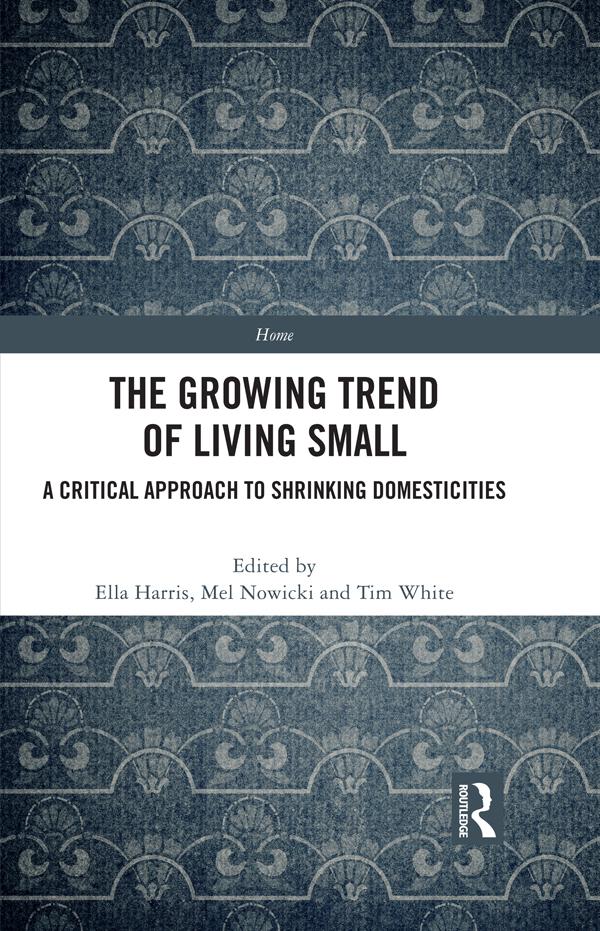
This book examines the growing trend for housing models that shrink private living space and seeks to understand the implications of these shrinking domestic worlds. Small spaces have become big business. Reducing the size of our homes, and the amount of stuff within them, is increasingly sold as a catch-all solution to the stresses of modern life and the need to reduce our carbon footprint. Shrinking living space is being repackaged in a neoliberal capitalist context as a lifestyle choice rather than the consequence of diminishing choice in the face of what has become a long-term housing ‘crisis’. What does this mean for how we live in the long term, and is there a dark side to the promise of a simpler, more sustainable home life? Shrinking Domesticities brings together research from across the social sciences, planning and architecture to explore these issues. From co-living developments to the Tiny House Movement, self-storage units to practices of ‘de-stuffification’, and drawing on examples from across Europe, North America and Australasia, the authors of this volume seek to understand both what micro-living is bringing to our societies, and what it may be eroding
Betal nemt med kort, Klarna, Apple Pay eller Google Pay. Ikke tilfreds? Du har altid 14 dages fortrydelsesret. Læs mere i vores vilkår. Har du spørgsmål, så send os en mail på hello@memmo.org.
Memmo gør det nemmere at studere – uanset hvor du er i verden. Hos os samler du dine kursusbøger og smarte studieværktøjer ét sted: resuméer, quizzer, podcasts og flashcards. Og så er der Ted, din studieven, der svarer på alt, du undrer dig over. Over 50 000 studerende studerer allerede her – bygget til at hjælpe dig med at lære hurtigere og stresse mindre.