
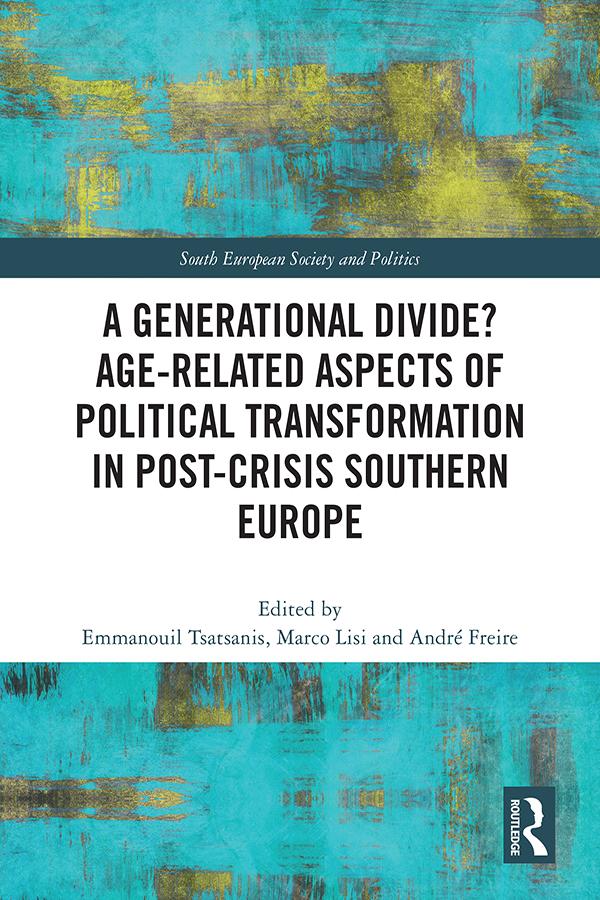
This book examines the political consequences of the economic crisis in Southern Europe from the perspective of a widening intergenerational divide. It focuses on the cases of Greece, Italy, Portugal and Spain to fill the gap in the literature by examining various age-related rifts in post-crisis Southern Europe.
Public discussion about the economic crisis of the late 2000s to mid-2010s in Southern Europe often refers to its impact on the region’s younger citizens, but not enough attention has been given to the political consequences of the crisis on the young. The comparative studies in the volume cover various thematic areas, such as electoral behaviour, political culture, democratic values, forms of political engagement and political representation.
The overarching questions that the book attempts to answer are: a) to what extent and in what areas can one talk about an emergent generational divide in the region, and b) has the experience of the economic crisis been profound enough for young South Europeans to create a new ‘crisis political generation’? Many of the answers offered point to tangible effects of the crisis, but mostly in the sense of accentuating dynamics that already existed.
The chapters in this book were originally published as a special issue of South European Society and Politics.
Betal nemt med kort, Klarna, Apple Pay eller Google Pay. Ikke tilfreds? Du har altid 14 dages fortrydelsesret. Læs mere i vores vilkår. Har du spørgsmål, så send os en mail på hello@memmo.org.
Memmo gør det nemmere at studere – uanset hvor du er i verden. Hos os samler du dine kursusbøger og smarte studieværktøjer ét sted: resuméer, quizzer, podcasts og flashcards. Og så er der Ted, din studieven, der svarer på alt, du undrer dig over. Over 50 000 studerende studerer allerede her – bygget til at hjælpe dig med at lære hurtigere og stresse mindre.