
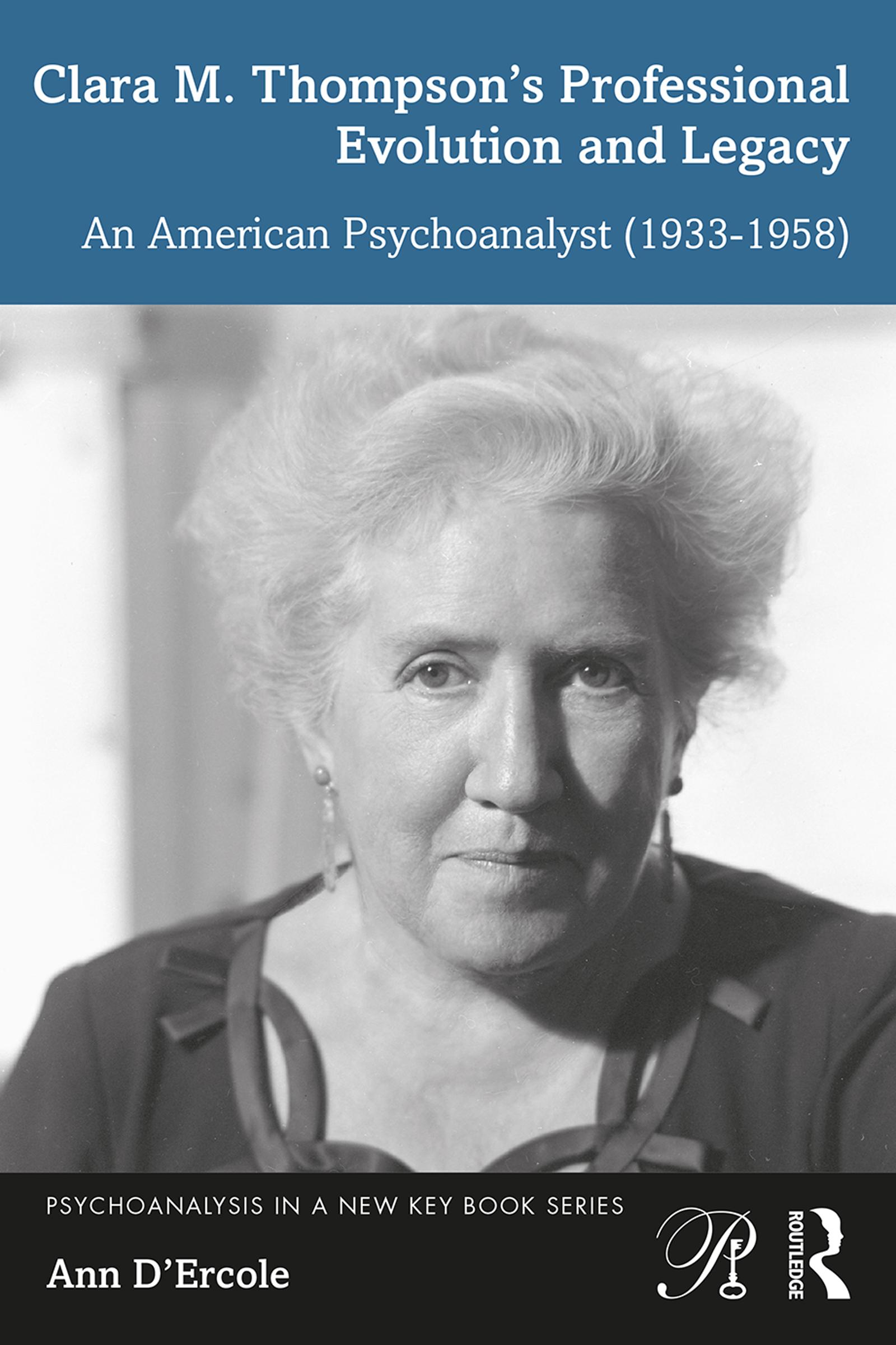
Beginning in 1933, after Sandor Ferenczi’s death, this volume draws extensively from interviews, personal correspondence, and scholarly essays to explore the latter part of Clara Thompson’s life and professional career.
The reader is afforded an understanding of Thompson's development with the luminaries who influenced her, and who she, in turn, influenced, including Harry Stack Sullivan, Erich Fromm, and other "cultural" social scientists. Building on her collaborative work with Ferenczi, and influenced by Sullivan, Thompson’s pioneering essays expand the psychoanalytic perspective to embrace the dynamic interpersonal encounter between patient and analyst. Critical of Freud's views on women, Thompson also argues against the inequality of women and men in society, reflecting her own moral compass. This volume clarifies Thompson’s role in psychoanalytic history, reclaiming her numerous and valuable contributions to both the interpersonal psychoanalytic tradition and to the field of psychoanalysis as we know it today.
D’Ercole’s artfully woven account of Thompson’s life will prove essential reading for psychoanalysts, psychotherapists, psychologists, and anyone interested in the history of psychoanalysis.
Betal nemt med kort, Klarna, Apple Pay eller Google Pay. Ikke tilfreds? Du har altid 14 dages fortrydelsesret. Læs mere i vores vilkår. Har du spørgsmål, så send os en mail på hello@memmo.org.
Memmo gør det nemmere at studere – uanset hvor du er i verden. Hos os samler du dine kursusbøger og smarte studieværktøjer ét sted: resuméer, quizzer, podcasts og flashcards. Og så er der Ted, din studieven, der svarer på alt, du undrer dig over. Over 50 000 studerende studerer allerede her – bygget til at hjælpe dig med at lære hurtigere og stresse mindre.