
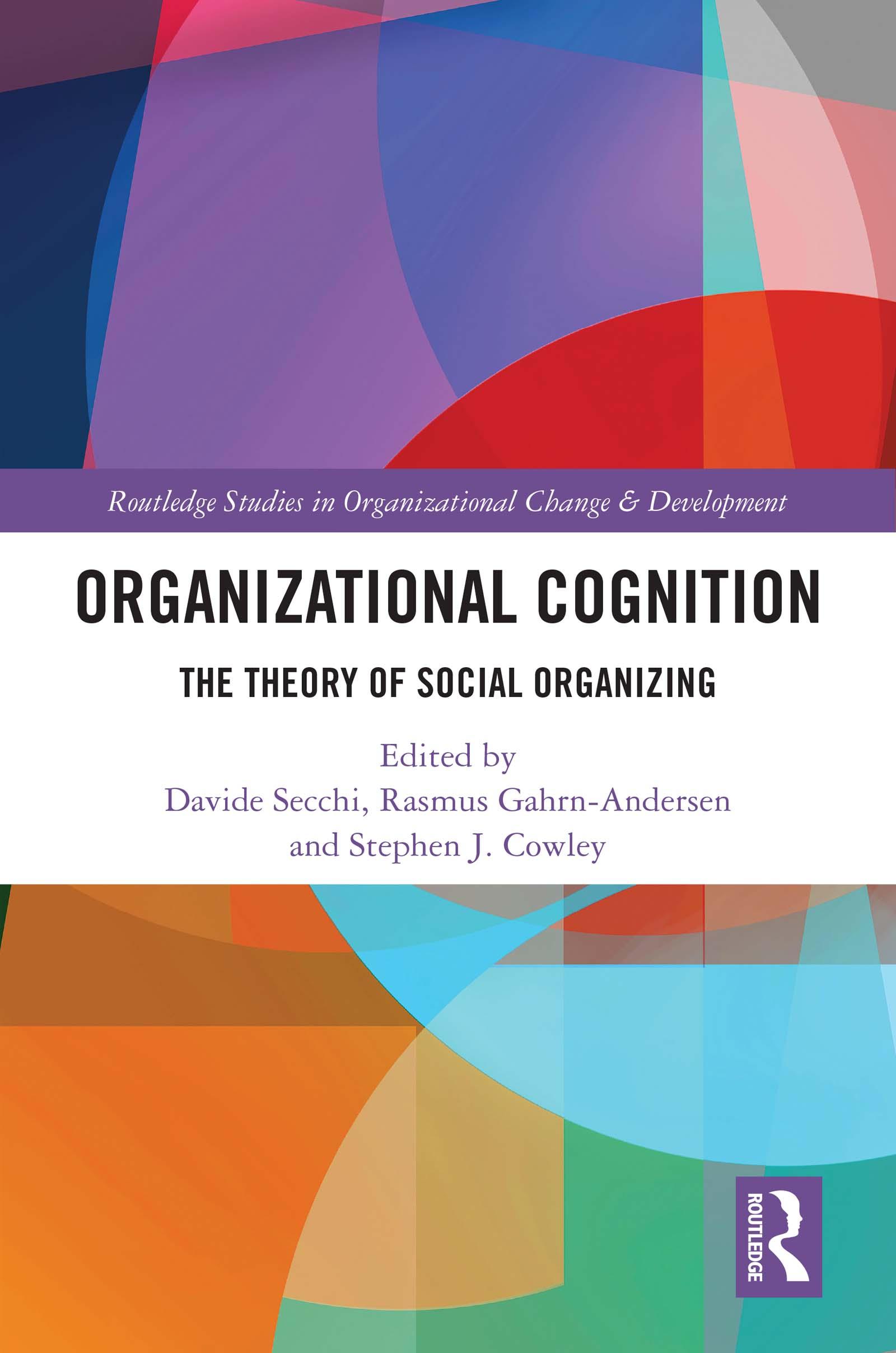
Cognition is usually associated with brain activity. Undoubtedly, some brain activity is necessary for it to function. However, the last thirty years have revolutionized the way we intend and think about cognition. These developments allow us to think of cognition as distributed in the sense that it needs tools, artifacts, objects, and other external entities to allow the brain to operate properly. Organizational Cognition: The Theory of Social Organizing takes this perspective and applies it to the organization by introducing a model that defines the elements that allow cognition to work. This model shows that cognition needs the combined and simultaneous presence of micro aspects—i.e. the biological individual—and macro super-structural elements—e.g. organizational climate, culture, norms, values, rules. These two become practice of cognition as they materialize in a meso domain—this is any action that allows individuals to perform their daily duties. Due to the micro-meso-macro interactions, this has been called the 3M Model. Most of what happens in the meso domain relates to exchanges between two or more people, i.e. it is a social activity. This is usually mentioned in the perspectives above, but it is rarely explored.
By bringing meso activities to the center of cognition, the book develops and presents the Theory of Social Organizing. Not only this is useful to organizational scholars, but it also opens a new path for cognition research.
Betal nemt med kort, Klarna, Apple Pay eller Google Pay. Ikke tilfreds? Du har altid 14 dages fortrydelsesret. Læs mere i vores vilkår. Har du spørgsmål, så send os en mail på hello@memmo.org.
Memmo gør det nemmere at studere – uanset hvor du er i verden. Hos os samler du dine kursusbøger og smarte studieværktøjer ét sted: resuméer, quizzer, podcasts og flashcards. Og så er der Ted, din studieven, der svarer på alt, du undrer dig over. Over 50 000 studerende studerer allerede her – bygget til at hjælpe dig med at lære hurtigere og stresse mindre.