
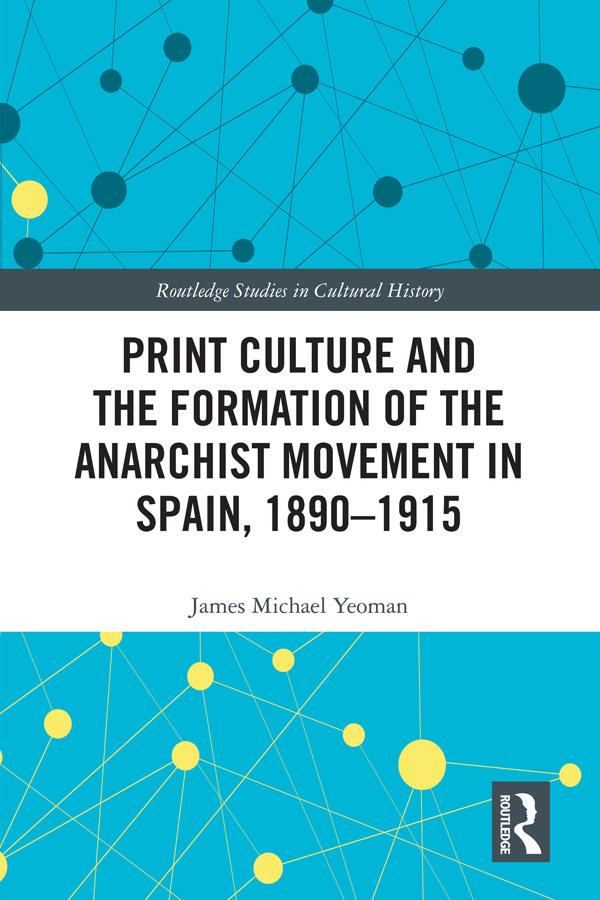
This book analyzes the formation of a mass anarchist movement in Spain over the turn of the twentieth century. In this period, the movement was transformed from a dislocated collection of groups and individuals into the largest organized body of anarchists in world history: the anarcho-syndicalist National Confederation of Labour (Confederación Nacional del Trabajo: CNT). At the same time, anarchist cultural practices became ingrained in localities across the whole of Spain, laying foundations which maintained the movement’s popular support until the end of the Spanish Civil War in 1939.
The book shows that grassroots print culture was central to these developments: driving the development of ideology and strategy – broadly defined as terrorism, education and workplace organization – and providing an informal structure to a movement which shunned recognized leadership and bureaucracy.
This study offers a rich analysis of the cultural foundations of Spanish anarchism. This emphasis also challenges claims that the movement was "exceptional" or "peculiar" in its formation, by situating it alongside other decentralized, bottom-up mobilizations across historical and contemporary contexts, from the radical pamphleteering culture of the English Civil War to the use of social media in the Arab Spring.
Betal nemt med kort, Klarna, Apple Pay eller Google Pay. Ikke tilfreds? Du har altid 14 dages fortrydelsesret. Læs mere i vores vilkår. Har du spørgsmål, så send os en mail på hello@memmo.org.
Memmo gør det nemmere at studere – uanset hvor du er i verden. Hos os samler du dine kursusbøger og smarte studieværktøjer ét sted: resuméer, quizzer, podcasts og flashcards. Og så er der Ted, din studieven, der svarer på alt, du undrer dig over. Over 50 000 studerende studerer allerede her – bygget til at hjælpe dig med at lære hurtigere og stresse mindre.