
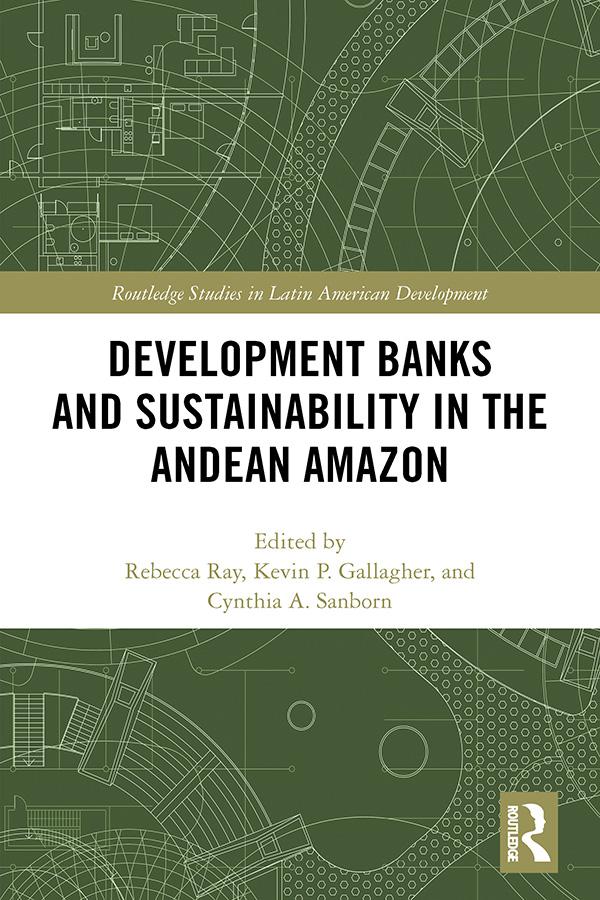
This book explores what development banks, governments, and communities have learned in the last decade of careful negotiation between social and environmental protections in the Andean Amazon, and the pressures of a surging infrastructure and development boom.
While mega-dams, highways, and ports are filling up the pipelines of planners, the national governments of Andean and Amazon-basin countries and major development banks have enacted ambitious social and environmental protections. The book traces the development of social and environmental protections after years of struggle by affected communities, going beyond official policies to discover how these reforms work in practice, and ultimately whether they are enough to stem the risks of infrastructure mega-projects. As Chinese public banks play an increasingly important role in the region, the book also demonstrates that there is a risk of governments undercutting their own standards. By contrast, this book shows that making infrastructure work for everyone involved requires mutually reinforcing networks of support and accountability among communities, governments, and development banks.
This book, led by an expert multi-disciplinary, international team, will be of considerable interest to researchers in the fields of development and development economics, geography, anthropology, and ecology, as well as practitioners in development banks and in government regulatory and foreign aid agencies.
Betal nemt med kort, Klarna, Apple Pay eller Google Pay. Ikke tilfreds? Du har altid 14 dages fortrydelsesret. Læs mere i vores vilkår. Har du spørgsmål, så send os en mail på hello@memmo.org.
Memmo gør det nemmere at studere – uanset hvor du er i verden. Hos os samler du dine kursusbøger og smarte studieværktøjer ét sted: resuméer, quizzer, podcasts og flashcards. Og så er der Ted, din studieven, der svarer på alt, du undrer dig over. Over 50 000 studerende studerer allerede her – bygget til at hjælpe dig med at lære hurtigere og stresse mindre.