
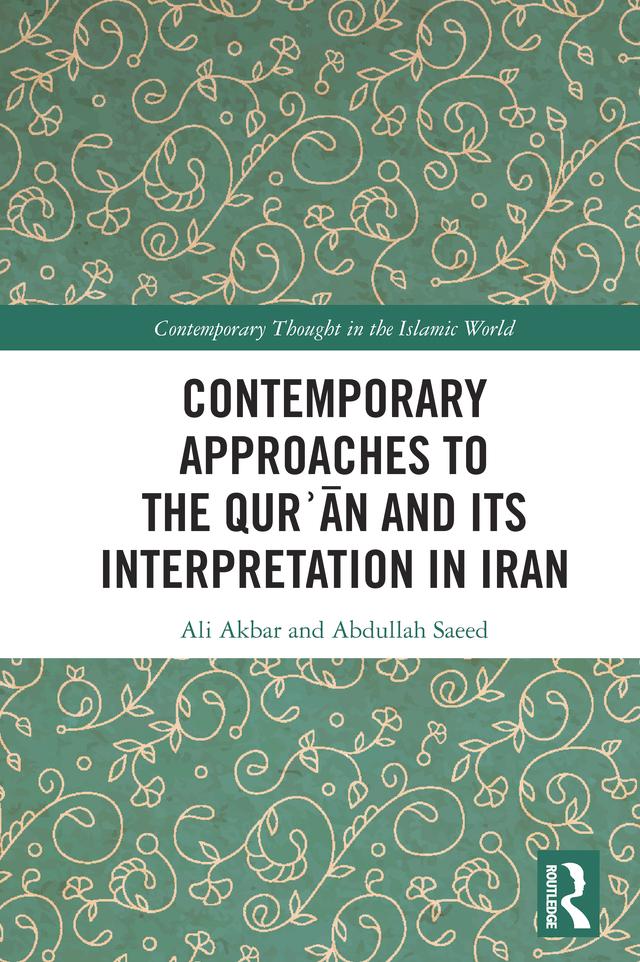
This book sets out how contemporary Iranian scholars have approached the Qurʾān during recent decades. It particularly aims to explore the contributions of scholars that have emerged in the post 1979-revolution era, outlining their primary interpretive methods and foundational theories regarding the reading of the Qurʾān.
Examining issues such as the status of women, democracy, freedom of religion and human rights, this book analyses the theoretical contributions of several Iranian scholars, some of which are new to the English-speaking academy. The hermeneutical approaches of figures such Abdolkarim Soroush, Muhammad Mojtahed Shabestari, Mohsen Kadivar, Hasan Yousefi-Eshkevari, Abolqasem Fanaie and Mostafa Malekian are presented and then analysed to demonstrate how a contextualist approach to the Qu’ran has been formed in response to the influence of Western Orientalism. The effect of this approach to the Qu’ran is then shown to have wide-ranging effects on Iranian society.
This study reveals Qu’ranic thought that has been largely overlooked by the West. It will, therefore. Be of great use to academics in Religious, Islamic and Qurʾānic studies as well as those studying the culture of Iran and the Middle East more generally.
Betal nemt med kort, Klarna, Apple Pay eller Google Pay. Ikke tilfreds? Du har altid 14 dages fortrydelsesret. Læs mere i vores vilkår. Har du spørgsmål, så send os en mail på hello@memmo.org.
Memmo gør det nemmere at studere – uanset hvor du er i verden. Hos os samler du dine kursusbøger og smarte studieværktøjer ét sted: resuméer, quizzer, podcasts og flashcards. Og så er der Ted, din studieven, der svarer på alt, du undrer dig over. Over 50 000 studerende studerer allerede her – bygget til at hjælpe dig med at lære hurtigere og stresse mindre.