
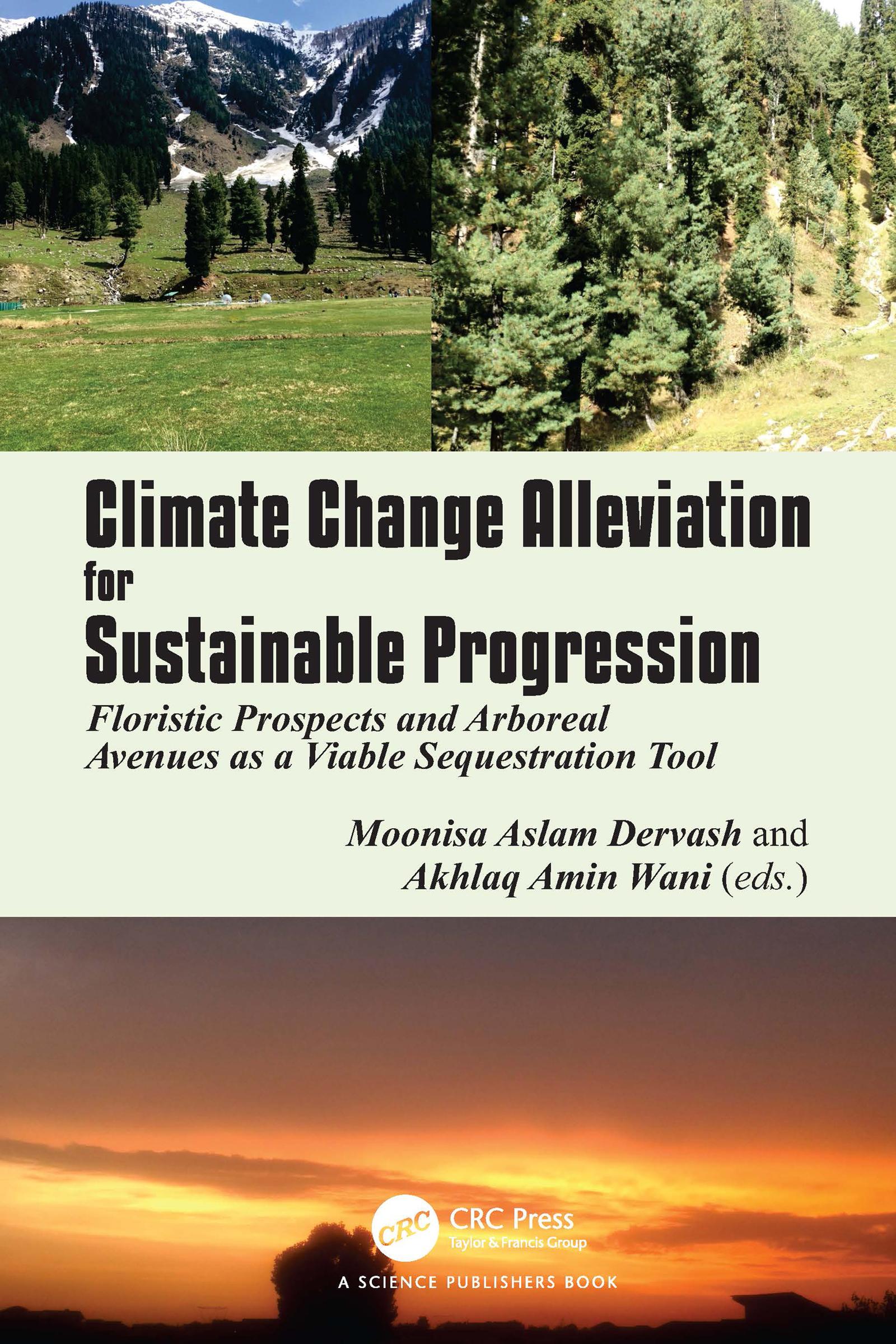
The change in climatic conditions has resulted in a series of events from the melting of polar ice to the rising of sea levels. This has affected low-lying coastal areas by endangering plants and animals, agriculture and livelihood patterns in general, not to mention causing the outbreak of diseases like dengue, malaria, etc. It is, thus, imperative that mitigation measures to stabilize or reduce the concentration of carbon dioxide is brought about. A key step is the bio-fixation of carbon from the atmosphere.
This book attempts to bring forth the role of vegetation in carbon sequestration. The introductory chapters of the book deal with the understanding of the physical attributes governing climate on earth, historical account of climate change, impacts of climate change on different environs and eco-strategies to combat climate change. Detailed account of mechanism of carbon sources and sinks, carbon credits and REDD+ are also discussed. A sizeable portion of the book is dedicated to the climate change and phonological variability, clean development mechanism and economic stability through natural resource management. Academicians, researchers, policy makers and environmental stakeholders will find it a useful and comprehensive guide in the floristic and arboreal potential to sequester carbon dioxide and will suffice the diverse needs of teaching and research.
Betal nemt med kort, Klarna, Apple Pay eller Google Pay. Ikke tilfreds? Du har altid 14 dages fortrydelsesret. Læs mere i vores vilkår. Har du spørgsmål, så send os en mail på hello@memmo.org.
Memmo gør det nemmere at studere – uanset hvor du er i verden. Hos os samler du dine kursusbøger og smarte studieværktøjer ét sted: resuméer, quizzer, podcasts og flashcards. Og så er der Ted, din studieven, der svarer på alt, du undrer dig over. Over 50 000 studerende studerer allerede her – bygget til at hjælpe dig med at lære hurtigere og stresse mindre.