
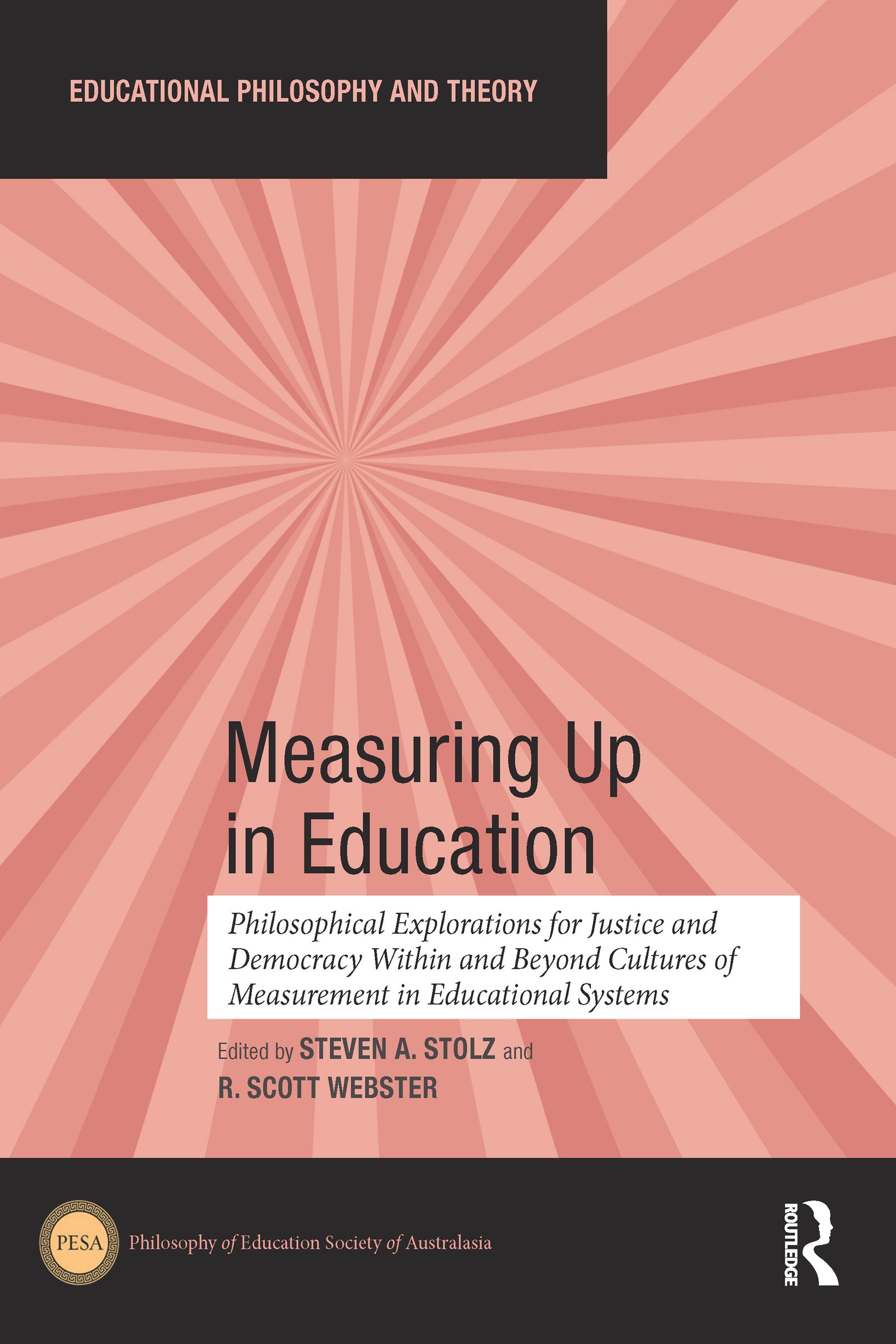
Cultures of measurement are often considered to dominate educational practices, to the degree that, as Biesta (2010) has identified in Good Education in an Age of Measurement we no longer measure what we value, but rather we have become conditioned to value what is measured. A clear example of this occurs when institutions and staff "teach to the test" by emphasising narrow conceptions of learning and of knowledge, simply because the consequences of high-stakes assessments have important implications regarding funding, resources, and even tenure.
This collection explores, via various philosophical means, how valuable educational practices can occur within and beyond cultures of measurement. What seems to be required is for practitioners in education to regain their relationship to the overall purposes of education, such as the furthering of justice and democracy for both individual students and societies as a whole. Such a reconnection has the potential to re-humanise curricular experiences for students, which may have become dehumanised through particular cultures of measurement. It is argued that certain legitimate measures can advance justice and democracy, and so careful attention must be assigned to their validity and value.
This book was originally published as a special issue of Educational Philosophy and Theory.
Betal nemt med kort, Klarna, Apple Pay eller Google Pay. Ikke tilfreds? Du har altid 14 dages fortrydelsesret. Læs mere i vores vilkår. Har du spørgsmål, så send os en mail på hello@memmo.org.
Memmo gør det nemmere at studere – uanset hvor du er i verden. Hos os samler du dine kursusbøger og smarte studieværktøjer ét sted: resuméer, quizzer, podcasts og flashcards. Og så er der Ted, din studieven, der svarer på alt, du undrer dig over. Over 50 000 studerende studerer allerede her – bygget til at hjælpe dig med at lære hurtigere og stresse mindre.