
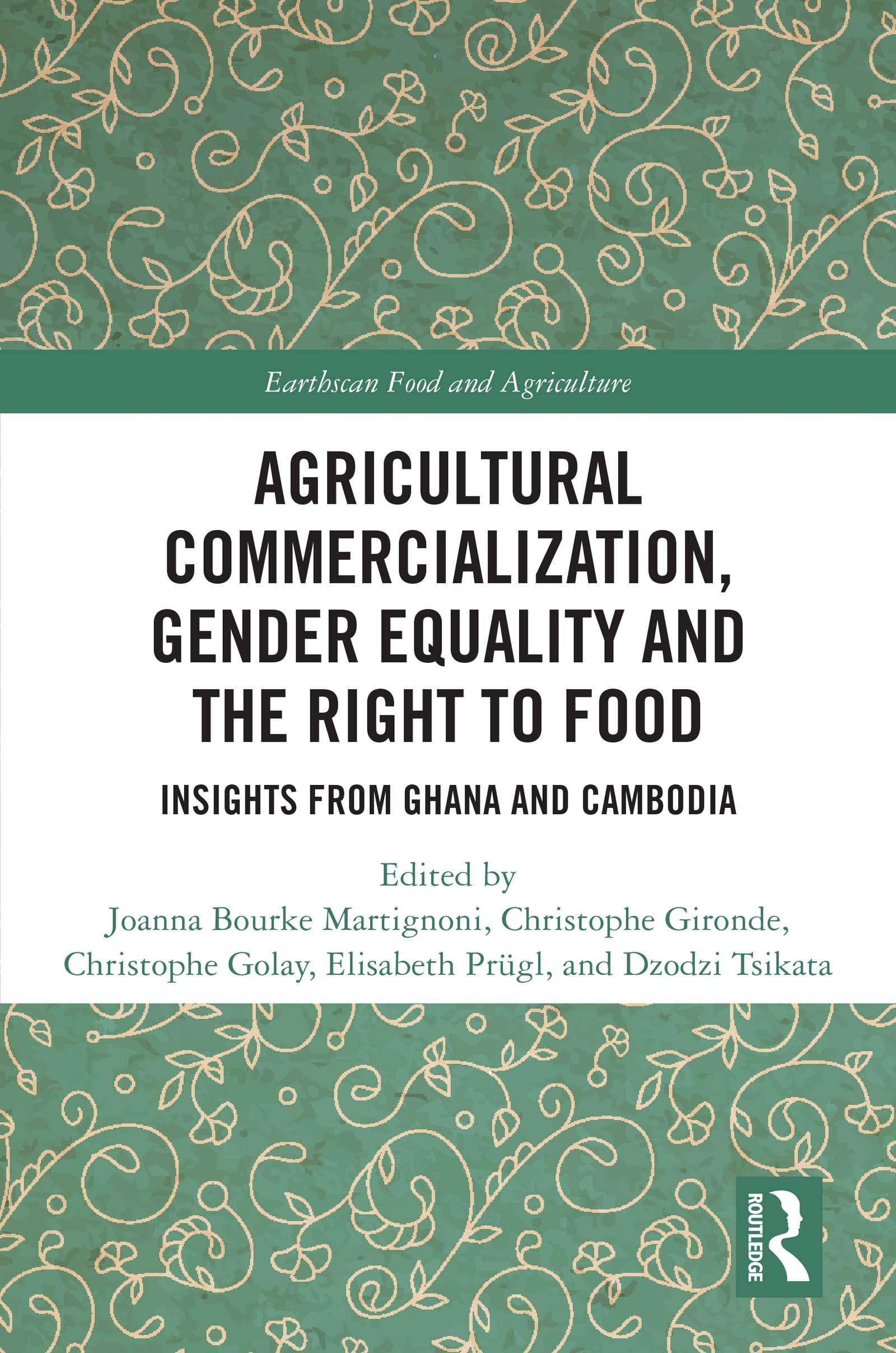
This volume explores agricultural commercialization from a gender equality and right to food perspective.
Agricultural commercialization, involving not only the shift to selling crops and buying inputs but also the commodification of land and labour, has always been controversial. Strategies for commercialization have often reinforced and exacerbated inequalities, been blind to gender differences and given rise to violations of the human rights to food, land, work and social security. While there is a body of evidence to trace these developments globally, impacts vary considerably in local contexts. This book systematically considers these dynamics in two countries, Cambodia and Ghana. Profoundly different in terms of their history and location, they provide the basis for fruitful comparisons because they both transitioned to democracy in the early 1990s, made agricultural development a priority, and adopted orthodox policies of commercialization to develop the sector. Chapters illustrate how commercialization processes are gendered, highlighting distinctive gender, ethnic and class dynamics in rural Ghana and Cambodia and the different outcomes these generate. They also show the ways in which food cultures are changing and the often-problematic impact of these changes on the safety and quality of food. Specific policies and legal norms are examined, with chapters addressing the development and implementation of frameworks on the right to food and land administration. Overall, the volume brings into relief multiple dimensions shaping the outcomes of processes of commercialization, including gender orders, food cultures, policy translation, national and sub-national policies, corporate investments and programmes, and formal and informal legal norms. In doing so, it offers insight not only on our case countries, but also provides proposals to advance rights-based research on food security.
This book will be of great interest to students and scholars of food security, agricultural development and economics, gender, human rights and sustainable development.
Betal nemt med kort, Klarna, Apple Pay eller Google Pay. Ikke tilfreds? Du har altid 14 dages fortrydelsesret. Læs mere i vores vilkår. Har du spørgsmål, så send os en mail på hello@memmo.org.
Memmo gør det nemmere at studere – uanset hvor du er i verden. Hos os samler du dine kursusbøger og smarte studieværktøjer ét sted: resuméer, quizzer, podcasts og flashcards. Og så er der Ted, din studieven, der svarer på alt, du undrer dig over. Over 50 000 studerende studerer allerede her – bygget til at hjælpe dig med at lære hurtigere og stresse mindre.