
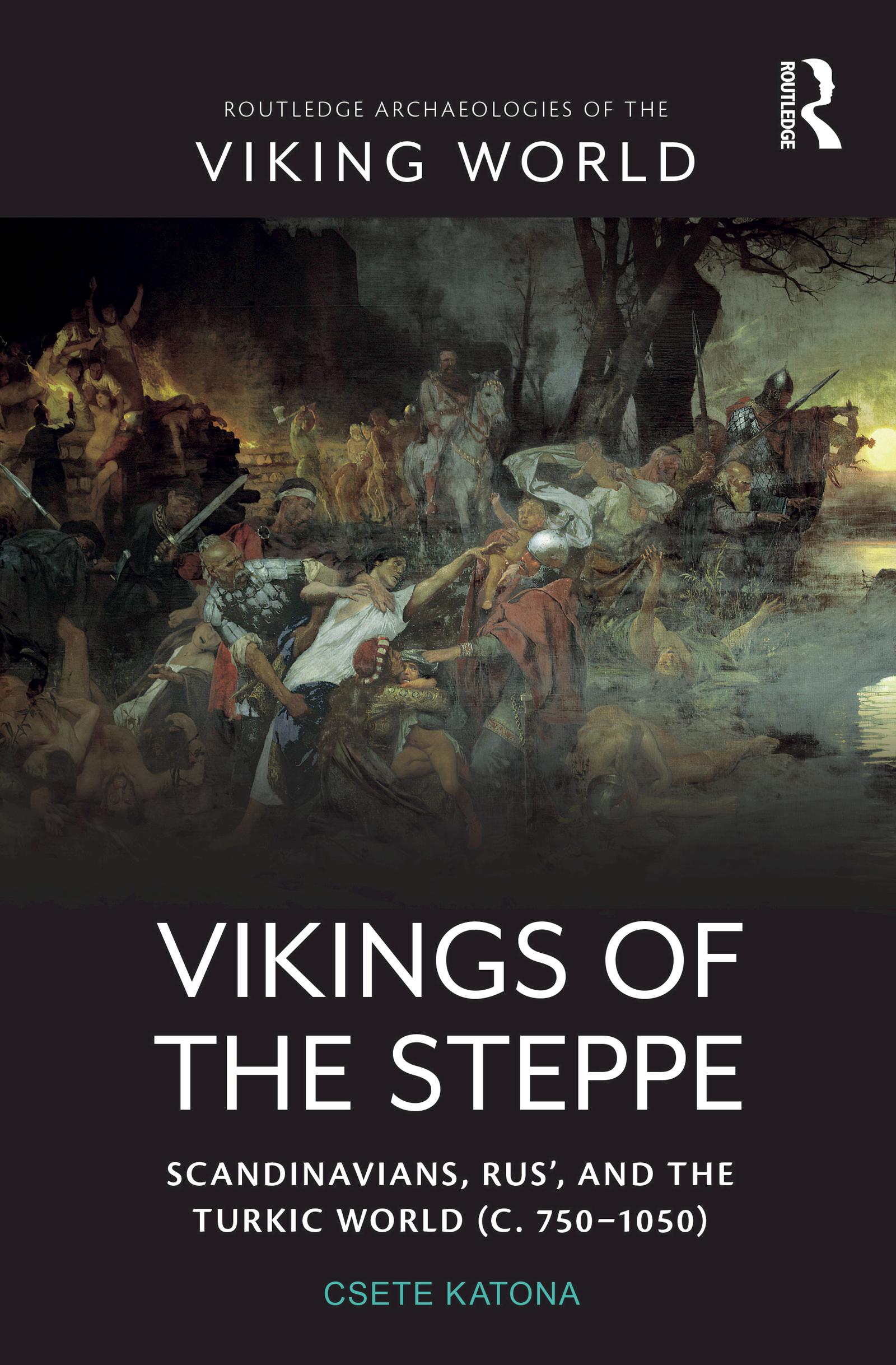
This book explores the relationship between Vikings, Rus’ and nomadic (mostly Turkic) steppe dwellers during the course of the Viking Age (c. 750–1050) in a geographical area stretching from Eastern Scandinavia through the Kievan Rus’, Byzantium, the Islamic world to the Western Eurasian steppes.
The primary focus is the steppe influence on the development of Scandinavian-Rus’ culture. It illustrates the effects of Turkic (nomadic) cultures on the evolving Scandinavian-Rus’ communities in their military technology and tactics, as well as in everyday customs, ritual traditions and religious perceptions, whilst paying attention to the politico-commercial necessities and possible communication channels tying these two cultures, normally considered to be distinct, together. The arguments are supported by a multi-disciplinary analysis of diverse historical and archaeological materials occasionally supplemented with linguistic evidence. The result is a comprehensive evaluation of the relations of the Scandinavians active in the ‘East’ with Turkic groups, and brings (the so far neglected) steppes into Viking studies in general.
The book will fill a serious scholarly gap in the field of Viking studies and will be read by both academics and students interested in the archaeological and historical sources concerned with the traditions of the ‘Eastern Vikings’.
Betal nemt med kort, Klarna, Apple Pay eller Google Pay. Ikke tilfreds? Du har altid 14 dages fortrydelsesret. Læs mere i vores vilkår. Har du spørgsmål, så send os en mail på hello@memmo.org.
Memmo gør det nemmere at studere – uanset hvor du er i verden. Hos os samler du dine kursusbøger og smarte studieværktøjer ét sted: resuméer, quizzer, podcasts og flashcards. Og så er der Ted, din studieven, der svarer på alt, du undrer dig over. Over 50 000 studerende studerer allerede her – bygget til at hjælpe dig med at lære hurtigere og stresse mindre.