
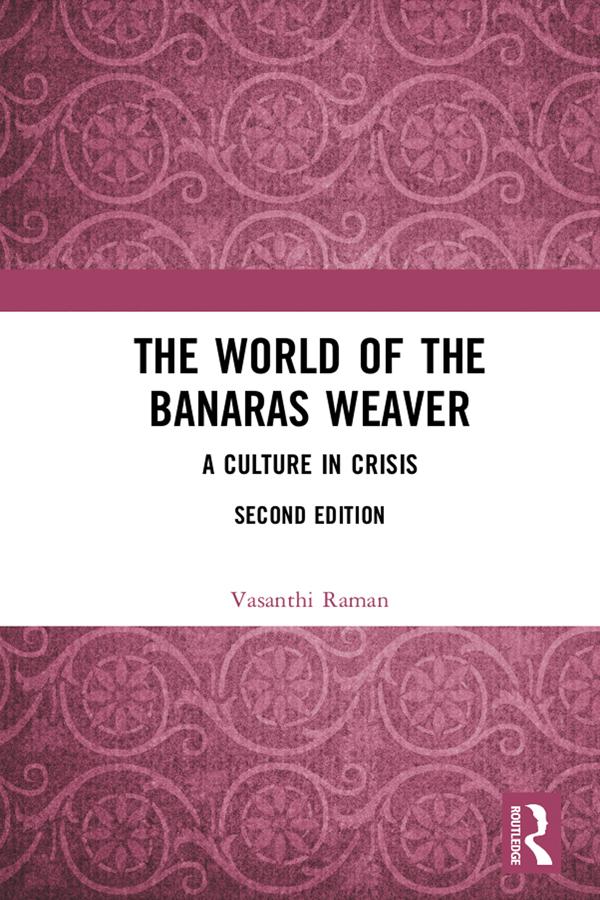
This book is a fascinating investigation into how communalism plays out in everyday India. Using the metaphor of tana-bana – the warp and the weft of the Banarasi sari – the author reproduces the interwoven life of Hindu-Muslim relations in the Banarasi sari industry.
As the city of Banaras in Uttar Pradesh takes the centre stage as the site of this ethnographic study, the author documents the dissonance in representations of Banaras as a sacred Hindu city and its essential plural character. The volume
• examines in-depth the lives of Banaras Muslims in the social and economic matrix of the sari industry;
• highlights how women negotiate between home, family and their place in the artisanal industry; and
• sheds light on their fast-changing world of the Banaras weavers and their responses to it.
With a new introduction and fresh data, the second edition looks at the subsequent developments in the weaving industry over the last decade. This volume will be of immense interest to scholars and researchers of social anthropology, gender studies, development studies, sociology and South Asian studies.
Betal nemt med kort, Klarna, Apple Pay eller Google Pay. Ikke tilfreds? Du har altid 14 dages fortrydelsesret. Læs mere i vores vilkår. Har du spørgsmål, så send os en mail på hello@memmo.org.
Memmo gør det nemmere at studere – uanset hvor du er i verden. Hos os samler du dine kursusbøger og smarte studieværktøjer ét sted: resuméer, quizzer, podcasts og flashcards. Og så er der Ted, din studieven, der svarer på alt, du undrer dig over. Over 50 000 studerende studerer allerede her – bygget til at hjælpe dig med at lære hurtigere og stresse mindre.