
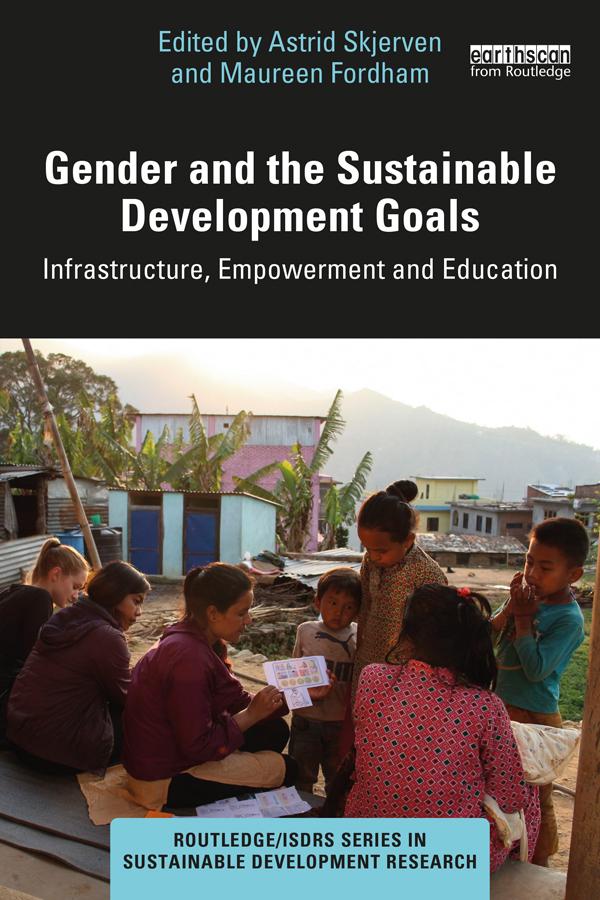
This book sheds light on the important and mostly neglected role that gender plays in achieving the UN Sustainable Development Goals, doing so by investigating three key problem areas: empowerment, education, and infrastructure.
Starting with a theoretical and methodological framework, this edited collection contains 12 chapters from scholars and researchers from around the world. The book includes numerous case studies discussing the current status of gender equality relating to the SDGs. It reinforces the significance of gender for sustainable and just development, highlighting how women play a major role in work organization, disaster management, income, household maintenance, and mediation of knowledge. "Women" as a classification encompasses much diversity with many intersecting axes of difference; this book focuses on the excluded and disadvantaged majority social group, without imposing homogeneity on that categorization. Many chapters focus on critical situations occurring in the Global South, where these issues are highly prominent, and importantly, these contributions are written by local scholars. Finally, the volume provides pathways for basic and professional gender responsive education and innovation in the field.
The book will generate important discussions in interdisciplinary research and higher education settings focusing on sustainable development, gender, equality, human rights, and education.
Betal nemt med kort, Klarna, Apple Pay eller Google Pay. Ikke tilfreds? Du har altid 14 dages fortrydelsesret. Læs mere i vores vilkår. Har du spørgsmål, så send os en mail på hello@memmo.org.
Memmo gør det nemmere at studere – uanset hvor du er i verden. Hos os samler du dine kursusbøger og smarte studieværktøjer ét sted: resuméer, quizzer, podcasts og flashcards. Og så er der Ted, din studieven, der svarer på alt, du undrer dig over. Over 50 000 studerende studerer allerede her – bygget til at hjælpe dig med at lære hurtigere og stresse mindre.