
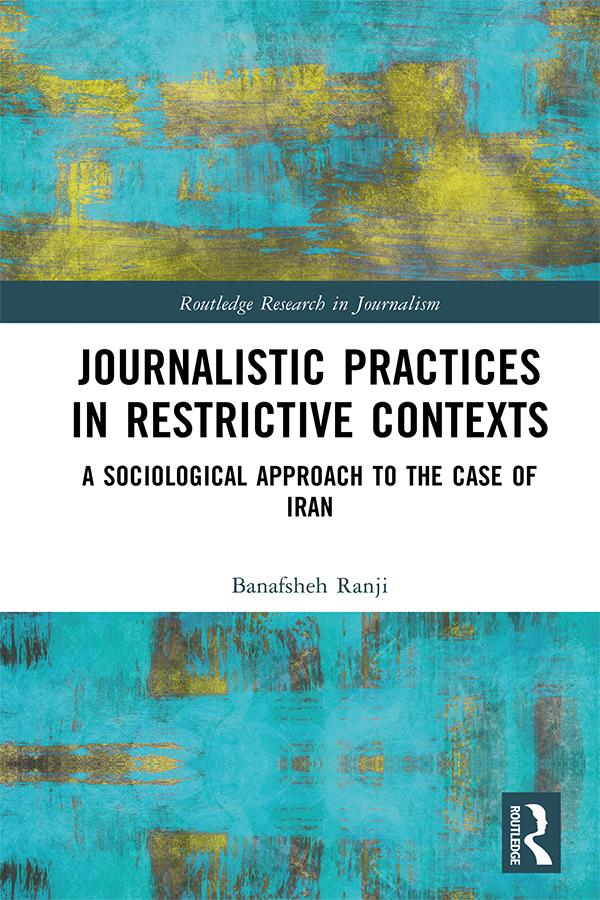
Based on fieldwork conducted in Iran, this book discusses how it is possible for journalism to exist and function in a restrictive context.
The book brings together a range of structural (macro), organizational (meso), and individual (micro) processes to analyze journalistic practice in a politically restrictive setting, a context thus far dominated by structural explanations. Using Pierre Bourdieu’s work as a starting point, Banafsheh Ranji develops an explanatory framework for how Iranian journalists navigate the daily 'minefield' of their professional environment. The analysis sheds light on the everyday reality of journalism in Iran, addressing factors that hinder journalists’ work while also showing how journalists use a set of double game strategies to simultaneously circumvent constraints and avoid retaliation. Moving beyond notions of censorship and repression that accompany discussions of journalism in such settings, the book instead focuses on how we may think of critical journalism, professionalism, and journalistic power, agency, and autonomy in restrictive contexts.
Offering powerful insights into the realities of journalism in a tightly controlled environment, this book will be a key resource for scholars and students of journalism, media and communication studies, political science, sociology, Iranian studies, and Middle East studies.
Betal nemt med kort, Klarna, Apple Pay eller Google Pay. Ikke tilfreds? Du har altid 14 dages fortrydelsesret. Læs mere i vores vilkår. Har du spørgsmål, så send os en mail på hello@memmo.org.
Memmo gør det nemmere at studere – uanset hvor du er i verden. Hos os samler du dine kursusbøger og smarte studieværktøjer ét sted: resuméer, quizzer, podcasts og flashcards. Og så er der Ted, din studieven, der svarer på alt, du undrer dig over. Over 50 000 studerende studerer allerede her – bygget til at hjælpe dig med at lære hurtigere og stresse mindre.