
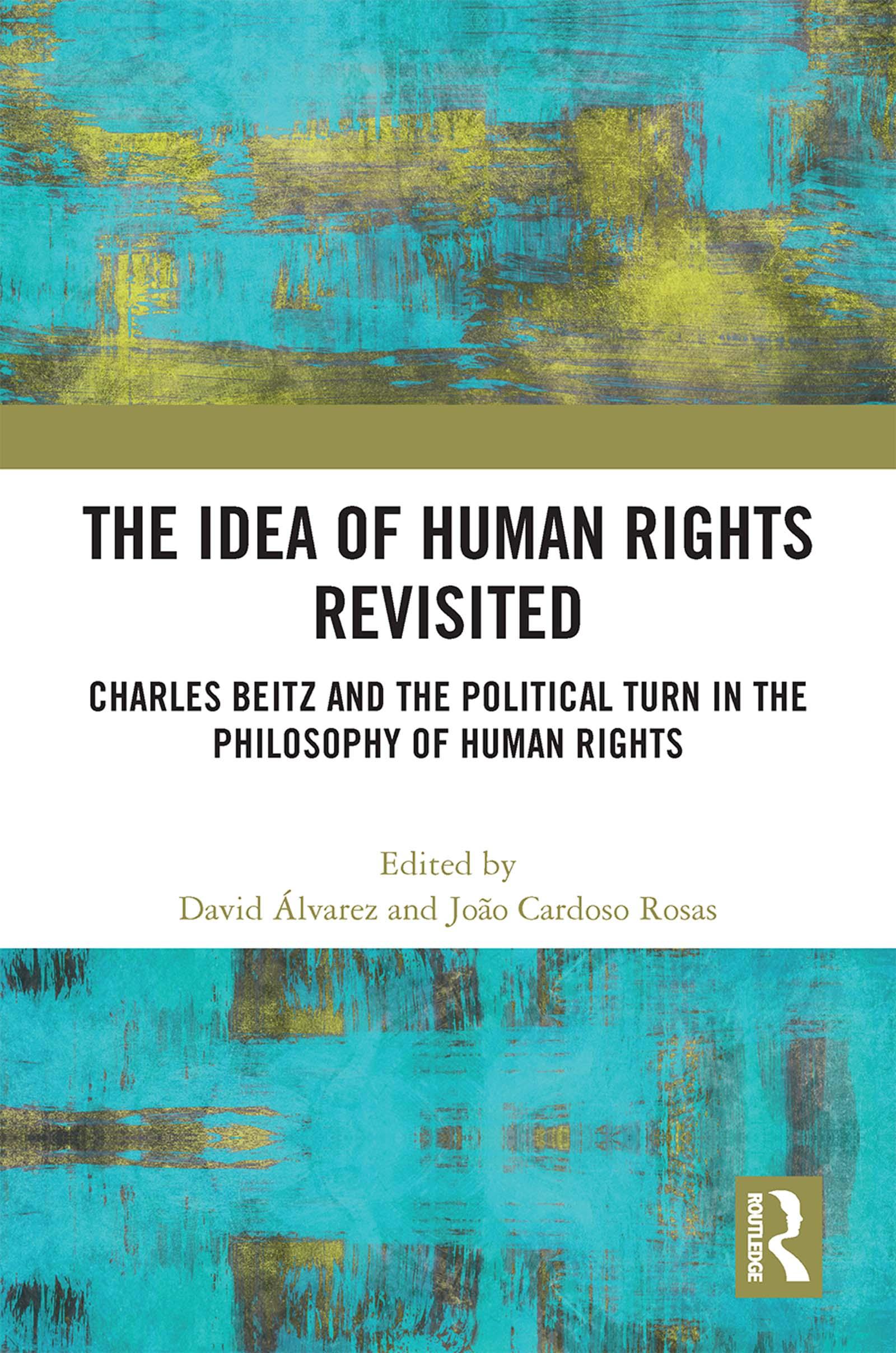
This volume takes stock of the seminal contribution of Charles Beitz to the so-called "political turn" in the philosophy of human rights, whose origins are in the work of the late Rawls. In his already classic book The Idea of Human Rights (2009), Beitz proposes that human rights are better understood from the vantage point of their practice in the contemporary world. Instead of looking at these rights as legal and political instantiations of fully justified moral rights, Beitz reconstructs the idea of human rights as being part of a global discursive practice that can only be understood in the framework of the international system of states in which we live. In this system of interdependent states, with the consequent dispersion of political authority, human rights constitute an array of internal justifications and criticisms, rather than a blueprint of the ideal society.
All the chapters in this volume draw on these fundamental ideas elaborated by Beitz and propose to extend them further in their connection with humanistic accounts of human rights, with the plurality of contexts in which the practice of human rights takes place, and finally, with the interconnections between these rights and global justice or intergenerational justice.
The chapters in this book were originally published as a special issue of Critical Review of International Social and Political Philosophy.
Betal nemt med kort, Klarna, Apple Pay eller Google Pay. Ikke tilfreds? Du har altid 14 dages fortrydelsesret. Læs mere i vores vilkår. Har du spørgsmål, så send os en mail på hello@memmo.org.
Memmo gør det nemmere at studere – uanset hvor du er i verden. Hos os samler du dine kursusbøger og smarte studieværktøjer ét sted: resuméer, quizzer, podcasts og flashcards. Og så er der Ted, din studieven, der svarer på alt, du undrer dig over. Over 50 000 studerende studerer allerede her – bygget til at hjælpe dig med at lære hurtigere og stresse mindre.